 Revolutionizing · Modernizing · Simplifying
Revolutionizing · Modernizing · Simplifying
Revolutionizing · Modernizing · Simplifying
Every December, Hayley and I load up the car, grab Bodhi, and make the drive up I-70 into the mountains. Not to ski. Not to pass through. We go to Georgetown for the Christmas Market, and honestly it is one of our favorite things we do all year. There is something about that town in December, snow on the peaks, Victorian storefronts lit up, the whole place looking like someone built a movie set and forgot to take it down. Except none of it is a set. It is all real. And the story behind how it got there is genuinely one of the most dramatic in Colorado history.
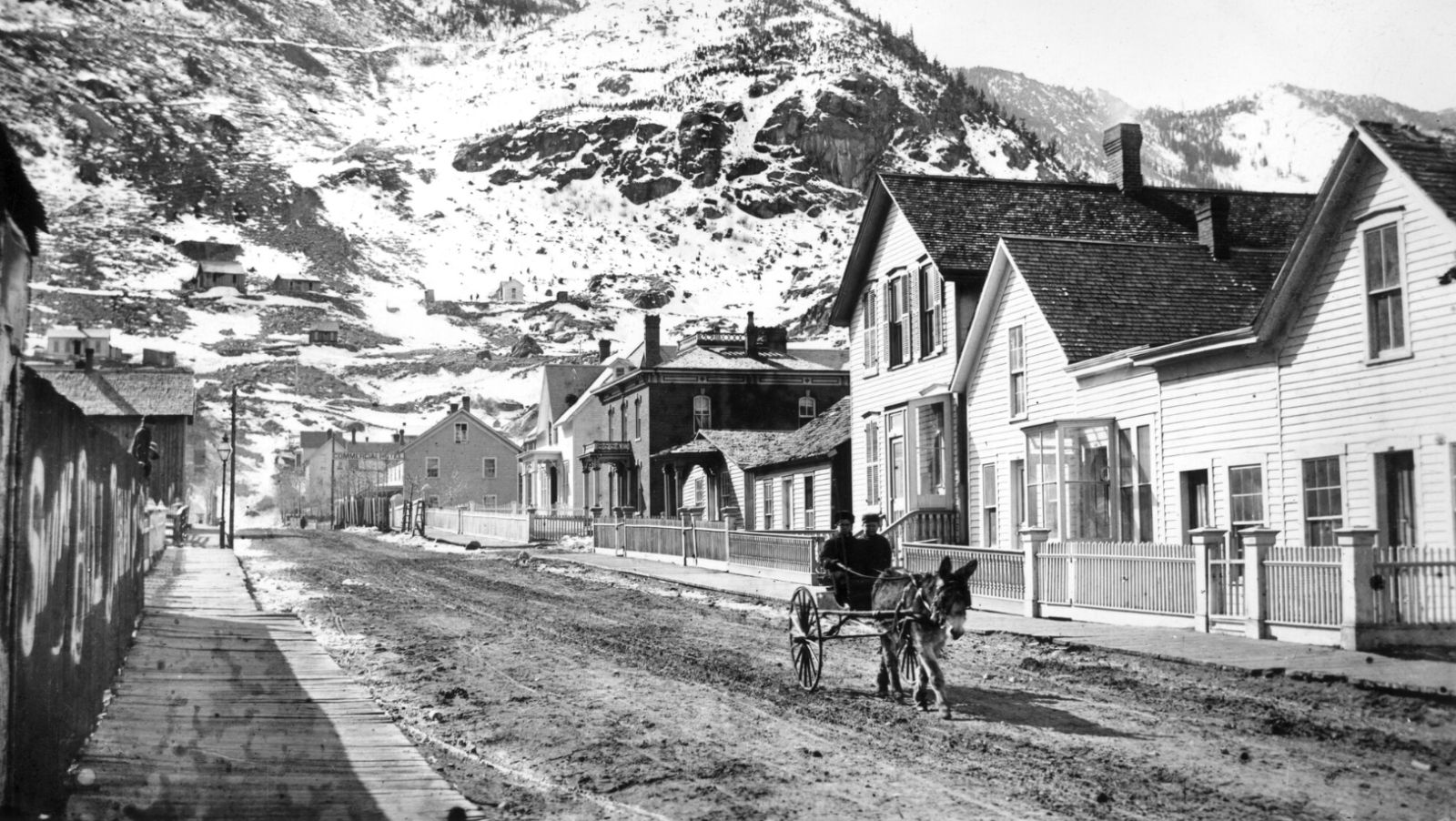
So let me take you through it.
The whole thing starts with David and George Griffith, two brothers who showed up in Clear Creek canyon during the summer of 1859 looking for gold. And they found it. Near the head of Clear Creek, they hit promising outcrops of ore and George made the trip to Central City to file their claims. Their brother John came out not long after to help with development work and get a cabin built. They called it the Griffith Mining District.
Here is the thing most people miss about the Griffith brothers. They also found silver. They just did not care about it. In 1859, everyone was after gold, so the silver got noted and ignored. Those were almost certainly the first significant silver discoveries in the entire state of Colorado. They just did not know it yet.
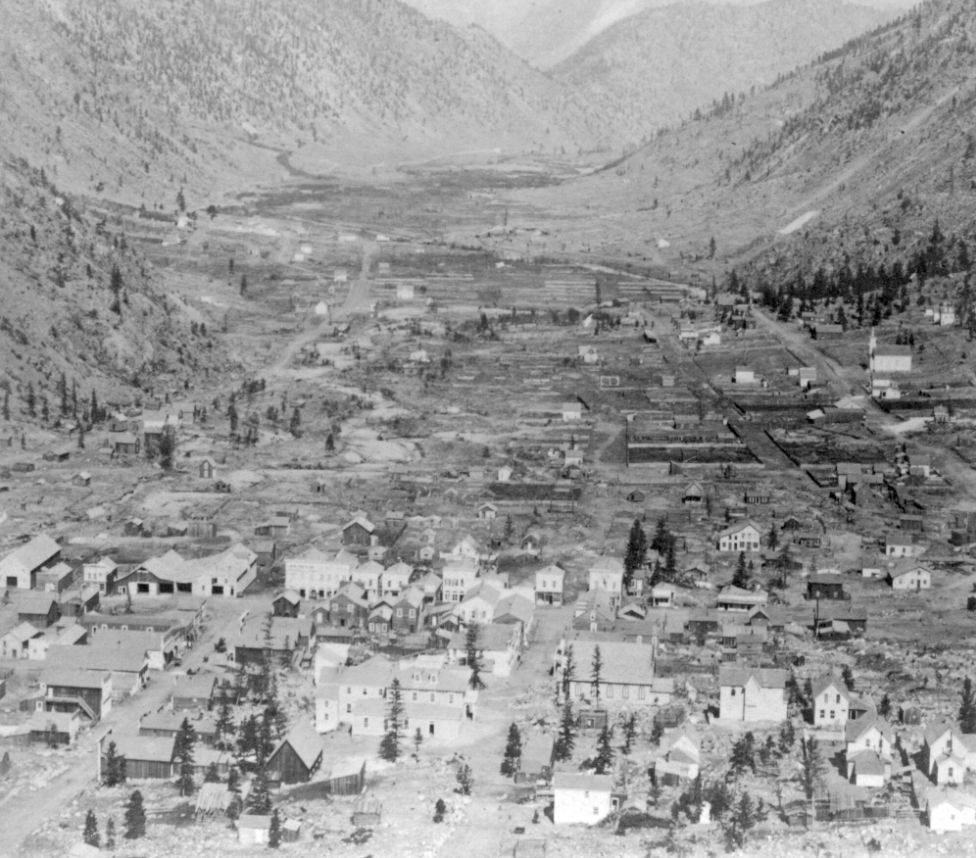
A reporter from the Rocky Mountain News came out in August of 1859 and filed this: "We have no doubt there are millions of gold in the immediate vicinity." That is a real quote. That is the kind of press that gets a town built fast.
Most miners cleared out for the winter of 1859 to 1860, as they did. The Griffiths came back in the spring and brought their families with them. And immediately hit a wall. No road. No way to get supplies up to the mines. So what did they do? They started a toll road company and built their own road from Central City to the site. The road finished by summer of 1860, and Georgetown was officially dedicated on June 29, 1860.
By 1861, over 2,000 claims had been filed. The first stamp mill went up that spring. Things were moving.
And then they were not.
Between late 1861 and spring of 1864, the bottom fell out. The technology to process the local ores just was not there yet. Eastern investors started losing confidence in Colorado mines. A boom in the adjacent Union Mining District pulled men and money away. The Griffith family splintered under the pressure.
By 1864, only George Griffith was left in Georgetown. And then he left too. He moved to Mexico that year and never came back. He never saw his namesake town become one of the richest mining cities in the American West. That is the kind of detail that sticks with you.
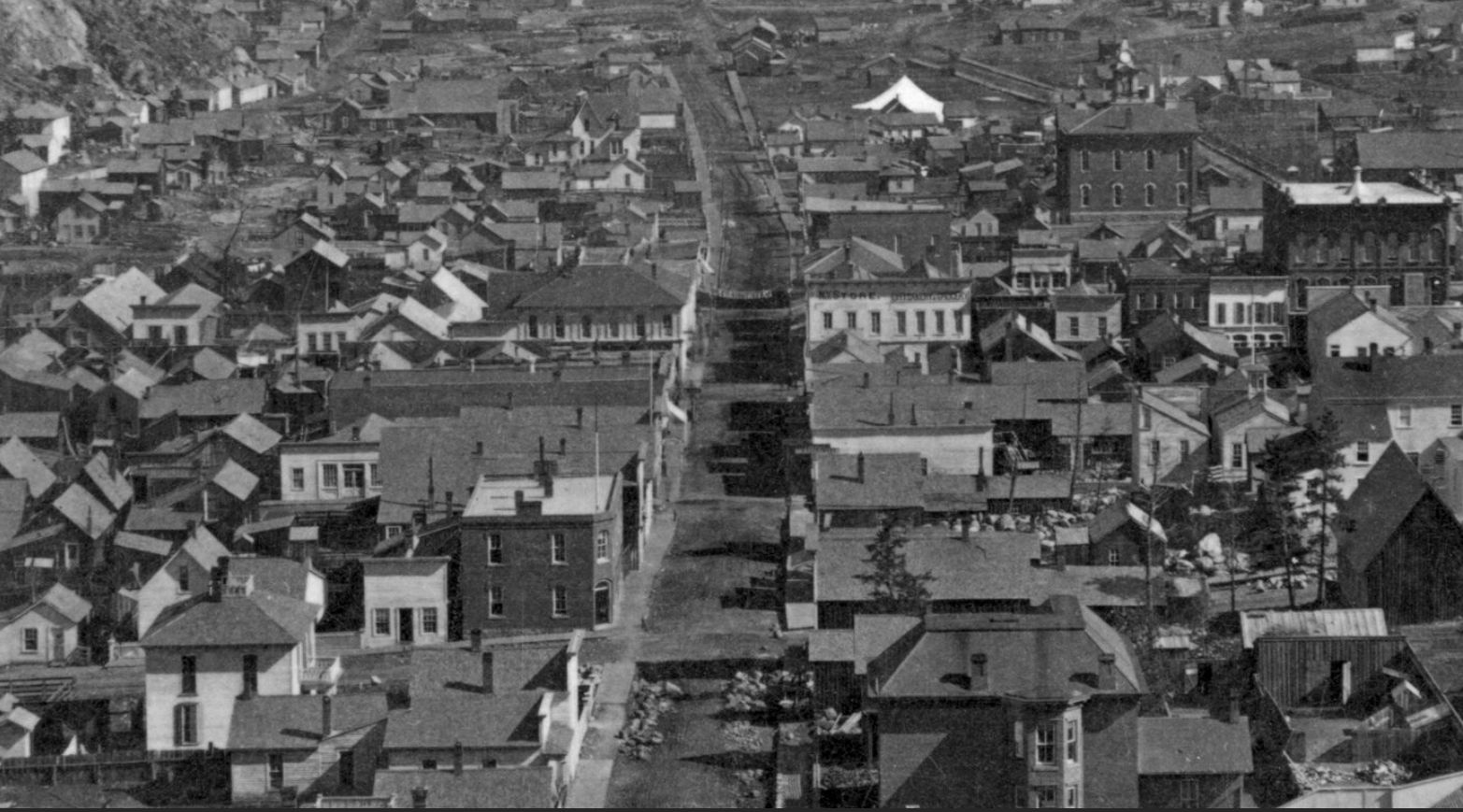
But the town did not die. By fall of 1864, gold was running out across the territory and attention swung hard toward silver. New discoveries near the head of Clear Creek brought people back to Georgetown. The first silver rush in Colorado hit in 1865, and Georgetown was right at the center of it.
The new silver mines were up at serious elevation, not the kind of place you put a town. So Georgetown became the supply center, the social center, the place where the money came to rest between shifts. In 1865 a new adjacent town called Elizabethtown got laid out. By 1866, it was obvious the two towns were better as one. Georgetown absorbed it and kept the name.
The 1867 boom was real. The town was incorporated in 1868. That same year it took the county seat of Clear Creek County away from Idaho Springs. And I love this quote from a Central City newspaper in July 1867, describing the building boom at Georgetown: "The buildings mostly new, and neatly constructed, seem to have sprung up spontaneously from the earth like the trees, grass, and flowers."
By 1869, a writer named Samuel Bowles was describing Georgetown in his book "Our New West" as "quite the nicest bit of inhabited portion of the mountains" and calling it a place "every tourist should visit." Tourism was basically part of Georgetown's identity from the very beginning. That matters for what comes later.
Prominent Europeans were showing up and writing home about the place. Churches from eastern denominations were sending missionaries because Georgetown was being positioned as the cultural capital of Colorado's mining districts. Sons of eastern businessmen were arriving with capital to build something permanent. This was not just a mining camp. People were betting on it as a real city.
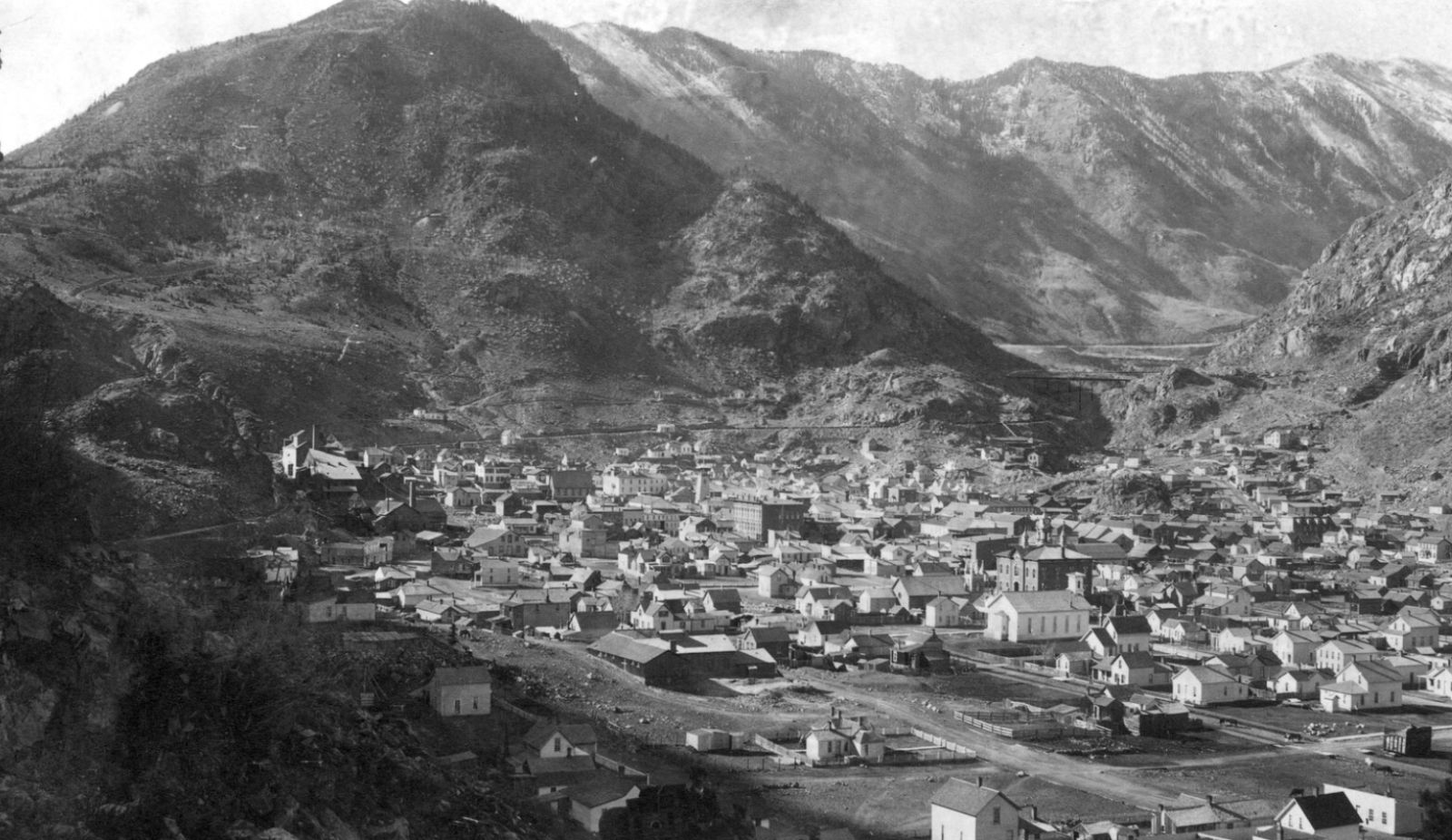
By 1874, Clear Creek County had passed neighboring Gilpin County as Colorado's largest producer of precious metals. The railroad finally arrived in August of 1877, and the Georgetown Miner reported that 8,000 people attended the celebration. Eight thousand. For a railroad arrival. That tells you everything about how much it meant.
By 1878, Georgetown had peaked. Around 2,000 men employed in mines, mills, and related industries. City population estimated at 10,000 residents. The nickname was official. Georgetown was "The Silver Queen of Colorado."
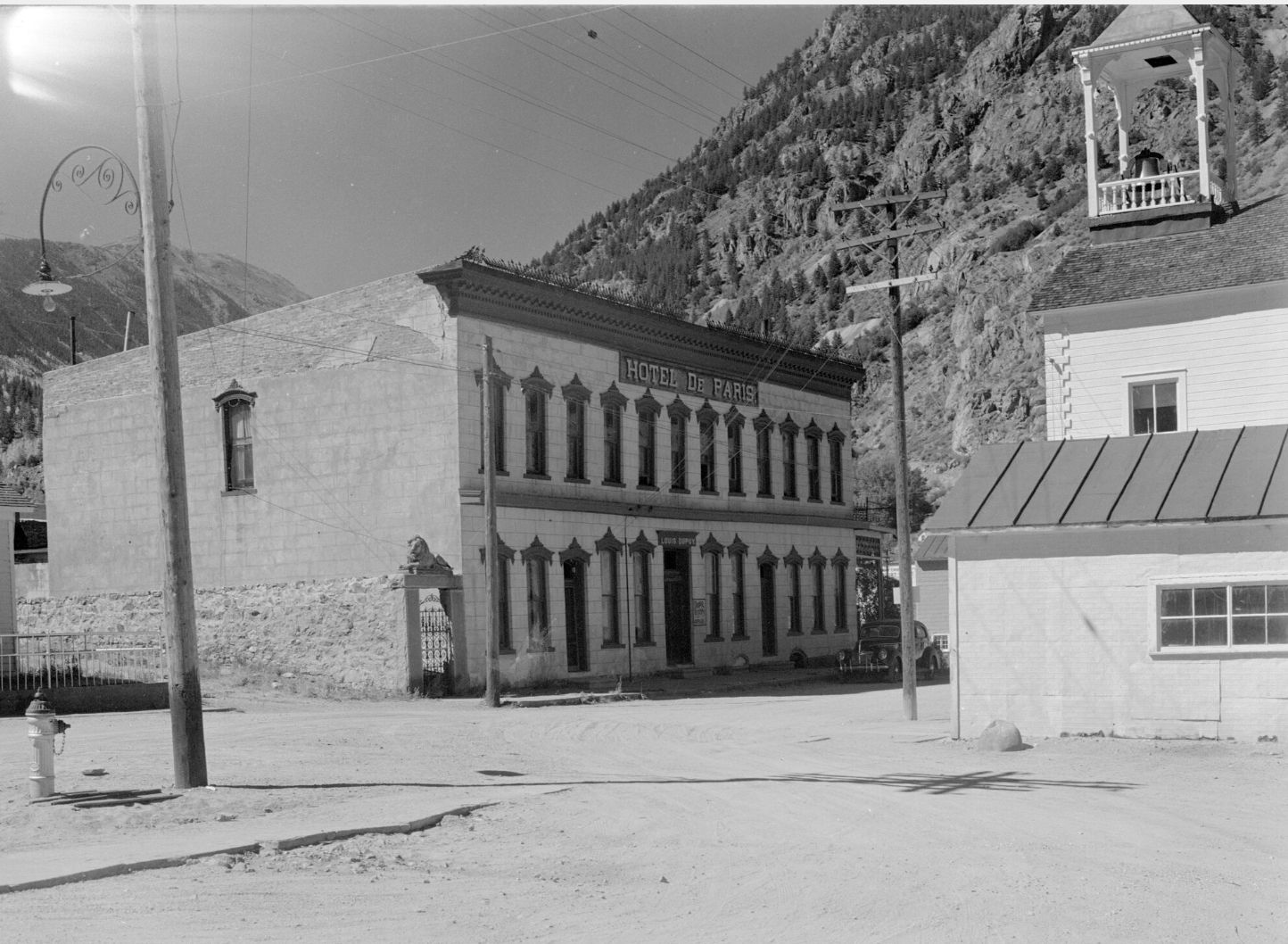
This is also the era that gave us Louis Dupuy and the Hotel de Paris. Full disclosure, we did a whole separate piece on Dupuy because his life story absolutely deserves it, so keep an eye out for that one. But I will say this for now: nobody knew who this man actually was until he died. French immigrant, opened one of the most sophisticated hotels in the American West right there in Georgetown, became one of the most talked about figures in Colorado. And kept his real past completely to himself. The Hotel de Paris Museum is still there today and worth every minute of your time.
Georgetown's moment at the top did not last. It almost never does in Colorado mining history.
Spectacular silver discoveries at Leadville came in and just blew everything else off the map. Then Aspen. Then the San Juans. Capital and experienced mining men moved toward the new action, as they always do.
Georgetown kept producing. Through the 1880s, the district was pulling out more than a million dollars in precious metals every year, with some years clearing two million. That is not nothing. But it was not Leadville, and everyone knew it.
The Sherman Silver Purchase Act of 1890 gave Georgetown one last run. New commercial and residential buildings went up between 1890 and 1892. Electric street lights. A sewer system. The town was modernizing.
Then 1893 happened.
National depression plus the repeal of the Sherman Act plus collapsing silver prices. It was the worst economic crisis in Colorado's history, and silver towns took the hardest hit. Georgetown's mining industry was effectively crippled. The Silver Queen was done.
The town limped through the rest of the 1890s. World War I briefly brought things back to life because demand for lead soared. Newspapers reported that by 1917 the population had more than doubled from 600 to 1,400 residents almost overnight. But when the war ended and lead prices normalized, that was over too.
Georgetown kept declining through the 1900s. By 1960, the population of the town was 307 people. That is it. Three hundred and seven.
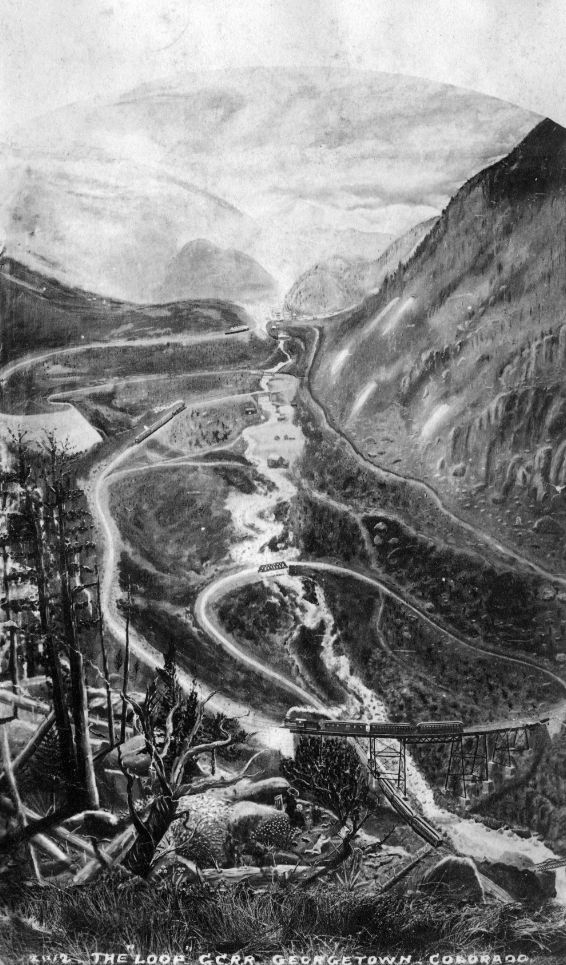
Before we get to the comeback, we have to talk about the Georgetown Loop Railroad because it is genuinely one of the most interesting pieces of infrastructure in Colorado history.
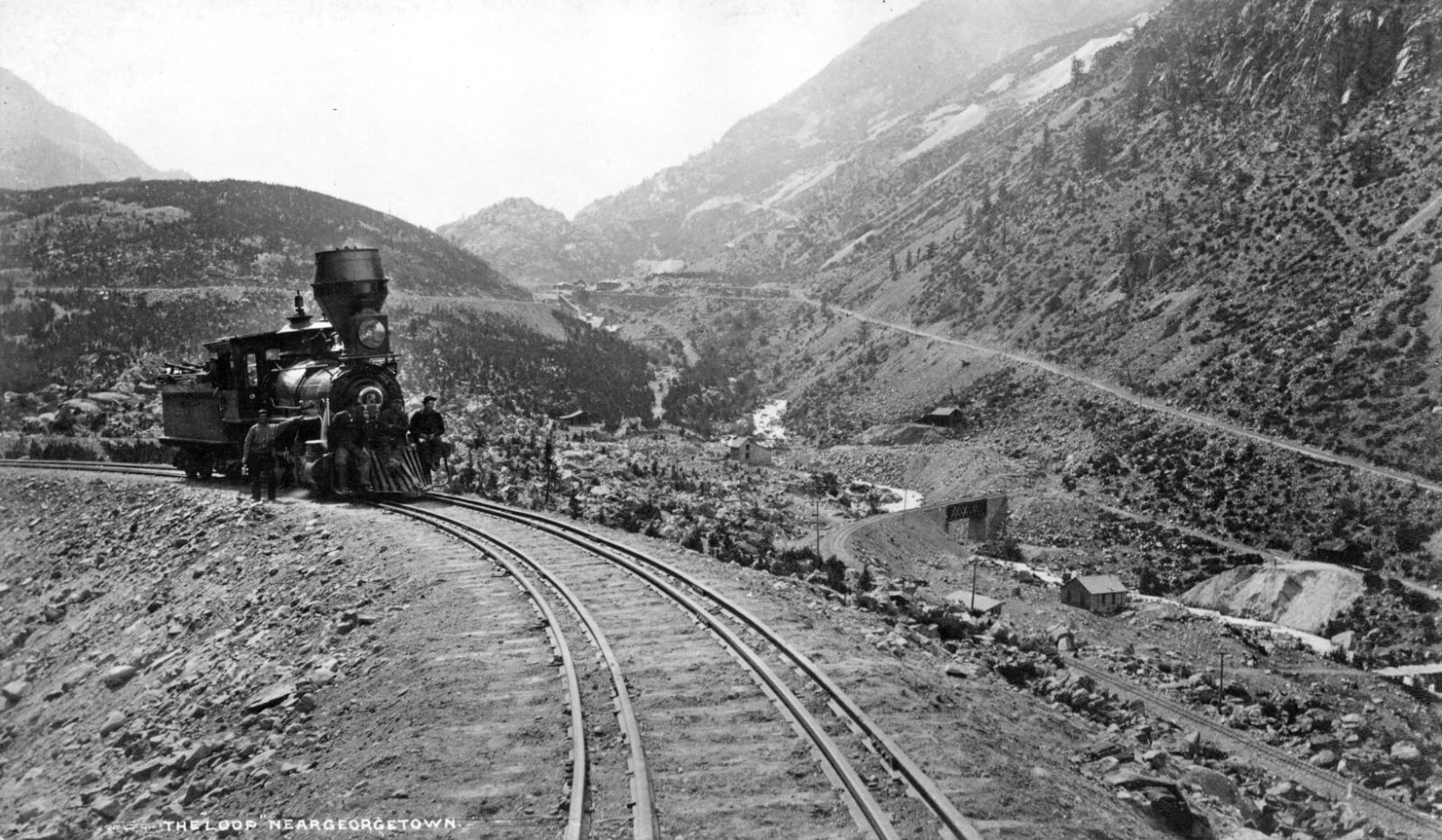
Originally built in 1884, the Loop is a 4.5 mile narrow gauge railroad running between Georgetown and Silver Plume. The canyon is narrow, the grades are steep, and the engineers who designed it ran it through four bridges over Clear Creek with horseshoe bends to gain elevation without blasting straight up the mountain. It was remarkable engineering for 1884 and people knew it even then. Tourists were riding it from the start.
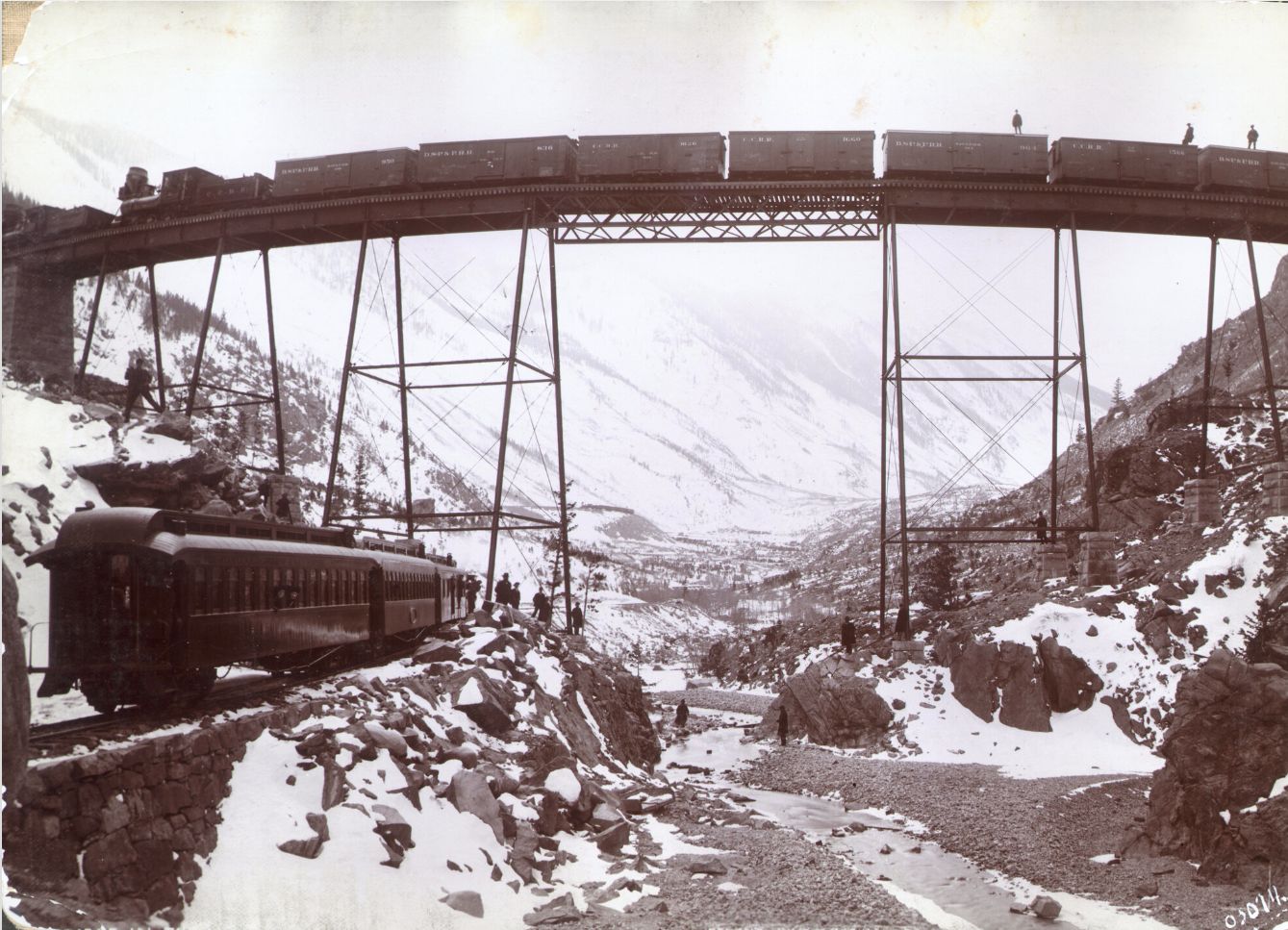
Auto travel started cutting into rail tourism in the early 1900s. The mines closed during World War II. By 1938, the Loop stopped operating entirely. The line was dismantled. And for a while that seemed like the end of it.
But in 1959, on the 100 year anniversary of the original gold discovery at Georgetown, plans started forming to bring it back. Land was acquired through the 1960s. The loop was reconstructed between 1969 and the early 1980s. The Devil's Gate High Bridge came back in 1984, exactly 100 years after the line originally opened. You can ride it today. Go to georgetownlooprr.com for schedules and tickets.
What saved Georgetown long term was the same thing people were writing about back in 1869. Tourism. Skiers passing through on the way to resorts were already making Georgetown a stop by the 1950s. In 1966, the Georgetown-Silver Plume National Historic District was designated as a National Historic Landmark. Today, over 200 nineteenth century structures are still standing in Georgetown. Over 200. The town is one of the best preserved examples of a Victorian era mining boom town anywhere in the West.
Population has climbed back above 1,000. And if you are thinking about what that means for real estate, Clear Creek County and Georgetown specifically have held interest from buyers who want mountain proximity without Summit County prices. Worth watching if that angle is on your radar. You can see what is available at symbiohomes.com.
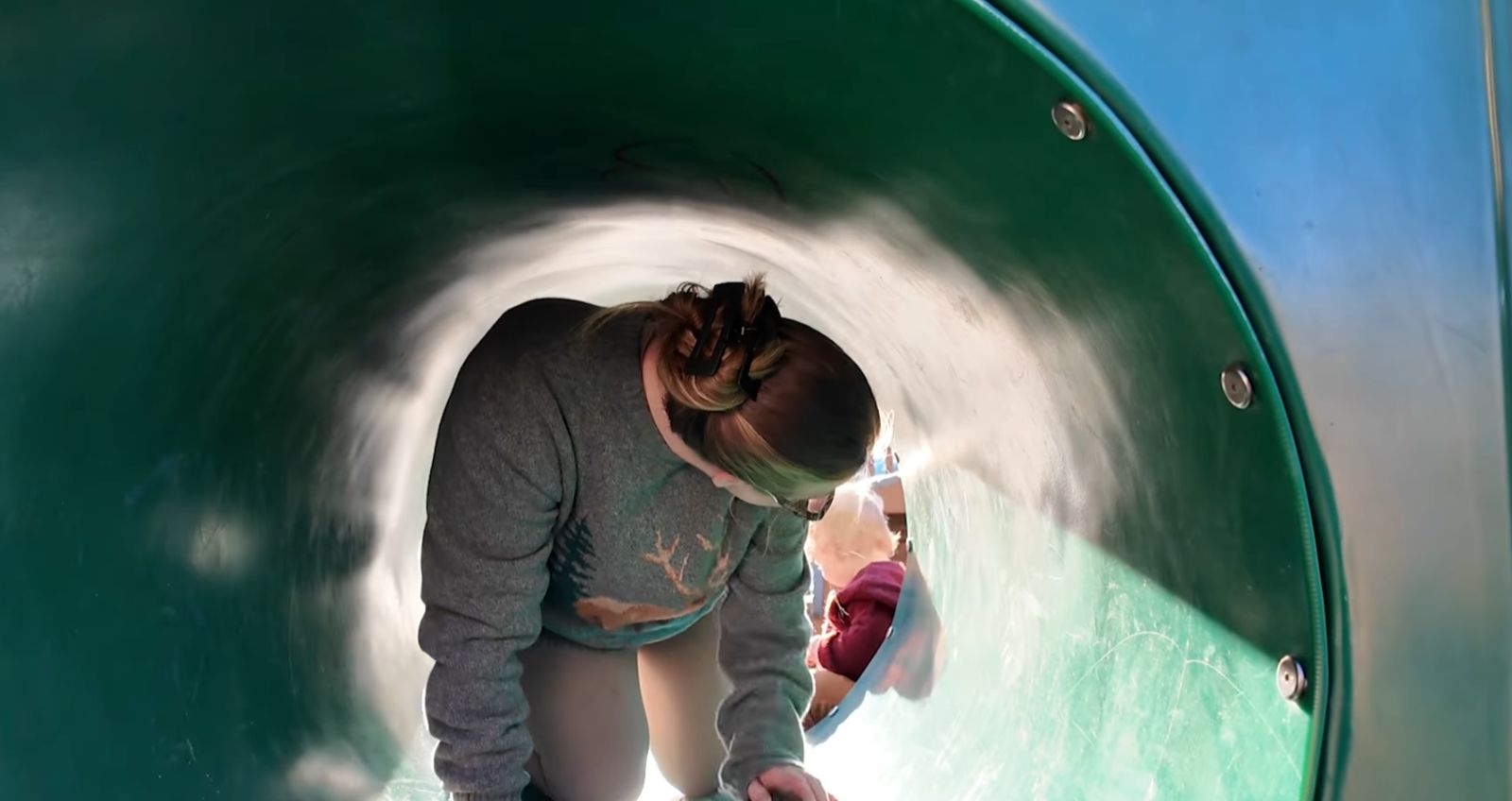
For us, Georgetown is always going to be the Christmas Market. Hayley and Bodhi on that park slide (and look, that park is genuinely excellent, do not skip it). Walking the main street with hot drinks. Stopping at 511 Rose for dinner, which is one of those meals where you do not really want to leave. And the Hamill House Museum and Hotel de Paris Museum are must-stops if you have not made time for them. History Colorado runs both and they are legitimately great.
It is a town that went from gold rush to silver boom to near ghost town and back again. From 10,000 people to 307 and then up to over 1,000. It has been written about by European travelers, celebrated with 8,000 person railroad parties, nearly abandoned, and then quietly turned itself into one of the most intact pieces of the 1800s you can walk through in Colorado.
Buckle up on your next drive up I-70. Exit 228. Georgetown is worth more than a pass-through.