 Revolutionizing · Modernizing · Simplifying
Revolutionizing · Modernizing · Simplifying
Revolutionizing · Modernizing · Simplifying
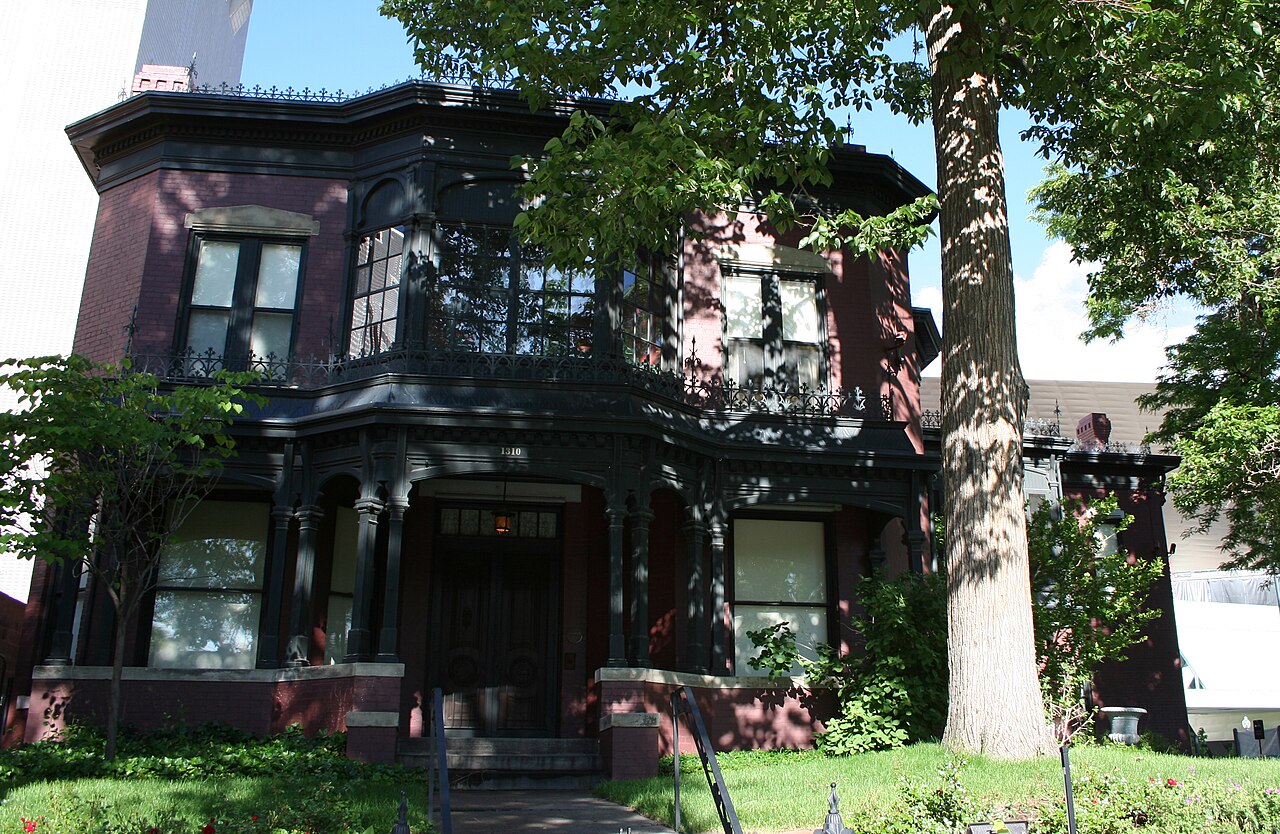
There is an empty wooden coffin sitting in a room at 1310 Bannock Street right now. Not a prop in the haunted-house sense. A real recreation of a Victorian wake, staged inside a mansion built in 1883, directly behind the Denver Art Museum.
Most people walk past this house and never clock it. It is the quiet one in the Golden Triangle, the Victorian with the good bones that you notice for half a second on your way to the museum. But every October it turns into one of the most genuinely eerie things happening in Denver, and almost nobody talks about it.
So let me tell you what is actually happening here.
It is called Victorian Death Experiences, and it is back for 2026 at the Center for Colorado Women's History. History Colorado announced the fall lineup in a press release dated September 17, and the program runs select dates from October 1 through October 31.
This is year four, for the record. It debuted and sold out, then grew in 2024 and 2025. That is a word-of-mouth thing. People go, people tell their friends, it books up.
On pricing and timing, here is what last year looked like. In 2025 it ran 6 to 7:15 p.m. on Thursdays and Fridays, with select Saturday afternoon slots at 1 and 3 p.m. It was adults only, and it cost
And new for 2026, they have added shadow box collaging, tarot reading sessions, and tintype-style portrait sessions. So it is not just a walk-through. You can sit for a portrait the way people did when photographing the dead was a normal part of grieving.
Here is the part people miss. This is not jump scares and fog machines.
Cat Jensen, the education coordinator at the Center, puts the emphasis on reverence around death rather than a haunted house. And once you are inside, that framing makes total sense. The whole thing is about the central role women played in death in the late 1800s and early 1900s. Preparing the bodies. Hosting the wakes. Carrying the mourning.
Because death was everywhere back then. Dangerous working conditions. Illness that we would shrug off today. Medical care that barely qualified. Accidents constantly. History Colorado is clear-eyed about that. Death was ever-present, and the labor of dealing with it fell on women, in the home, by hand.
Guests are encouraged to come in period mourning attire and prepared to attend that Victorian wake. So yes, you dress for it. You sit with the coffin. You participate.
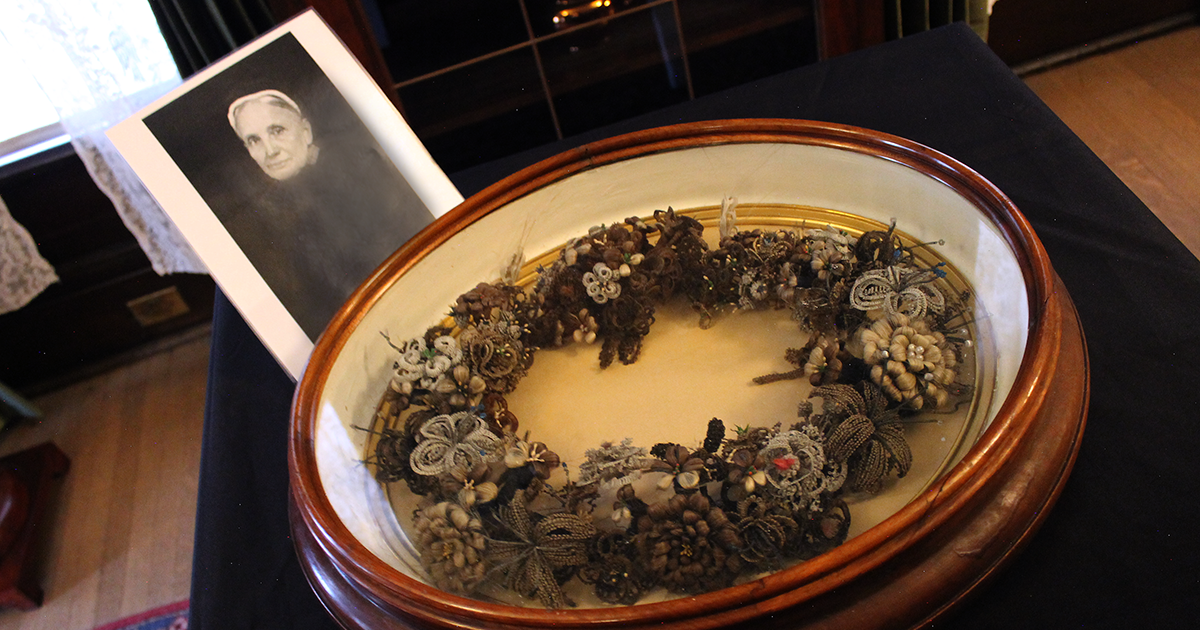
The objects on display are what get in your head.
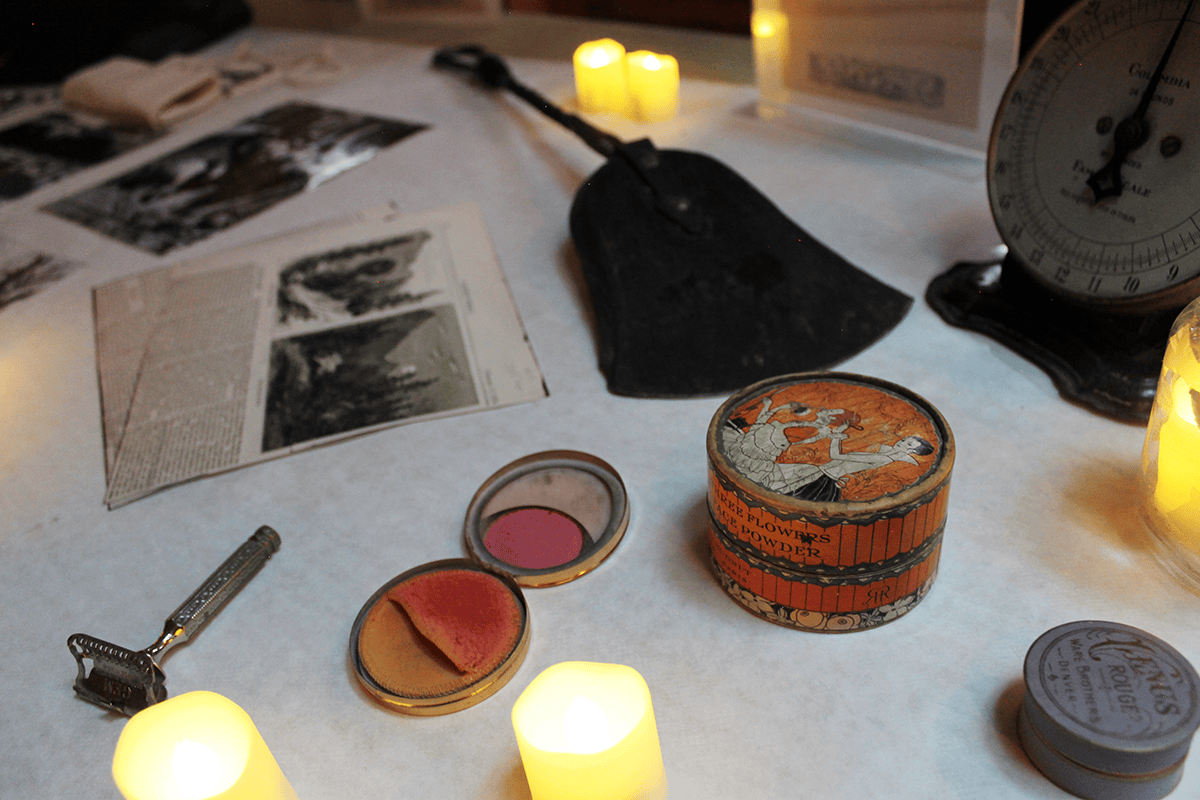
There is hair jewelry, made partly from a deceased loved one's actual hair. People wore their dead. Let that sit for a second. There are rooms decorated specifically for mourning. There is a black mourning wedding dress with a lace veil, which is exactly as unsettling as it sounds. And there are notebooks chronicling seances that Denver socialites hosted in their own parlors.
That is the thread I keep coming back to. These were real Denver families doing this. Not a Hollywood version of the Victorian era. The actual people who lived in this city.
The tour tells the stories of real Colorado women, including Esther Allspach, a domestic worker who lived in this very house with the Evans family in the late 19th century. Not a founder, not a socialite. A working woman whose life is usually the kind history forgets. That is the entire point of this place.
The mansion was built in 1883 for William and Elizabeth Byers. If the name Byers rings a bell, it should, that is the Rocky Mountain News family. Later it sold to the William Gray Evans family. It is on the National Register of Historic Places (NRHP #70000158) and it has been restored to the 1912 to 1924 period, so you are walking through rooms that look the way they did a century ago.
The Center for Colorado Women's History opened inside this house in March 2018, and it is the only physical center in Colorado dedicated to presenting women's stories. The only one. In a house behind the art museum that most locals could not pick out of a lineup.
Side note from the real estate side of my brain, because I cannot help it. A restored 1883 Victorian in the Golden Triangle, half a block from the Denver Art Museum, is a reminder of what this pocket of downtown used to be before the high-rises. These houses were the luxury listings of their day. Now most of them are long gone. This one survived, and it is open to the public.
If you want cheap frights, go somewhere else. If you want something that is actually about Denver, about the women who built it, and about how this city handled death when death was a weekly visitor, this is the one.
Dress in your mourning best. Sit with the coffin. Look at the hair jewelry. And let the 1883 house do the rest.
Dates run all October at 1310 Bannock Street. Adults only.