 Revolutionizing · Modernizing · Simplifying
Picture a town of fewer than 150 people at 7,900 feet, sitting right at the foot of the Sangre de Cristo Range. Now put a 42-foot Tibetan stupa in it. And a bright-yellow spiral tower modeled on the temples of ancient Mesopotamia. And a 26-mile pilgrimage route that links fifteen different spiritual centers on foot.
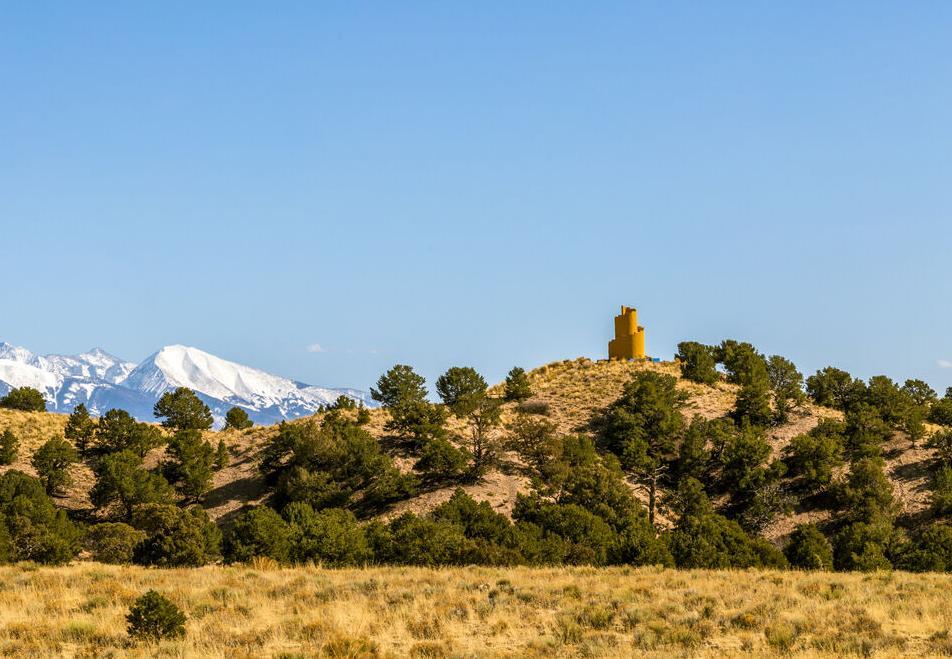
That is Crestone. And on November 2, 2026, History Colorado published a blog called "Tashi Gomang Stupa: Shangri-La in the San Luis," calling this place a destination unlike anywhere else in the state. They are not wrong.
Here is the part most people miss. Crestone was never supposed to be any of this.
George Adams platted Crestone in 1880 as a service hub for gold and silver miners. The town incorporated in 1902. Then the ore gave out, the way it always does in Colorado, and Crestone did what a hundred other mountain towns did. It started dying.
What saved it was not a new vein. It was a decision made in the 1970s.
A couple named Maurice and Hanne Strong bought a large tract of the old Baca land out there. Then in 1988 they started something called the Manitou Foundation, and the whole idea was simple and kind of wild. They gave parcels of that land, for free or close to it, to religious groups from around the world. Buddhists. Hindus. Christians. Traditions you have probably never heard of.
So instead of condos and a ski lift, Crestone got temples. More than two dozen of them now, spread across the town and the broader Baca Grande community, which holds maybe a thousand people total. Monasteries, retreat sites, stupas, the works.
And here is the thing that actually matters if you live on the Front Range. Almost all of it is free and open to you.
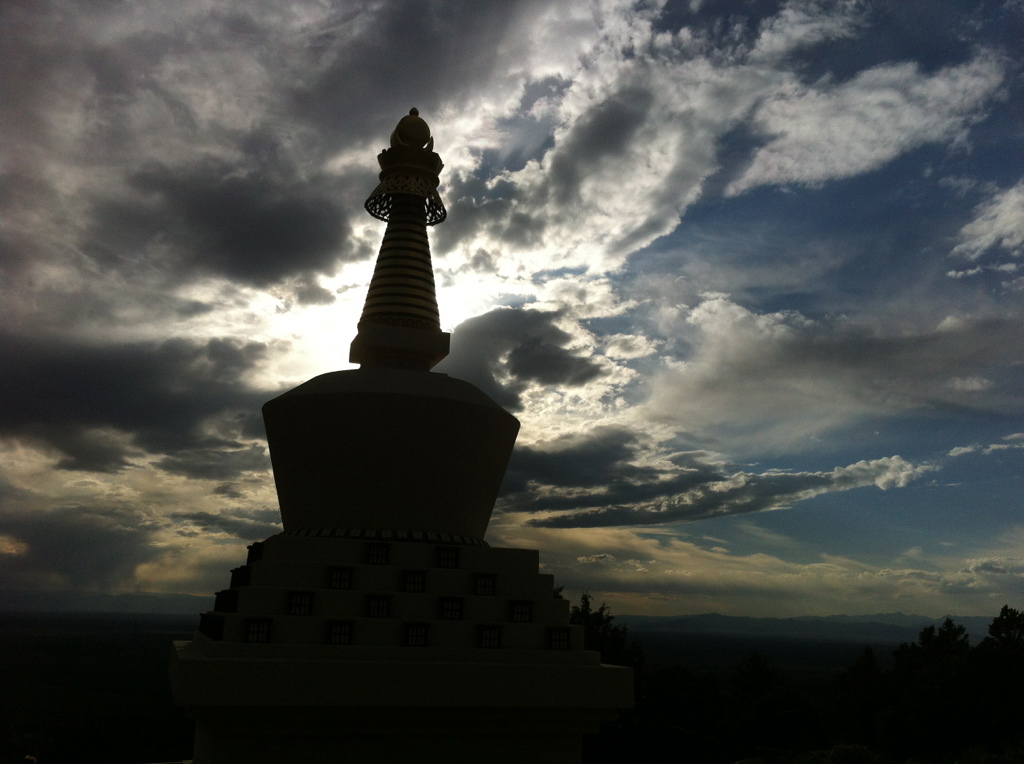
The Tashi Gomang Stupa is the big one. It rises 42 feet, and volunteers built it by hand over about seven years before it was consecrated in 1996. Inside it holds 100,000 miniature tsa-tsas, sacred relics, and juniper used for purification. It is dedicated to His Holiness the 16th Gyalwa Karmapa.
It sits on 200 acres managed by the Karma Thegsum Tashi Gomang, and you can walk up to it any day, sunrise to sunset, no charge, no appointment. That is the detail History Colorado keeps coming back to. You do not have to be Buddhist. You do not have to be anything. You just have to make the drive.
There is a second stupa too, the Jangchub Chorten, which honors Tulku Urgyen Rinpoche and holds 20,000 miniature stupas along with sacred texts and relics. Two of these things. In a town smaller than most apartment complexes in Denver.
This one is my favorite, honestly.
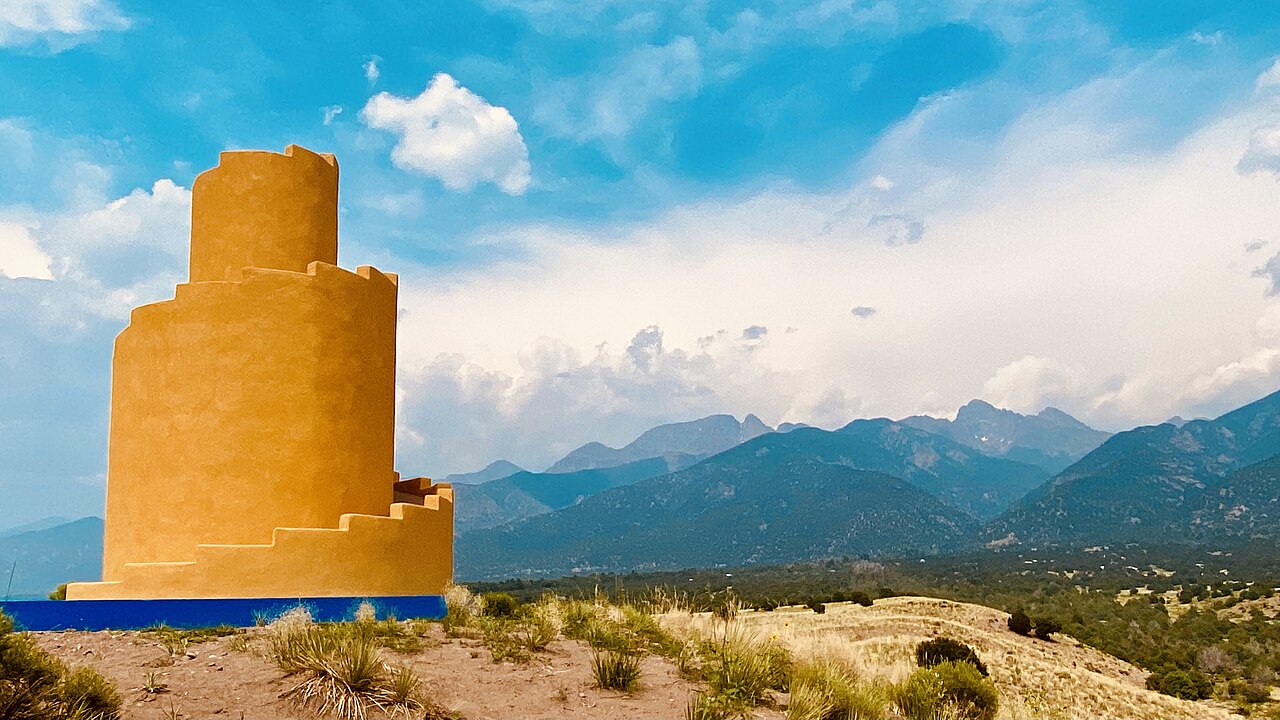
Picture a 30-foot concrete-block tower, bright yellow, spiraling up like something out of ancient Babylon, visible for miles across the valley floor. That is the Crestone Ziggurat, and it is described as the only spiritual structure of its kind in the entire United States.
So who builds a Mesopotamian temple in southern Colorado? A Syrian-American businessman named Najeeb Halaby, who commissioned it in 1978 as a private place for prayer. And Halaby was not some random guy. He was the father of Queen Noor of Jordan. His daughter married a king, and he built a ziggurat at the end of a dirt road called Cordial Way.
Here is the kicker. In 2001, the same Karma Thegsum Tashi Gomang that cares for the big stupa bought the property the ziggurat sits on. The price? Ten dollars. Ten. They have looked after it ever since, and like everything else out there, it is open sunrise to sunset.
If you want to see these on foot, there is the Camino de Crestone, a 26-mile interfaith pilgrimage that connects fifteen of the spiritual centers. You walk from one tradition to the next, all day, across the valley. I do not know anywhere else in the country where you can do that.
And Crestone is not only temples. It doubles as a basecamp for some of the hardest 14ers in the state. Crestone Peak sits at 14,296 feet, and Crestone Needle is right next to it, and climbers who know their stuff will tell you these are no joke. So you can summit a brutal peak in the morning and stand quietly at a stupa by afternoon. That combination is pretty rare.
Now, the real estate angle, because people always ask. A thousand residents across the whole Baca Grande, land that got carved up and gifted away starting in the 1970s, a town that chose temples over development. That history shows up in what the place feels like today. It stayed small on purpose. Hayley and I have talked about how few spots in Colorado actually did that.
Crestone is about four hours from Denver, down into the San Luis Valley, past the dunes. It is not on the way to anything. You go because you mean to.
Make the drive. The gates are open, and they do not charge you a dime.