 Revolutionizing · Modernizing · Simplifying
Revolutionizing · Modernizing · Simplifying
Revolutionizing · Modernizing · Simplifying
Six hundred beavers. That is what the Kawuneeche Valley used to hold, back when it was a damp, buzzing wetland eight miles long and half a mile wide. Today you drive past it on the west side of Rocky Mountain National Park and it looks like a grassy prairie. Pretty in a lonely way. But mostly it looks like something that died and nobody noticed.
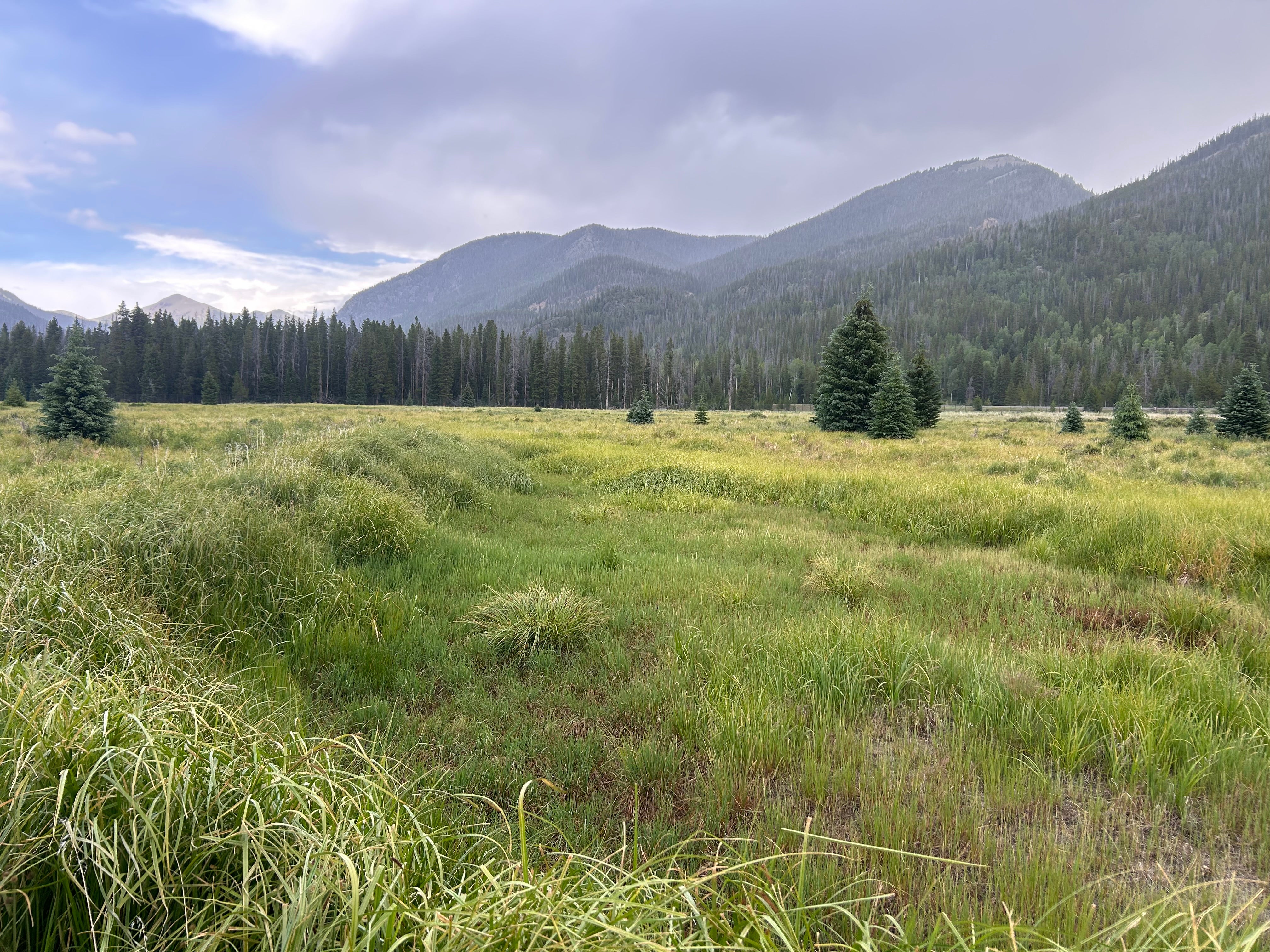
Here is the part people miss. This valley sits right below the Colorado River's headwaters at La Poudre Pass Lake. That water leaves here, runs through seven states, and eventually reaches around 40 million people. So when the top of the system collapses, that is not a Grand County problem. That is a Phoenix and Los Angeles and Las Vegas problem too.
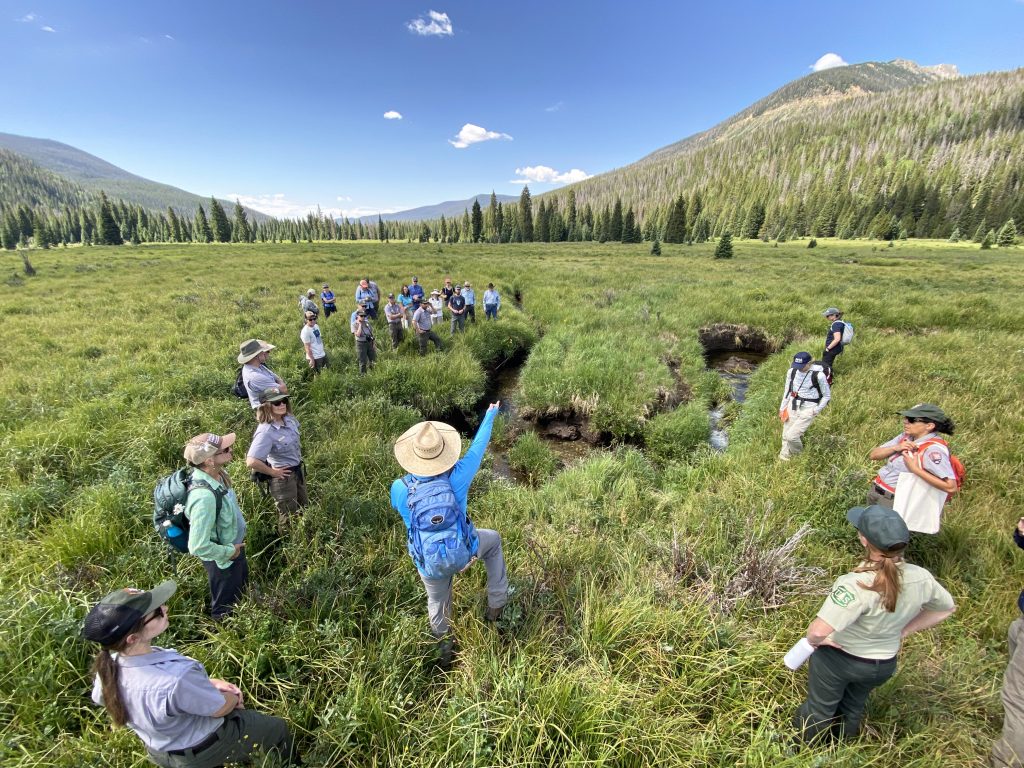
The short version. Willows.
Willows are the keystone species for a beaver-willow wetland. Beavers need them, and the whole soggy, biodiverse system runs on them. Historic photos from the 1880s all the way to 2000 show the Colorado River and its little tributaries up here buried under a dense canopy of tall willows. Thick. Green. Alive.
Then it thinned out. Fast.
Isabel de Silva Shewell is the lead park ecologist on the project, and she coauthored a paper in the May 2025 issue of Conservation Biology on exactly this. The finding was blunt. The vegetation structure changed dramatically since the early 2000s. Not over a thousand years. Over about two decades.
A big driver? Moose. And this is the part that stings a little, because we did it. Moose were reintroduced to the west side of Rocky Mountain National Park in 1978 and 1979. They took to it. Moose and elk both browse willow, and up here they browsed it down past the point where it could recover. No willows, no beavers. No beavers, no dams. No dams, and the water stops spreading out and soaking in. It just cuts a channel and leaves. The whole thing unravels from the plants up.
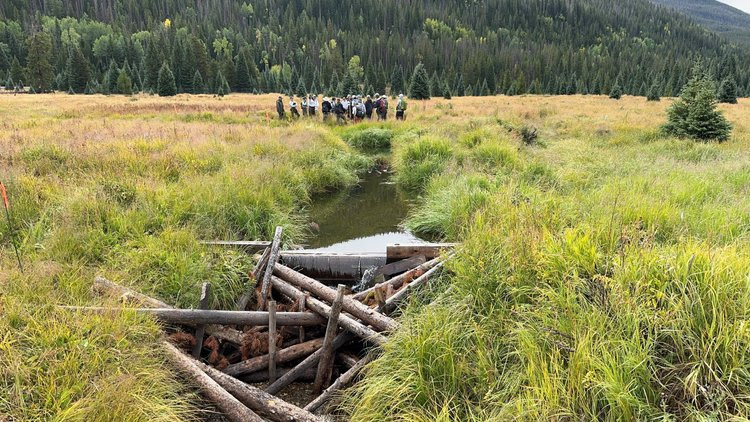
So right off the main valley road there is a 30-acre site called Beaver Creek. It is wrapped in an exclosure fence, and this fence is tall. Tall enough that a moose or an elk cannot jump it, which is the entire point. Keep the big browsers out, give the willows a fighting chance.
And here is the part I love. There are gates. The public is welcome to walk in. You can stand inside a live restoration experiment, in a national park, and look at the work with your own eyes. That almost never happens.
Beaver Creek got picked first because it was the most accessible of the pilot spots. Easy to run educational tours, easy to let people in. Smart move, if you ask me. You protect what you can see.
The timeline goes like this. Work started in 2023 with treating the invasive plants. In 2024, crews put up that exclosure fencing and built about 30 beaver-mimicry structures. Which is a fancy way of saying fake beaver dams. Humans building what the beavers used to build, hoping the water behaves the way it did when 600 rodents ran the place.
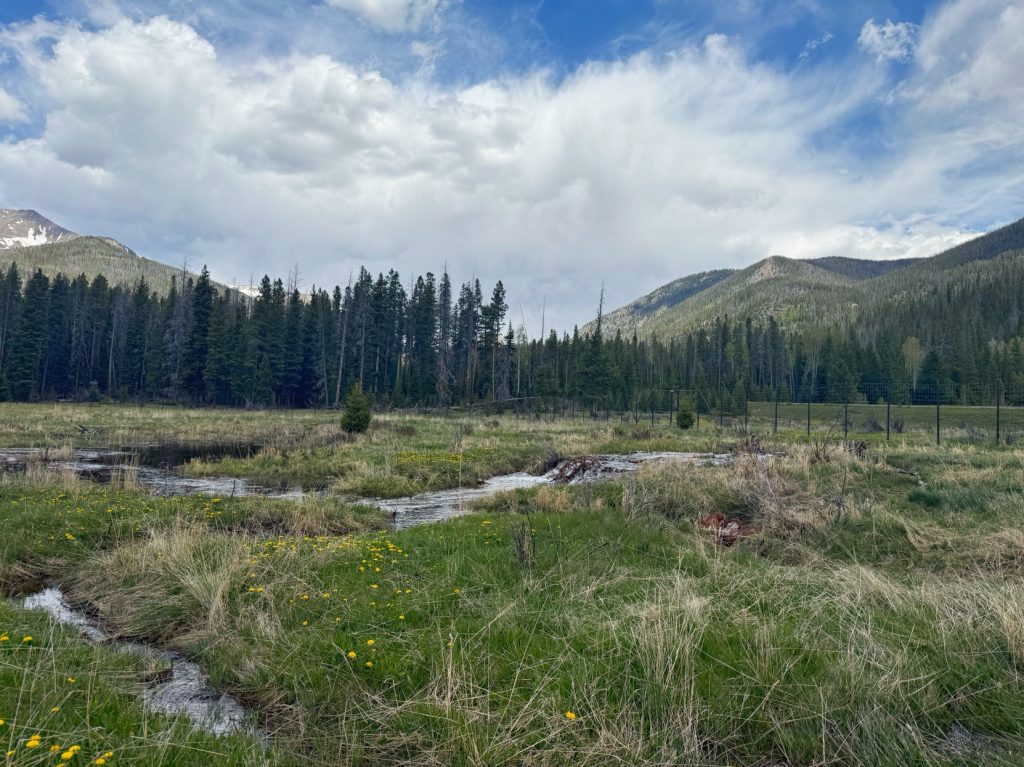
Early sign, yes.
In 2025, snowmelt runoff came in hard and Beaver Creek jumped its banks. It flooded about two and a half football fields' worth of meadow around it. Now, normally "the creek flooded" sounds like a problem. Here it is the whole goal. That is water spreading out, sinking in, staying instead of racing downstream. That is the sponge coming back. Exactly what a real beaver dam would do.
One good runoff season is not a victory. But it is the system twitching back to life, and that is more than this valley has done in a long time.
This is not one agency freelancing. Back in 2020 they formed the Kawuneeche Valley Restoration Collaborative, and the member list is basically everybody with a stake. Northern Water, Rocky Mountain National Park, Colorado State University, Grand County, the Rocky Mountain Conservancy, the town of Grand Lake, the Arapaho-Roosevelt National Forest, and The Nature Conservancy.
So far they have raised over $4 million to build this first project and plan for three more sites in the park. Beaver Creek is the pilot. The proof of concept.
Honestly the west side is the move here anyway. The Estes Park side of Rocky Mountain National Park is a zoo half the year. The Grand Lake side is quieter, the Kawuneeche runs about 15 miles down to where the Colorado River meets Shadow Mountain Reservoir below town, and you can do the whole thing without fighting a crowd for a parking spot.
Grand Lake itself is worth the stop. Little boardwalk town, real lake, the kind of place Hayley and I always end up staying longer than we planned. And the real estate out here is its own conversation, because gateway-town Grand County property lives and dies on this exact watershed. Water is the whole ballgame in Colorado. Always has been.
But start with the fence. Walk through the gate. Stand in the middle of a science project that is quietly trying to keep the Colorado River alive from the top down. Then decide for yourself whether the beavers knew something we forgot.