 Revolutionizing · Modernizing · Simplifying
Revolutionizing · Modernizing · Simplifying
Revolutionizing · Modernizing · Simplifying
Arsenic. Lead. Cadmium. That is what used to be in the ground where kids are now riding a pump track.
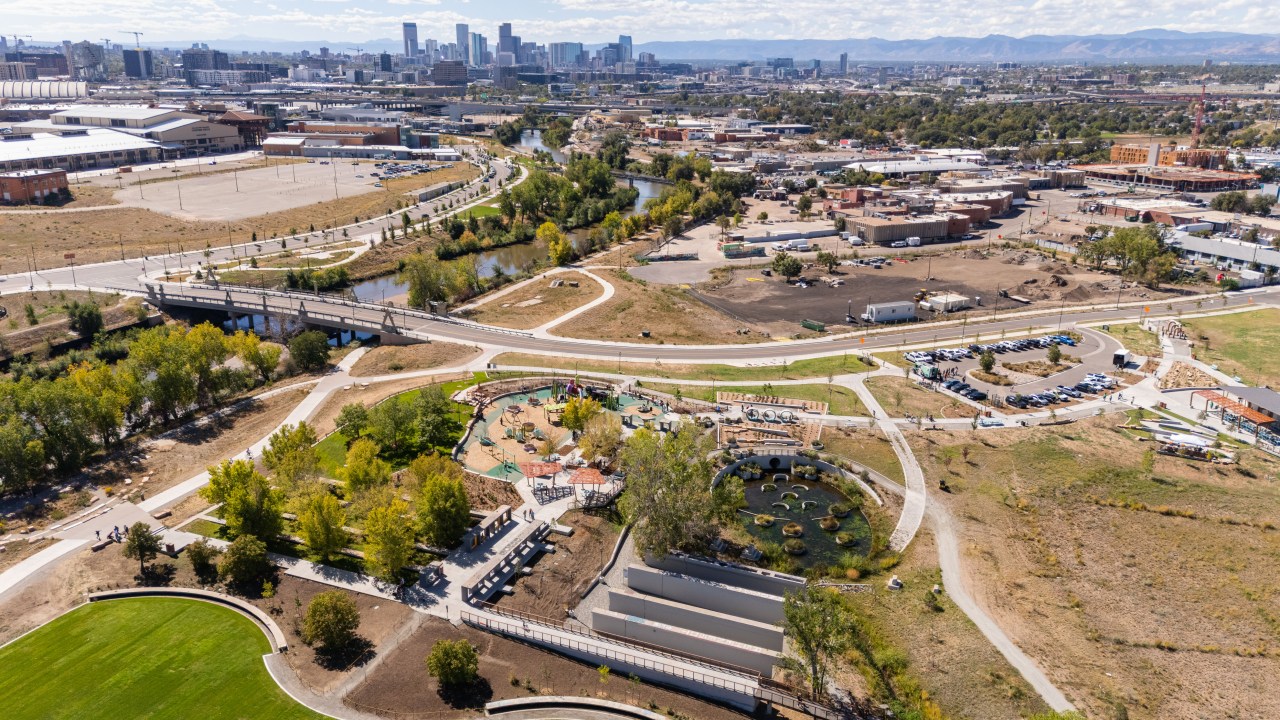
That is Heron Pond, in Globeville, and the soil under it carried decades of industrial poison from the smelters and dumping that built this part of Denver. Now it is the centerpiece of the largest natural area in the entire Denver Parks system. Eighty acres along the South Platte River. Opened to the public with a grand-opening party on Saturday, September 26, 2026.
Most people do not realize how long this took. Planning started back in 2017 as a community-driven effort. Designs got approved in 2021. So by the time the ribbon came off, you are looking at more than a decade of work and tens of millions of dollars. The Denver Gazette put the cost at over $39 million. CBS Colorado reported $44 million in funding. Either way, this is not a touch-up. This is a neighborhood getting something it was owed for a long time.
Here is the part people miss about Globeville. It grew up around smelters tied to Colorado's mineral boom starting in the 1870s. It was its own town, its own municipality, until it joined Denver in 1903. For more than a century it has been one of the most industrialized, overlooked pockets in the city. Train yards, highways, meatpacking, waste.
And this new park sits right on top of that history, literally. The site reused former industrial land, including the old Northside Wastewater Treatment Facility. Heron Pond itself was contaminated with arsenic, lead and cadmium from all those years of industry, and parts of it fall inside the Asarco Globe Cleanup Site, which has now been remediated.
So think about that. They took a brownfield, cleaned it, and handed it back as open space. Cinceré Eades, the Assistant Director of Urban Ecology and Trails, called it exactly what it is. Environmental justice. Delivering a cleaned-up, usable place to a neighborhood that got stuck with the pollution in the first place.
They did not name it after a donor or a politician. They named it Carpio-Sanguinette Park, after two community activists, Carpio and Sanguinette, who fought to clean up the meatpacking plants and stop the waste dumping near the river. So the name itself honors the people who did the fighting. That is rare, and if you ask me, it is the right call.
Mayor Mike Johnston said the park honors the area's history and "tells the stories of the families that have built this place," and he called it unlike any park Denver has built. For once that is not just ribbon-cutting talk.
This is not just grass and a bench. The project pulls together Heron Pond, Heller Open Space, the former Northside Park, and adjoining city properties across Globeville and Elyria/Swansea, all in Council District 9. One connected 80-acre stretch.
Inside it you get:
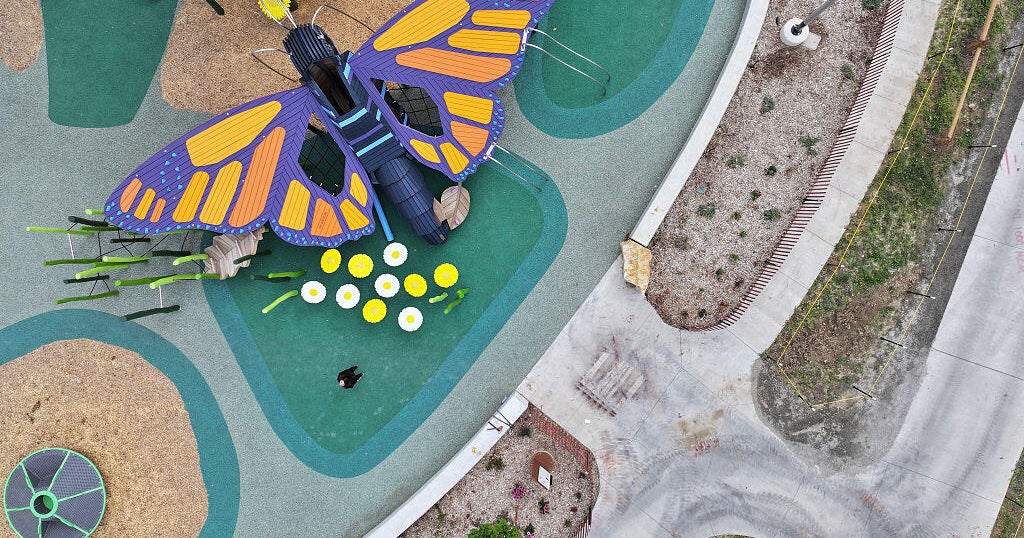
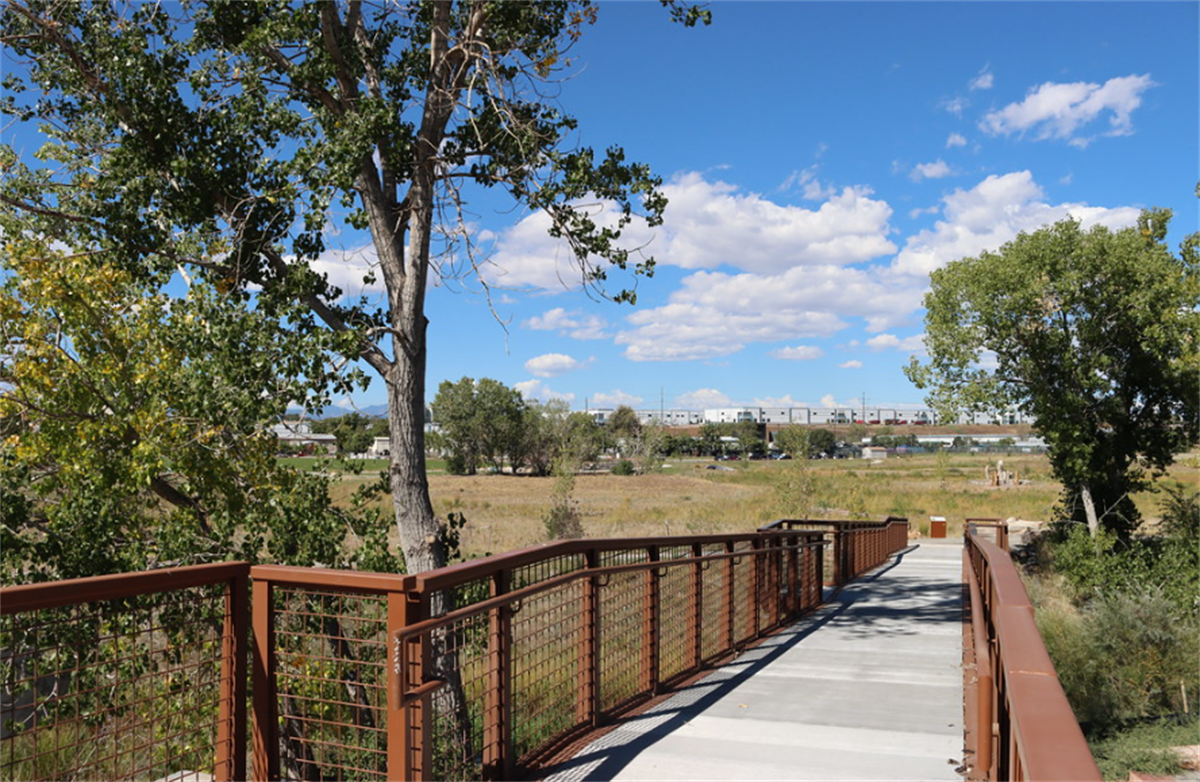
- A nature-inspired playground - A pump track (this is the one that got me, kids on bikes where the arsenic used to be) - A pavilion plaza and an amphitheater - Trails throughout - A nature overlook tower - A picnic shelter with a restroom - A graffiti wall, which is a smart nod to the neighborhood instead of pretending it does not exist
And here is the piece nobody puts on a brochure but matters the most. There is a new regional stormwater basin built into the park. It treats more than 700 acres of runoff before that water reaches the South Platte. So the park is not just pretty, it is cleaning the river on its way downstream. That is the kind of infrastructure that quietly pays off for decades.
None of this happened on one agency's checkbook either. Funding came from the DOTI Green Infrastructure Team, Park Legacy Funds, Great Outdoors Colorado, the Colorado Department of Public Health and Environment, Colorado Parks and Wildlife, the Colorado Health Foundation, and Adams County Open Space. It took that many partners to pull it off.
Globeville has sat in this weird spot for years. Close to downtown, close to the river, cut up by I-25 and I-70 and rail lines, and priced way under neighborhoods that are frankly less convenient. The thing that always held it back was exactly what this park just addressed. The ground, the pollution, the sense that nobody was investing here.
When the biggest natural area in the city lands on your block, that changes the conversation. Parks move neighborhoods. We have watched it happen all over the Front Range. A place that was defined by what was dumped there is now defined by 80 acres of open space with a river running through it. That is a real shift, and it is worth your attention because this is the kind of story that shows up in home values two and three years later, not overnight.
Hayley and I have driven through Globeville plenty of times on the way to somewhere else. The honest truth is most of Denver has treated it that way. A pass-through. This is the first time in a long time there is a real reason to stop, park the car, and spend an afternoon.
Go stand on the overlook tower and look back at the smelter history underneath you. That is a Radically Colorado kind of view.