 Revolutionizing · Modernizing · Simplifying
Revolutionizing · Modernizing · Simplifying
Revolutionizing · Modernizing · Simplifying
There's a moment about thirty minutes off I-70, right when you turn toward Moab, when the world shifts. Red sandstone canyons rise up on every side. The road narrows. And you realize you're not just driving into a town — you're driving into a geological phenomenon. The Colorado River built these walls over millions of years, carved out the space, and left just enough room in the middle for a community that refuses to be anything like anywhere else.
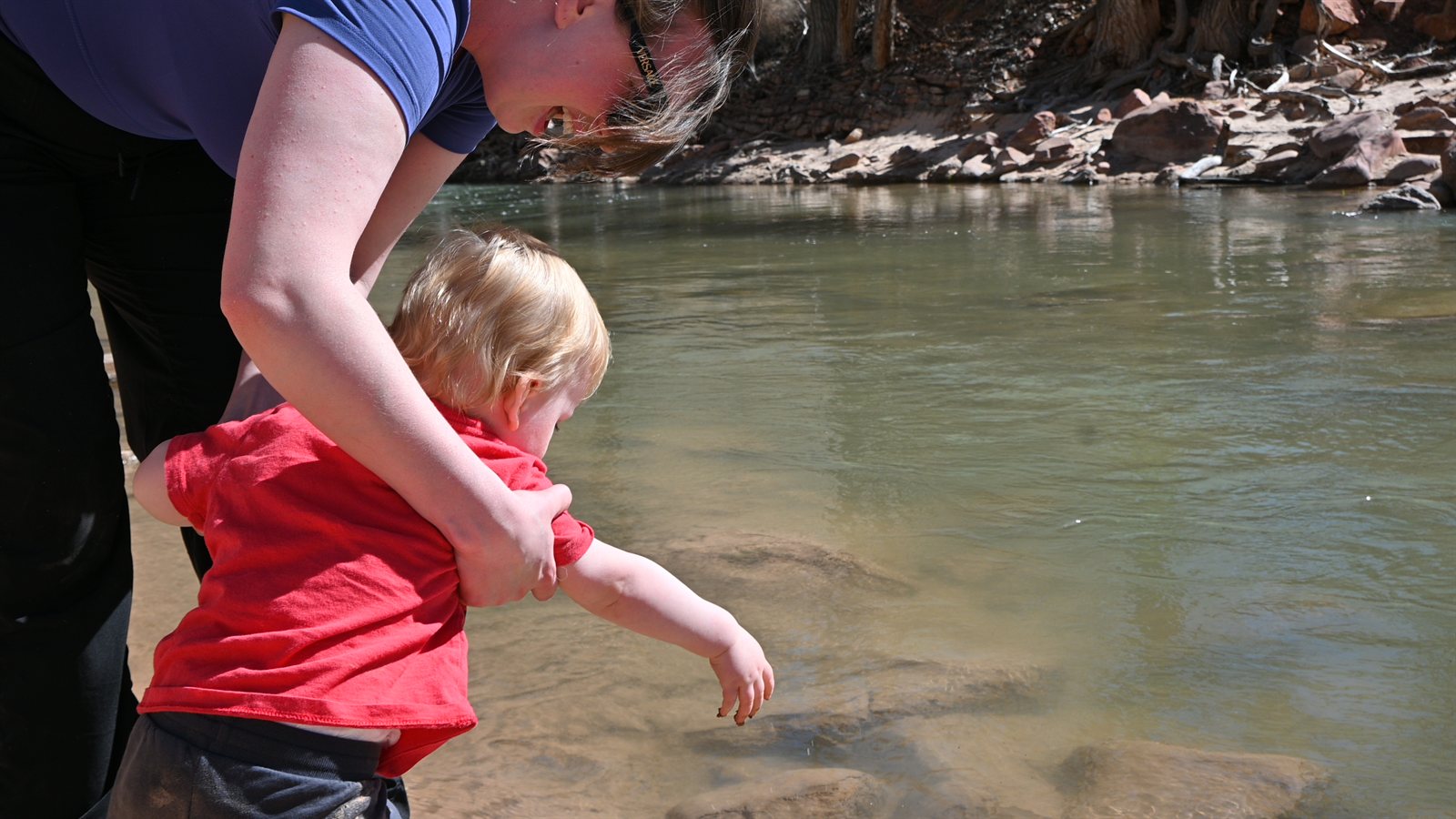
We're Coloradans through and through, so leaving the state always stings a little. But this trip? It barely felt like leaving. We picked up the Colorado River right where the Eagle River meets it in Cerro and rode those canyons all the way to Utah. And now, having spent time in Moab for the first time, we're completely and totally in love. The kind of love that makes you start planning your next visit before you've even left.
Here's everything we did, where we stayed, and why this place has us questioning our entire relationship with the outdoor West.
First stop you'll notice on that drive? Glenwood Canyon. The Colorado River has been at work for millions of years carving this thing out, and it shows. We made a quick stop in Glenwood Springs before pushing on into Utah, following the river like a thread through the landscape.
The drive into Moab is unlike going into any other town. Moab is literally surrounded by canyon. Every direction you look, there are red rock walls rising up, the Colorado River doing what it's always done, and this small community tucked into the middle of it all like it was meant to be discovered.
This place is interesting because it didn't boom the way Colorado towns did — no late 1800s mining rush or railroad story. Moab came up in the age of the automobile, and you can see it in the mid-century architecture all over town. The old drive-up motels, the retro signage — it all has this very specific era to it.
Moab's history goes something like this: The Ute people called this area home. Then the Mormons arrived and pushed them out — classic story of American expansionism, if we're being honest. By the late 1800s, Moab became a ranching hub, feeding cattle east to market. The quintessential American cowboy era.
Then came the Cold War. Uranium.
Moab's population exploded from 1,200 to 5,000 almost overnight. There were more millionaires per capita in Moab in the 1950s than anywhere else in the United States — because uranium was big money. The processing mill sat right along the Colorado River. A lot of people who worked those mills paid for that prosperity with their health; radiation poisoning was a real and tragic part of that chapter.
When uranium manufacturing shut down in 1984, the town was left scrambling. But reimagining yourself isn't too hard when you've got Arches and Canyonlands right in your backyard. The national parks were established in the 1960s, and since the 80s, Moab has been reinventing itself as one of the world's great adventure destinations. They're still cleaning up the uranium contamination along the river, but the town itself has fully transformed.
Today? It's the off-road capital of the world. Thousands and thousands of miles of 4x4 trails, hiking, mountain biking, river running — and one of the coolest little downtowns you'll find anywhere near a national park.
### Homewood Suites by Hilton Moab
For our first night — we were passing through on our way to Zion and a Vegas wedding — we grabbed a room at the Homewood Suites. One block off Main Street, dog friendly, balconies, and a perfect location to walk everywhere. We were only in town briefly that round, but it was exactly what we needed: central, comfortable, and affordable enough that we didn't feel guilty about the short stay.
### Red Cliffs Lodge
This is where Moab really got us.
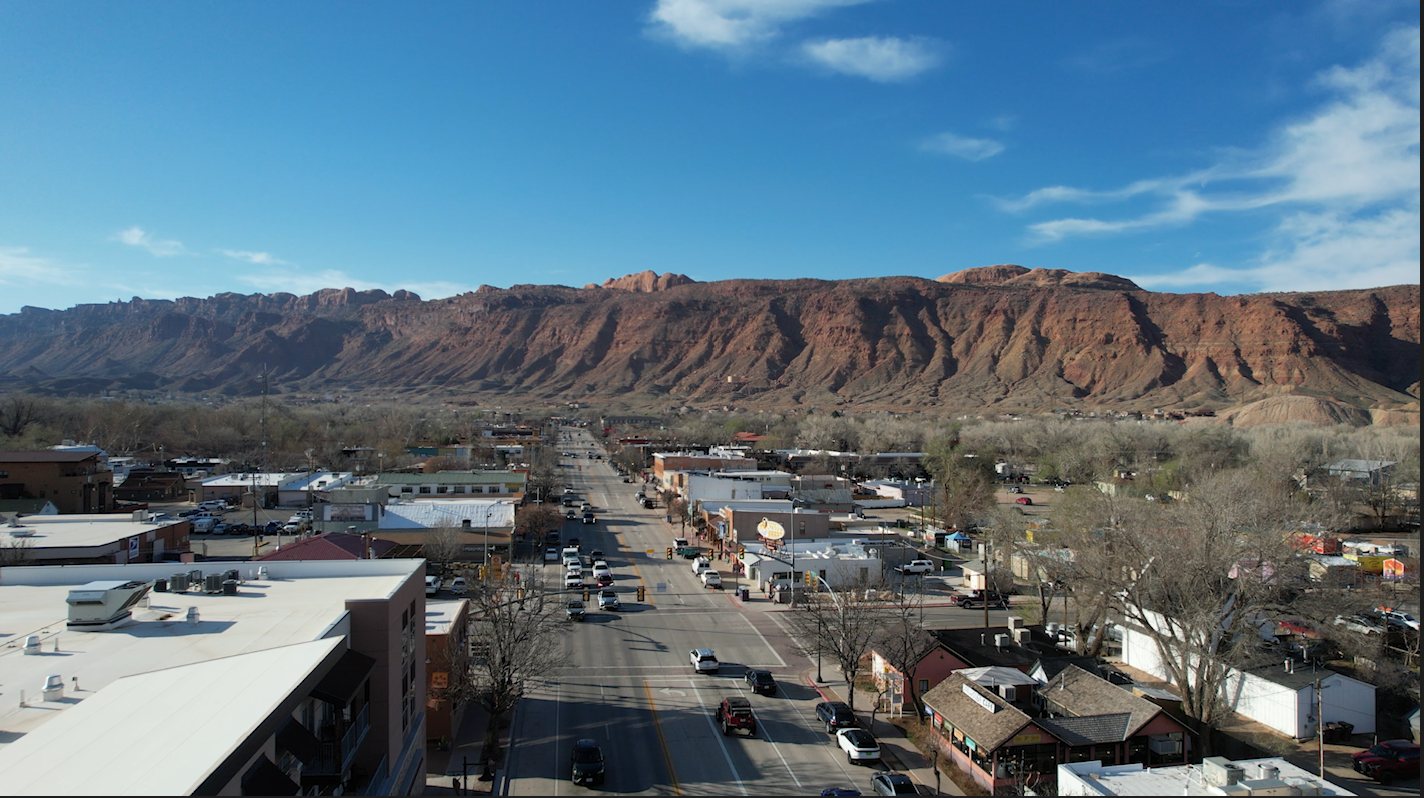
On our way back from Vegas, we drove straight into a canyon and landed here. After 24 hours in Las Vegas — which, we'll just say, is not our scene (like, at all — we're outdoor people) — pulling up to Red Cliffs Lodge felt like a reset for the soul.
The story behind this place is genuinely inspiring. In the 1980s when Moab was deteriorating after uranium died, a young entrepreneur named Colin Fryer showed up, fell in love with the land, bought the old Red Cliffs Ranch, and turned it into a resort. He designed the lodge himself, hands-on, and had an architect draw it up. He's since built another lodge in Zion and more properties in Moab — and honestly, Colin, if you're reading this, you're the kind of entrepreneur that gives us fuel.
The property sits right on the Colorado River with red rock canyon walls rising up on all sides. There's an irrigation creek that runs through and meets the river. There are horses. The views from every direction are mountains and canyon. We let the dogs play in the Colorado River and just stood there shaking our heads.
Vegas versus this? There is no comparison. Manmade beauty doesn't hold a candle to what geological forces have built here.
Moab's main drag has a great energy to it. It's walkable, there are local shops, and the food scene is better than you'd expect for a small Utah town.
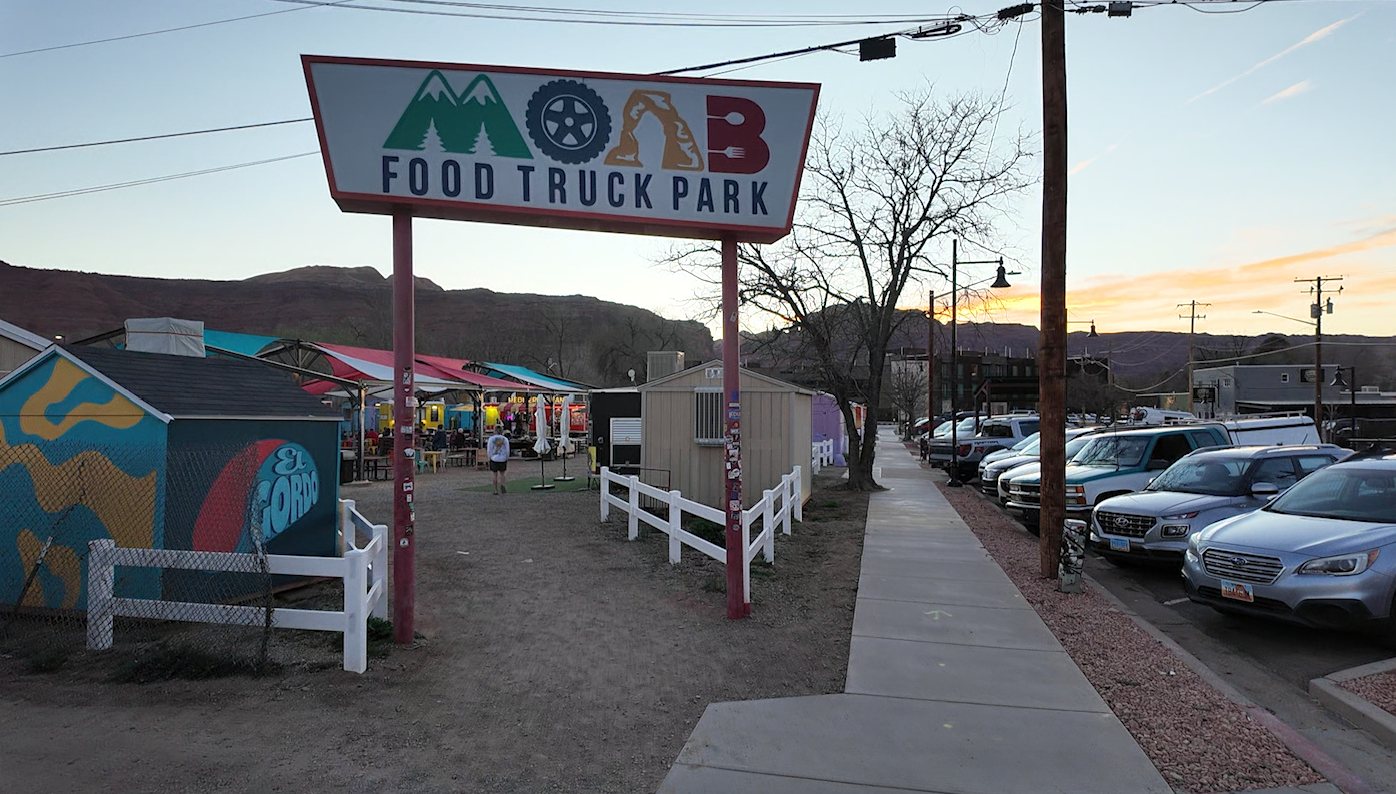
We hit Mediterranean food our first night and then wandered over to grab some peach cobbler gelato from one of the local food trucks nearby. The food truck setup in Moab is awesome — you could tell these were local entrepreneurs, not chains, and the variety was real. I'd love to see more Colorado towns do something like this.
We also made a stop at Gearheads Outdoor Store — a giant outdoor shop with great prices and great service. Turns out when you're on a long road trip, certain pairs of shoes make their presence very known in an enclosed vehicle. We walked out with two new pairs of hiking shoes for around
Moab is home to two national parks: Arches and Canyonlands. We made it to Arches on this trip — Canyonlands is calling us back.
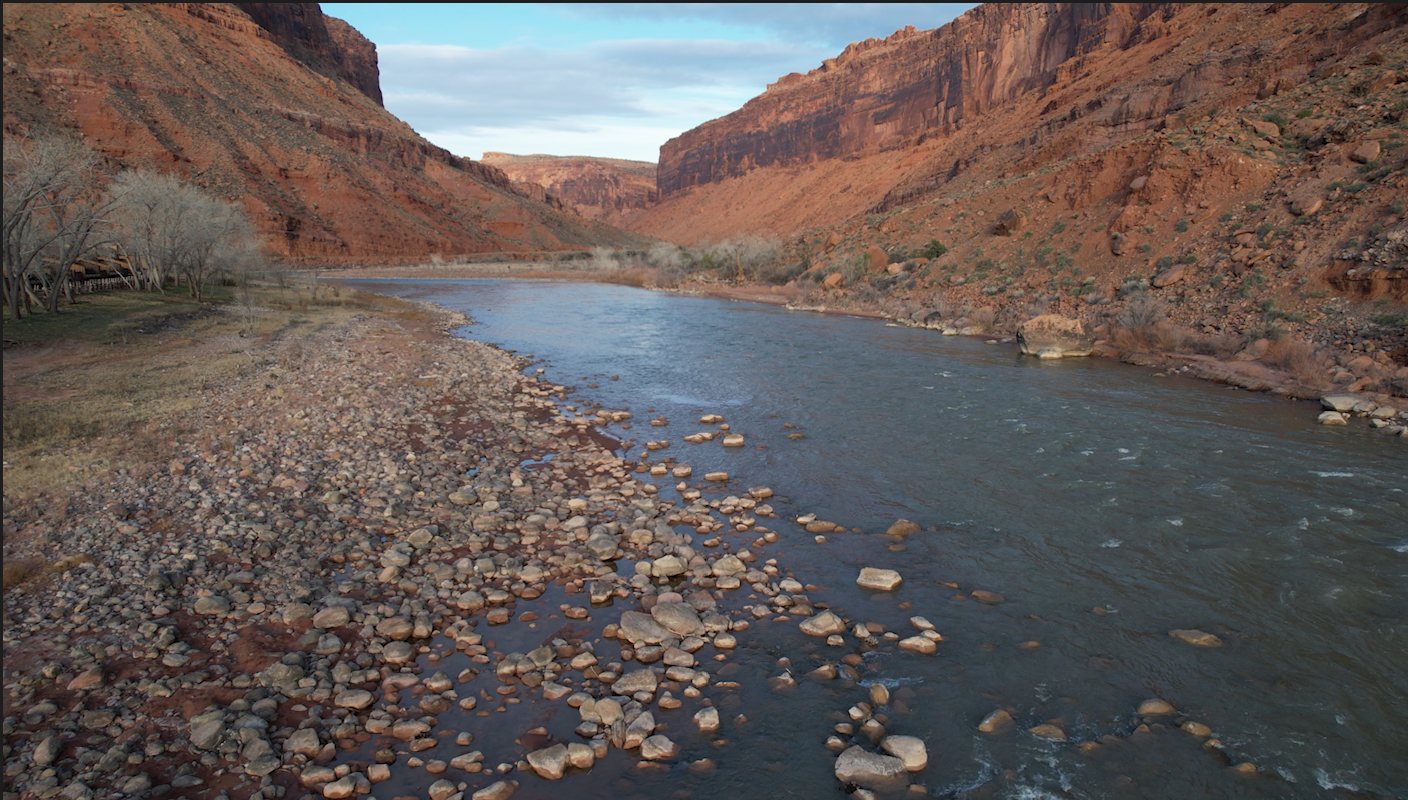
Arches was established in the 1960s, one of America's later national parks — late to the scene, but came with all the style. It's an alien planet. Every single direction you look. Red rock formations that took millions of years to become what they are, and your brain just can't fully process it.
A few notes from our visit in March:
No timed entry (unlike Rocky Mountain National Park) — but that's reportedly changing as crowds grow, so check recreation.gov before you go.
Delicate Arch and the popular spots were busy even in March. If you're going during peak season, plan accordingly.
Skyline Arch Trail — this is the move if you want to escape the crowds and still get stunning views. We had it almost to ourselves.
Here's the trick with Moab: the beauty doesn't stop at the national park boundary. You've got national forest, BLM ground, and seemingly no matter where you go in this area, it's just beautiful. That's the secret. Skip the crowded spots sometimes and just wander. You'll find something that takes your breath away.
We could spend a lifetime here and not even scratch the surface of what Moab offers. The off-roading alone — which is genuinely the crème de la crème of what this place does — could take years to fully explore. Add the hiking, the river, the history, the food, and the sheer visual spectacle of it all?
Moab makes you question your position in the world. Standing in that canyon, watching the Colorado River do what it's been doing for millennia, you feel the pull toward something simpler. More rooted. It's geological forces carving something so insanely beautiful that it's hard to process as real.
You can't come to this town and not want to come back. That's just the truth.
We were passing through. We came back. And we're already planning the next one.
Like this kind of adventure? Make sure to like, subscribe, and do all the things for more radically Colorado content — even when we wander just across the border.
---
Arches National Park - National Park Service https://www.nps.gov/arch/index.htm
Canyonlands National Park - National Park Service https://www.nps.gov/cany/index.htm
Recreation.gov - National Park Reservations & Timed Entry https://www.recreation.gov
Red Cliffs Lodge https://www.redcliffslodge.com
Homewood Suites by Hilton Moab https://www.hilton.com/en/hotels/cnyodhw-homewood-suites-moab/
Moab History & Uranium Legacy - National Park Service https://www.nps.gov/articles/moab-uranium-mill.htm
Discover Moab - Official Tourism Site https://www.discovermoab.com