 Revolutionizing · Modernizing · Simplifying
Revolutionizing · Modernizing · Simplifying
Revolutionizing · Modernizing · Simplifying

Last week, 1,898 homes dropped their asking price in the Denver metro area. In that same seven-day stretch, only 1,473 homes actually closed. More price cuts than sales. Let that sink in for a moment, because that single data point tells you everything you need to know about where Denver's housing market stands right now.
And it gets worse. According to the S&P CoreLogic Case-Shiller Index, Denver home values dropped 2.2% year over year in February 2026, officially making it the number one city in America for falling home prices. Not Tampa. Not Seattle. Not Phoenix. Denver.
The Mile High City just claimed a title nobody wanted, and as a Colorado realtor pulling MLS data every single week, I can tell you the numbers on the ground paint an even starker picture than the national headlines suggest.
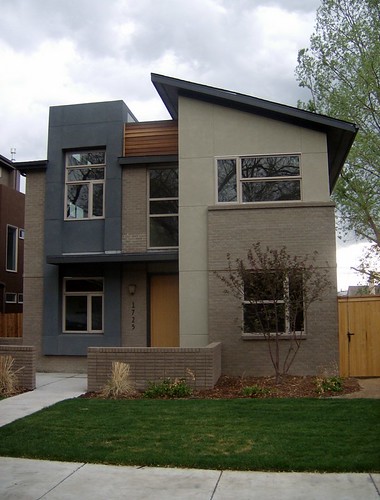
There's one piece that has been making the rounds through every brokerage, title company, and mortgage office across the Front Range: a national report titled "Denver Surpasses Tampa as Market With Fastest Falling Home Values."
Denver displaced Tampa as the weakest market in the S&P Case-Shiller Index. Tampa had held that bottom spot for months, a dubious distinction it earned after years of pandemic-era price escalation. Now Denver owns it. And this isn't just a Denver versus Tampa story. More than half of all major US metropolitan markets posted year-over-year price declines in February. Los Angeles, Washington DC, Seattle, Phoenix, Dallas—the housing slowdown that started in the Sun Belt has broadened well beyond its origins.
What makes Denver's situation particularly striking is how fast the reversal happened. This was supposed to be one of the most resilient markets in the country, insulated by a diversified economy, an educated workforce, and an enviable quality of life. The fact that it now leads the nation in price declines should tell you something fundamental has shifted.
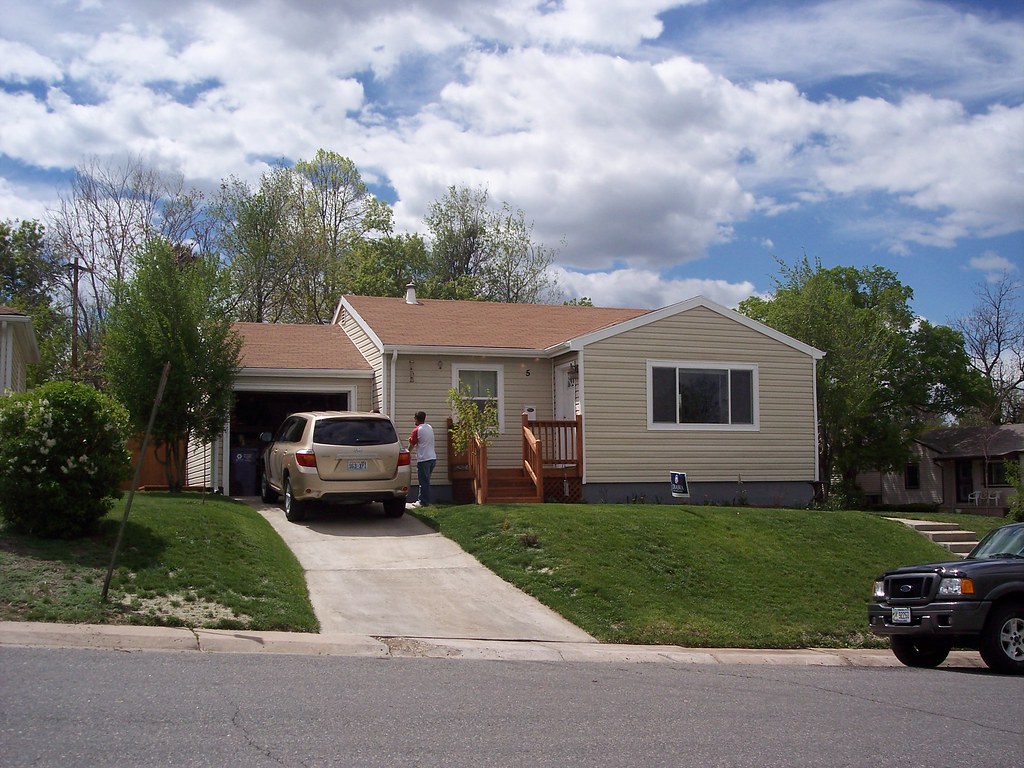
To understand why Denver is here, you have to understand why Denver boomed in the first place.
Denver had everything going for it. It was affordable relative to coastal cities. It was centrally located with a major international airport. It had strong education, a growing tech sector, and a lifestyle that attracted people from all over the country. Then you layer on the cannabis green boom, a wave of defense contractors, and the remote work explosion of Covid, and Denver became a Goldilocks zone for investment and relocation.
People came. Fast. Net migration into Colorado hit 68,844 people in a single year at its peak. Builders could not keep up. Inventory evaporated. Prices responded accordingly, and over a decade and a half, home prices in Denver quadrupled. That kind of growth in that short a period of time was never sustainable.
Then builders caught up. But they caught up right as demand started falling off a cliff.
New construction that was permitted during the low interest rate frenzy came to completion just as buyers pulled back. Thousands of new apartment units finished at the same time, with Class A amenity-based buildings marketing rents under
For three straight years, realtors and lenders told buyers the same thing: This is going to be the year interest rates go down. They said it in 2024. They said it in 2025. They're still saying it going into 2026.
It didn't happen.
And the reason it didn't happen is not because economists are incompetent. It's because interest rates are a multifaceted equation that doesn't respond to economic policy alone. When global conflict escalated in the Middle East, it sent ripples through the market and pushed rates back up just as they were beginning to ease. Unexpected geopolitical events change the entire equation. Nobody had that fully priced in.
The result is a borrowing environment that has crushed demand. It costs on average 80% more per month to purchase a home in the Denver metro than to rent one. That gap alone explains much of what you're seeing in the data. When buying costs nearly double what renting does, the economic incentive to purchase vanishes for a huge segment of potential buyers.
The second major story driving Denver's housing decline is one that doesn't get nearly enough attention: For the first time in decades, more Americans are leaving Colorado than moving here from other states.
Net migration into Colorado has dropped by over 50% from 2015 to 2025. The Denver metro area specifically saw a 69.6% decline in net migration relative to its 2015 peak. According to reporting from CPR News, Colorado's population growth rate has slowed to just 0.4%, its lowest since 1989, now trailing even the national average.
The only thing keeping the state's population net positive is international migration and birth rates. And with the current immigration policy environment, even that buffer is shrinking.
This matters enormously for real estate. The entire bull case for Denver home values was built on people moving here. That was the thesis: Denver is growing, demand will always outpace supply, buy now or be priced out forever. When that engine slows, so does demand. When demand slows while supply is rising, prices follow gravity.
That's the question I keep coming back to. And my honest read is no.
Denver is a microcosm of what's happening at a macro level across America. The cities seeing the steepest declines are the exact cities that exploded during Covid: Denver, Tampa, Phoenix, Austin, Seattle. Pandemic boomtowns that attracted massive migration, saw prices surge beyond what local incomes could support, and are now correcting as those tailwinds reverse.
Meanwhile Chicago is up 5%. New York is up 4.7%. Cleveland is gaining. Those are not cities that had a Covid boom. They're cities that didn't overbuild and didn't see runaway price escalation. Now the correction is bypassing them.
The S&P's own economists put it plainly: the geographic mix has shifted meaningfully, and the correction in supply-rich metros has more room to run. Translation: if you're in a market that overbuilt and overheated, don't expect a quick bounce back.
Before we get to what you should do about all this, let me show you what I see every week when I open the MLS.
In the past seven days alone there were only 1,473 homes that closed in the Denver metro. That sounds like an active market until you see the number sitting right next to it: 1,898 price decreases in that same period. More homes cut their price than actually sold.
That is not a headline. That is the data. And it paints a picture that every buyer, seller, and homeowner in Colorado needs to understand. Sellers are adjusting expectations in real time, often multiple times, before finding a buyer willing to transact. That tells you the market is still searching for equilibrium, and we're not there yet.
This is the question I get asked every single day. Here's my honest answer.
If you're thinking about selling and you bought in the past three years, you need a real analysis of your specific situation before you make any moves. A lot of people who bought at peak prices in 2022 are in a tough position, especially if they're in areas where new construction has added competition. Your equity situation depends on what you paid, what neighborhood you're in, and what the current data says about comparable sales. We're happy to run that analysis for you at no cost.
If you need to sell because of a life change, a job relocation, a growing family, or financial pressure, people are still transacting. The key is pricing to today's data, not last year's. The homes that are moving are the ones priced correctly from day one. The ones sitting are anchored to expectations that the market no longer supports. Overpricing in this environment doesn't just delay your sale—it can cost you real money as you chase the market down with successive price cuts.
If you're thinking about buying, any downturn is historically a good time to enter if you can afford the asset, if it cash flows, and if you're planning to hold it for more than five years. People who bought in 2010 and held through 2015 were very happy. I'm not calling this a 2008 scenario. But I am saying there is opportunity in a market where you have negotiating power, less competition, and sellers who are motivated. That window doesn't last forever.
And if you're not sure what camp you fall into, that's exactly what we're here for.
Denver didn't become the city with the fastest falling home prices overnight. It's the result of compounding forces: overbuilding during a boom, rising interest rates that never came back down, a reversal in migration trends, and a national housing correction that's hitting pandemic boomtowns the hardest.
Is it alarming? Yes. Is it permanent? That depends on what happens next with rates, with migration, and with how quickly supply and demand find balance again.
What I can tell you is this: the Denver market is no longer operating on momentum. It's operating on fundamentals. And for anyone making a real estate decision in 2026, understanding those fundamentals isn't optional—it's essential.
---
Want to know exactly where you stand in this market? We'll give you a free, honest expert analysis of your home's position with no pressure and no pitch.
📱 Call or text Derek Schulze: (720) 955-7770 📧 derek@symbiodenver.com
Download our free Denver Market Insider's Guide for a full breakdown of what's happening and what your smartest move is right now. 👉 https://www.symbiohomes.com/insiders-guide/
---
Sources: "Denver Surpasses Tampa as Market With Fastest Falling Home Values," a national listing site Colorado's Slowing Growth Could Be a Symptom of Its Own Success, CPR News Colorado's Population Growth Is Slowest Since 1989, CPR News