0 million sober, queer-centric roller rink, opened Oct. 23 at 1660 N. Federal Blvd., turning a dead furniture store into Sun Valley's newest third place.
A disco ball. A wood floor. And a sold-out crowd lacing up skates at six o'clock on a Friday night, right off Federal Boulevard, in a building that used to sell couches.
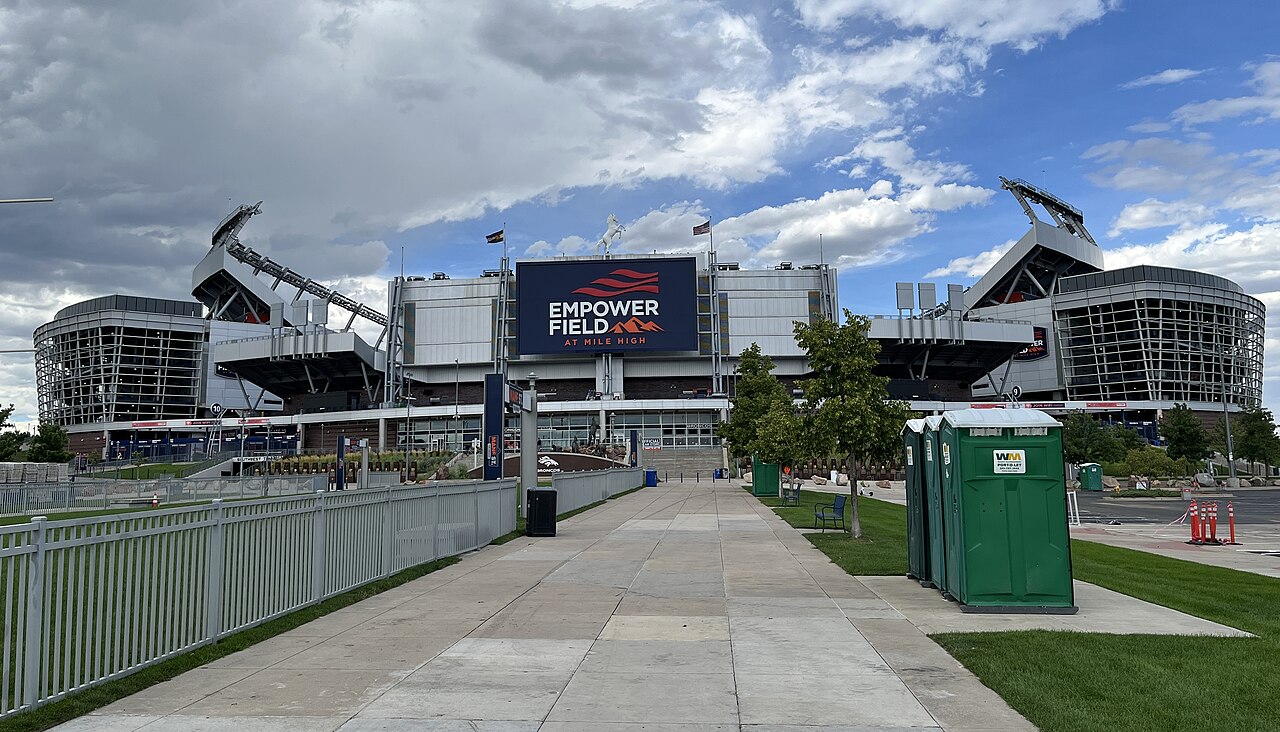 Denver stadium near Sun Valley neighborhood where the new rink debuted"Empower Field at Mile High exterior 2022" by Troutfarm27 is licensed under CC BY-SA 4.0.
That is how Rainbow Dome opened on Oct. 23, 2026. And the real story here is not the disco music, though there was plenty of that with DJs spinning all night. The real story is what it took to get the doors open at 1660 N. Federal Blvd., and why a westside neighborhood next to Empower Field at Mile High just got something it almost never gets anymore. A brand new place to simply go.
From pop-up to permanent
Here is the part people miss. Rainbow Dome did not appear out of nowhere.
Frankie Toan and Therin Zimmerman threw their first Rainbow Dome pop-up skate night back in October 2021. Five years ago. They did it again, and again, and the thing kept growing. Pop-ups are fun, but they are also exhausting, and they end. Every single time, you pack up and go home and there is nothing left standing the next morning.
So they decided to build something that stays.
That meant buying a building. The property at 1660 Federal sold for $6.25 million to an LLC tied to Toan. Then they spent about three years renovating a roughly 29,000 square foot former furniture store into an actual roller rink. The all-in project cost landed around
0 million. I mean, let that sit for a second. Ten million dollars, on Federal, for a roller rink. That is not a hobby. That is a serious bet on this neighborhood.
Kate Speer is also named as a Rainbow Dome cofounder, so this was a team effort from the jump.
What is inside
The wood-floor skating rink sits downstairs. Upstairs is a creative and workspace level, which is a smart use of a big footprint and honestly a reminder these folks think of this as more than a Friday night out.
But look at what they built around the skating. There is a rental desk and lockers, so you do not have to own gear to show up. There is a lounge. And there is a low-sensory room, which is the kind of detail that tells you exactly who this place is for. It is built to be comfortable for people who do not always feel comfortable in a loud crowded room.
And here is the thing that makes Rainbow Dome different from basically every big venue near the stadium. It is alcohol-free. No beer. They sell sodas instead. In a city where it feels like every new spot is a brewery or a bar with a brewery attached, a sober, queer-centric room is genuinely rare. This is a third place in the truest sense. Not home, not work, and not a bar. Somewhere you go to just be around people.
How the money came together
Ten million dollars does not come from one checkbook, and the way they funded this is worth your attention.
In July 2026, the State of Colorado awarded Rainbow Dome a $686,000 Colorado Community Revitalization Tax Credit, according to the Office of Gov. Jared Polis. That is a program meant to breathe life back into vacant and underused buildings, and a dead furniture store on Federal is pretty much the textbook case.
On top of that, Rainbow Dome ran a public crowdfunding campaign with a
million goal as part of the larger project. So the state put in, the public put in, and the founders put in. That is a lot of hands on one building.
The real estate angle
Let me step back, because this is the part I find fascinating.
Sun Valley sits in 80204, just north of Empower Field, and it has been one of the more overlooked pockets on the westside for a long time. Federal Boulevard is a corridor people drive through, not usually a place people stop. A vacant 29,000 square foot commercial building on a street like that is exactly the kind of property that sits empty for years and slowly drags a block down with it.
Instead, somebody paid $6.25 million for it and turned it into a destination that pulls people in on purpose, four nights a week. That is how neighborhoods actually turn. Not a press release. One stubborn building at a time. When you see a vacant big-box turn into something people line up for, pay attention, because that tends to move what happens around it.
When to go and what it costs
Opening night started at 6 p.m. and sold out in advance, disco ball and all. Regular hours now run Thursday 5 to 10 p.m., Friday 5 p.m. to midnight, Saturday 10 a.m. to midnight, and Sunday 10 a.m. to 10 p.m.
Admission is
5 for adults 19 and over,
0 for teens 13 to 18, $8 for ages 6 to 12, and free for kids 5 and under. So it is genuinely a whole-family price, which fits the whole no-booze, everybody-welcome idea.
Hayley already wants to go on a Saturday, which is dangerous for me because I have not been on skates since roughly the Clinton administration. But that is sort of the point of a place like this. You do not have to be good. You just have to show up.
And now, finally, there is somewhere to show up.
 Revolutionizing · Modernizing · Simplifying