 Revolutionizing · Modernizing · Simplifying
Revolutionizing · Modernizing · Simplifying
Revolutionizing · Modernizing · Simplifying
Georgetown, Colorado. 1873. A Frenchman with one good eye, a broken clavicle, and a borrowed name is washing dishes in a bakery on 6th Street. He is by all accounts the best cook in the Colorado Territory. And he is washing dishes.
That is where the Hotel de Paris story actually starts. Not with champagne and foie gras and famous guests. With a dishwasher who nobody knew was running from the U.S. Army.
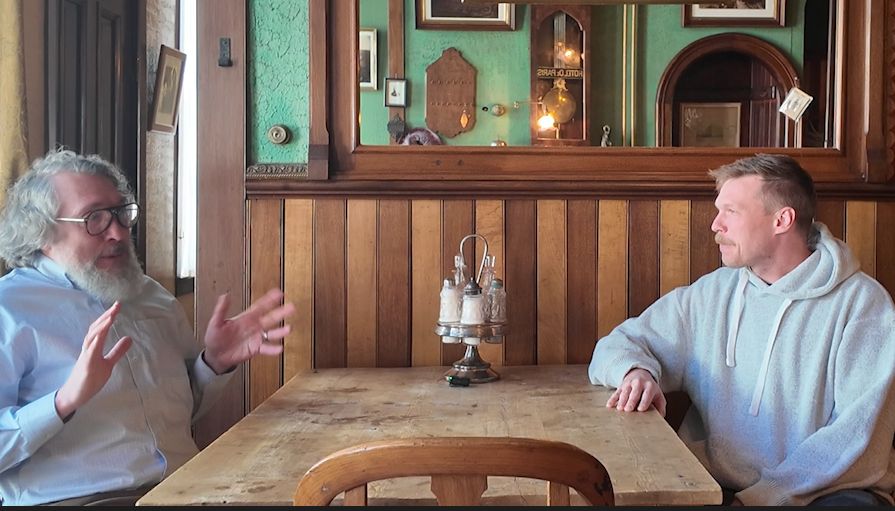
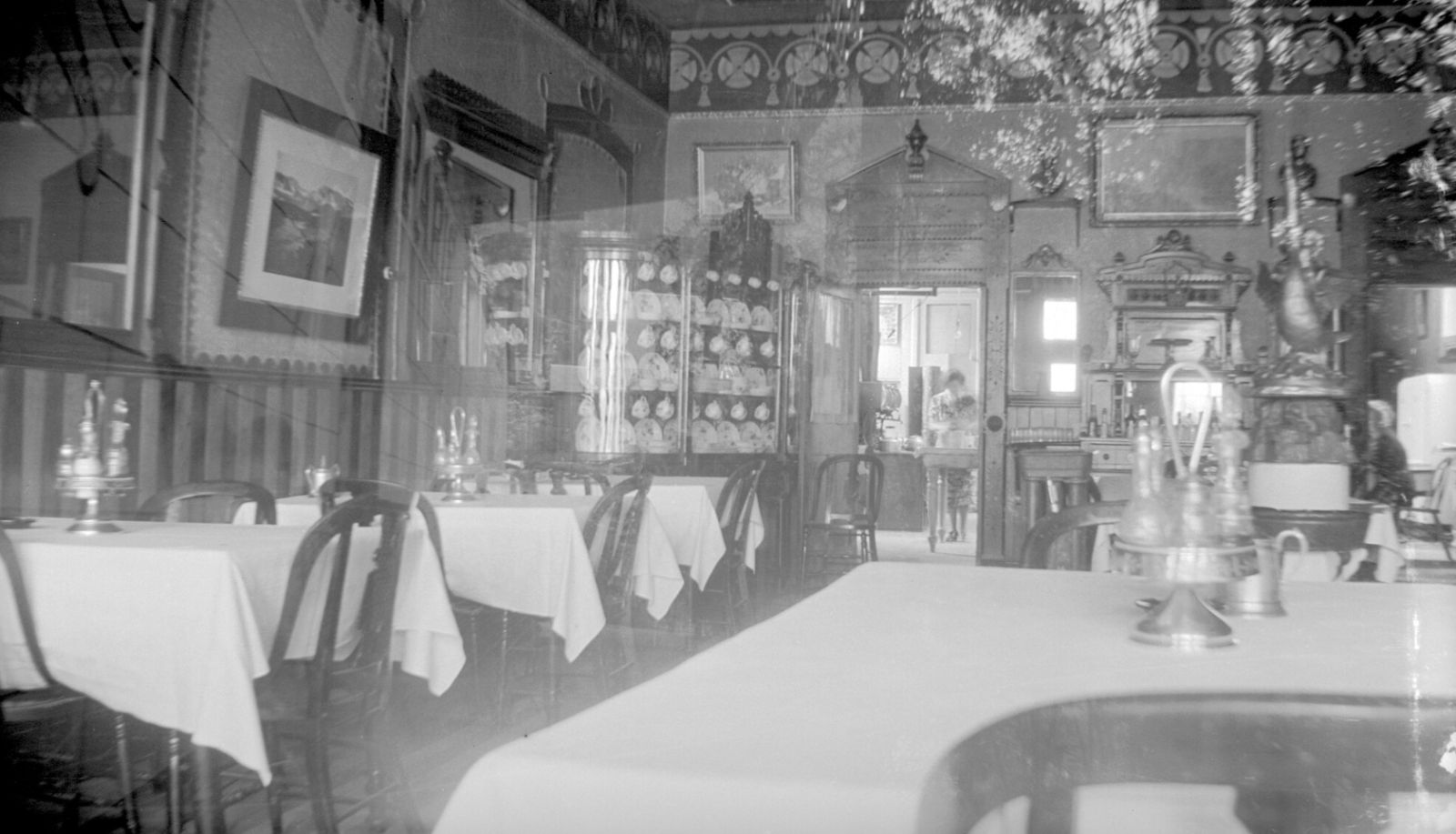
I sat down with Kevin Kuharic, executive director of the Hotel de Paris Museum, inside the original dining room of the hotel. Kevin has been here since 2010. He lives in Georgetown. He has worked in these buildings, read the archives, pieced together the man behind the myth. And what he told me about Louis Dupuy is honestly one of the best Western stories I have ever heard.
Kevin put it plainly: "Arguably, Louis was a broken person. And he reinvents himself. So our story is about reinvention. And second chances. Crossroads in life."
So let's get into it.
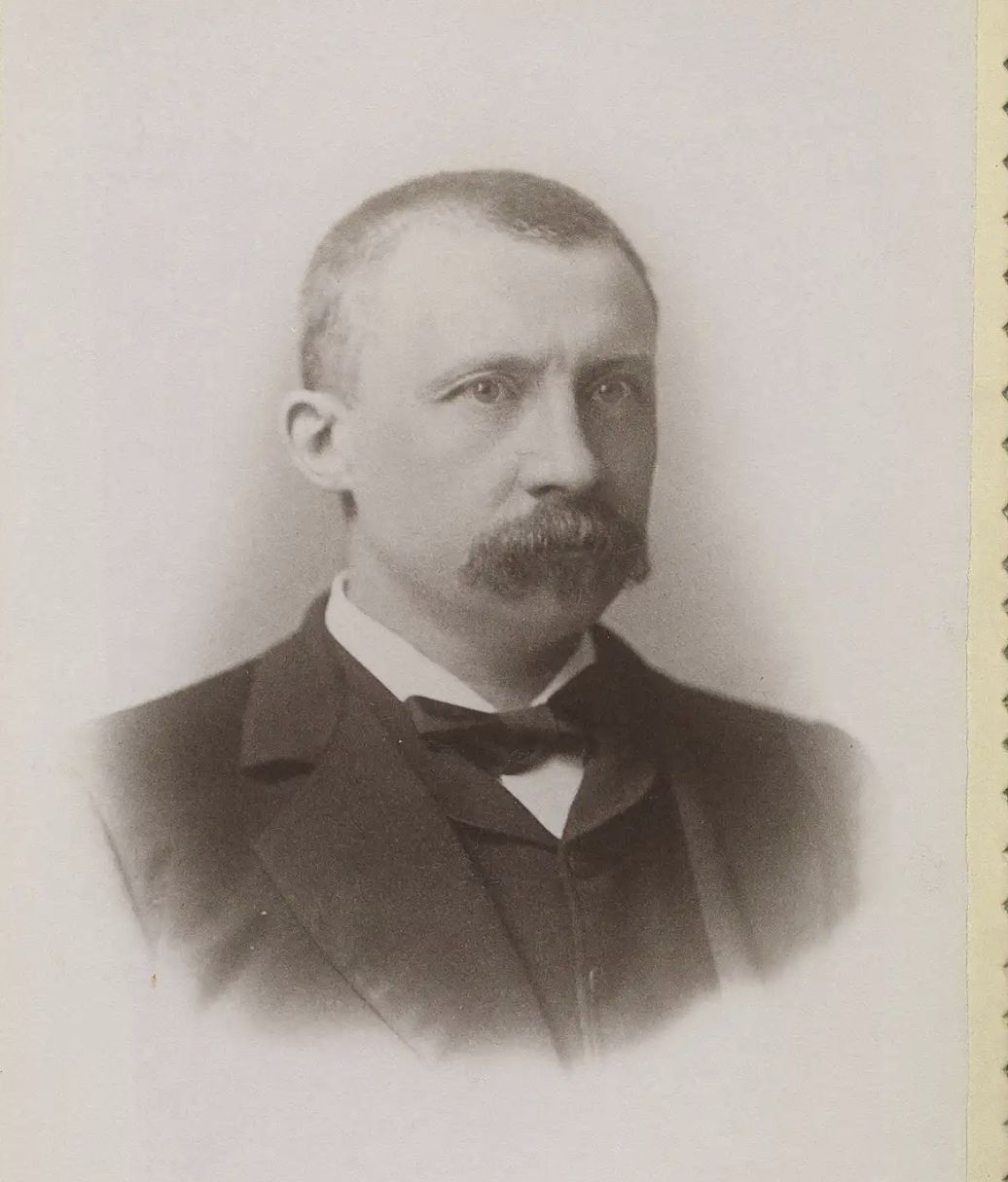
His real name was Adolphe Francois Gerard. Born in 1844 in Alencon, France, son of innkeepers. His parents did not want him following them into the hospitality trade, which is pretty ironic given what he became. They wanted him educated. But since they were not wealthy, the only way to make that happen was to send him to someone who would pay for it.
That someone was the Catholic Church.
At 15, he was shipped off to a seminary. Alone. Kevin thinks that probably felt like abandonment. And you get it, right? At 15 most of us could not handle being sent into the world by ourselves to become a priest we never wanted to be.
He learned fast though. French was native. He picked up German, English, and Latin. Highly intelligent, clearly. But he had zero desire for the priesthood.
So at 19 he engineered his own exit. And the way he did it tells you everything about who this man was.
He walked into the cathedral during mass. Accepted communion. Then spit the wafer onto the floor of the church. Sacrilege against the sacrament. He was excommunicated on the spot.
That is one way to get out.
He was now loose in the world. And what followed was basically a decade of running. From himself, mostly, though he did not know that yet. Kevin calls it the geographical cure. Get in trouble, relocate. Trouble follows because it is internal. He did not know that yet.
Paris first. He became a dishwasher in a hotel restaurant, then an apprentice cook. Master-level skills, trained in Paris. But he decided cooking was not the path and moved to London, where he worked as a translator and journalist. Four languages will do that for you. He found real success there.
Then in 1867, for reasons that remain a little murky, he decided to come to America. He traveled back to the port city of Le Havre, booked passage on a ship called the Harpswell, built in the 1850s by enslaved workers in Harpswell, Maine, and crossed the Atlantic. Landed in New York.
New York was going well until it was not. He plagiarized an article. Not from just anyone. He sold it to the editor of Frank Leslie's Illustrated Newspaper, which was the largest newspaper in the country at the time. The editor recognized it immediately. More trouble, this time of the self-made variety.
And here is where the real pivot happens. He had no money. He needed out of New York. So he enlisted in the U.S. Army. A Frenchman, now a U.S. soldier. Because of his language skills and literacy, he got a cushy post as a clerk. He was shipped west, first to Fort Riley, Kansas, then to Fort Russell in Cheyenne, Wyoming. Today that is Warren Air Force Base.
What were they doing in Cheyenne? Clearing the land of Native Americans. Genocide, to be direct about it. Colonization. Removing the indigenous population for white settlement.
And this is the first time we get any real indication that Adolphe had a moral compass.
He deserted.
That is his crime. That is what he spent the rest of his life running from. Desertion at that time was punishable by execution. He was a wanted man for the rest of his days. He walked from Cheyenne to Denver under cover of darkness, night by night, hiding behind boulders and trees, roughly 100 miles in civilian clothes.
Somewhere along that walk, he decided to call himself something else. The name he chose was Louis Dupuy, borrowed from an 18th-century French scholar and philosopher. A translator. Someone with the same traits he actually had. Kevin says, "He takes on this name Louis Dupuy. And so now he's at Denver, a big city. He's anonymous."
In Denver, Louis, as we now know him, starts at the bottom again. Always from the bottom. He gets work in a warehouse selling buffalo heads and buffalo hides. Products of the same Army-led campaign against Native Americans he had just walked away from. He did not stay long.
He went back to journalism. Got hired by William Byers at the Rocky Mountain News, selling subscriptions at first. Then Byers published an article with some bad French history in it, Louis corrected the record as any informed Frenchman would, and Byers realized he was massively underutilizing this guy.
Byers gave him the mining beat. High country coverage. Breckenridge, Dillon, Silver Plume, Georgetown. Louis traveled between silver camps with a little white burro named Florette, cooking for miners on the side because the articles alone did not pay enough. That cooking reputation grew into something real. By the time he landed in Georgetown, he was known as the best cook in the Colorado Territory.
But then he quit the Rocky Mountain News. Byers had been printing anti-Chinese and anti-Native articles, fanning the flames of hatred that Kevin says contributed directly to events like the Sand Creek Massacre and a race riot in Denver in 1880 where a white mob destroyed Chinatown, killed one man named Look Yang. The politicians owned the papers and inflamed the public. Kevin noted, with a dry smile, that this does not sound like a recurring theme at all.
So Louis, unemployed and living in Georgetown, went into mining. The easiest job to get. They always needed bodies because the work was so dangerous.
He got assigned to the Kennedy Tunnel at the Coldstream Mine on Sherman Mountain, about two miles from where we were sitting.
Hard rock mining. Pre-electricity. Pre-pneumatic tools. Dynamite charges in pairs. Louis and his partner set two shots and cleared out. One blast fired. One did not. Defective fuse. They waited days hoping it would eventually go off. It did not.
Louis decided to go back in and work on the fuse himself. His partner came with him for safety. Louis realized the blast was about to fire. He shouted a warning to the men watching from a distance. Then he grabbed his partner by the shirt collar and yanked him back.
The blast went off directly into Louis. He was permanently blinded in his left eye. Broken clavicle. Broken rib. A local newspaper described him as bloodied and mangled in the most cruel manner. They did not expect him to live through the night.
He was nursed back to health by Catholic nuns in Georgetown, which, if you know even a fraction of his backstory with the Church, is its own kind of poetry.
He survived. And when he did, something shifted. Kevin described it as his biggest crossroads. He had been through trouble after trouble, most of it self-created. Now he had saved lives, nearly died, been nursed back by the very institution he had scandalized, and the community raised two or three hundred dollars for him, which would be around six or seven thousand dollars today, as a reward for what he did.
He held onto that money. And he waited for the right moment.
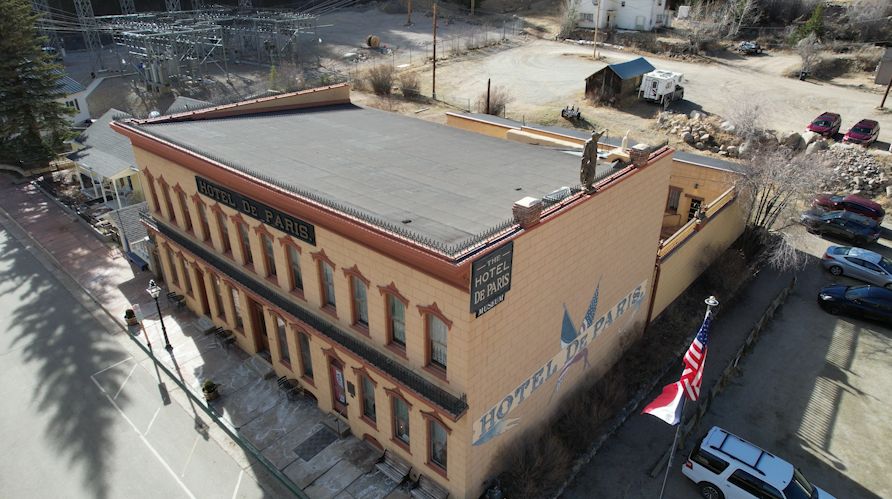
That moment came when the bakery he was washing dishes at outgrew the Powers Building and moved around the corner to Rose Street. Louis did not go with them. He took over the lease, used the reward money, renamed the operation, and on October 9, 1875, the Hotel de Paris opened for business.
He was 31 years old.
The hotel was modeled after a French inn in Alencon, Louis's hometown, and it charged an exorbitant four dollars a night. In a mining town in 1875, that is serious money. But here is the thing about Louis. He was not just selling luxury to the wealthy. A miner could afford to eat at the Hotel de Paris too. That miner would be getting cold cuts and a beer, or Welsh rarebit, while the mine investor at the next table was drinking French champagne and eating foie gras and Russian caviar and oysters.
He understood his market completely. Georgetown at its peak had maybe 3,500 people, 12 or so hotels and boarding houses operating simultaneously. Louis ran the finest one. But he made sure everyone could walk through his door.
He was making money too. Real money. By 1878 the building was available to purchase for
He added on again in 1882 and 1889. The final building is 7,000 square feet. Steam heat. Gas lighting replaced later by electric. Hot and cold running water in every room. A wine cellar. A library of over 2,500 volumes in four languages. Three gallery spaces for traveling salesmen to display their wares.
Some guests are worth mentioning. Jay Gould came through. William Henry Jackson. Isabella Bird. These are not small names.
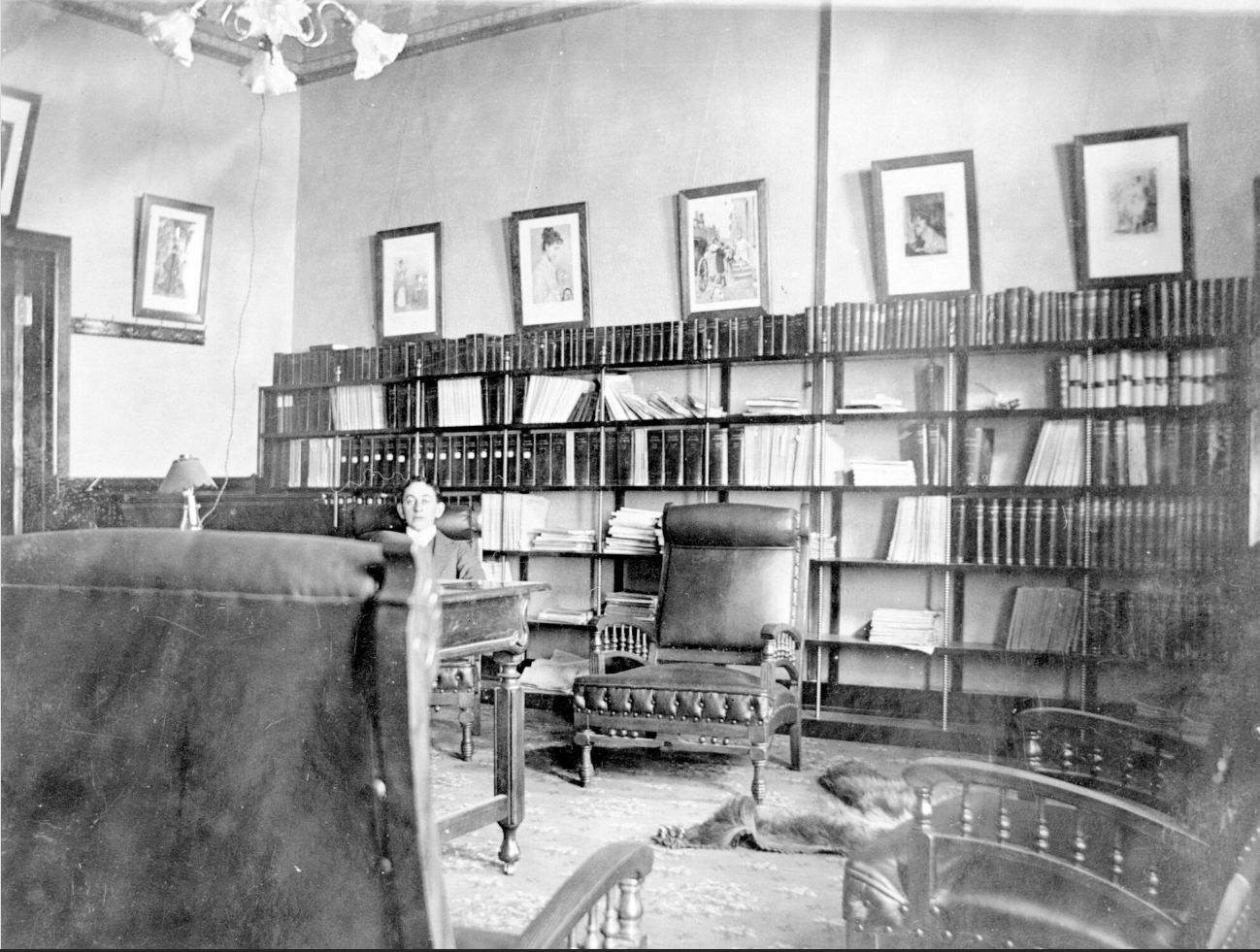
And while all of this was happening, Louis was doing something that went well beyond running a hotel. He was running debates in Room 14, chairs arranged in a circle, topics covering politics, religion, and art. He would ring a bell and read poetry to the dining room. Kevin called him "the first influencer of the day," and I think that is exactly right. He was not just feeding people. He was elevating them. Trying to change how they thought.
Kevin told me that he shared the same political positions as Frederick Douglass almost identically. He was pro-labor when that was radical. Pro women's rights. Anti-slavery. Pro civil rights. He employed female waitstaff in a French restaurant context where that was simply not done. He hired Chinese workers to build as much as 80 percent of this property. Kevin is careful here. "Do not paint him as a white savior. He's getting something out of it too." He paid those workers and those waitresses at lower rates than he would have paid white men. He was flawed. These things can coexist.
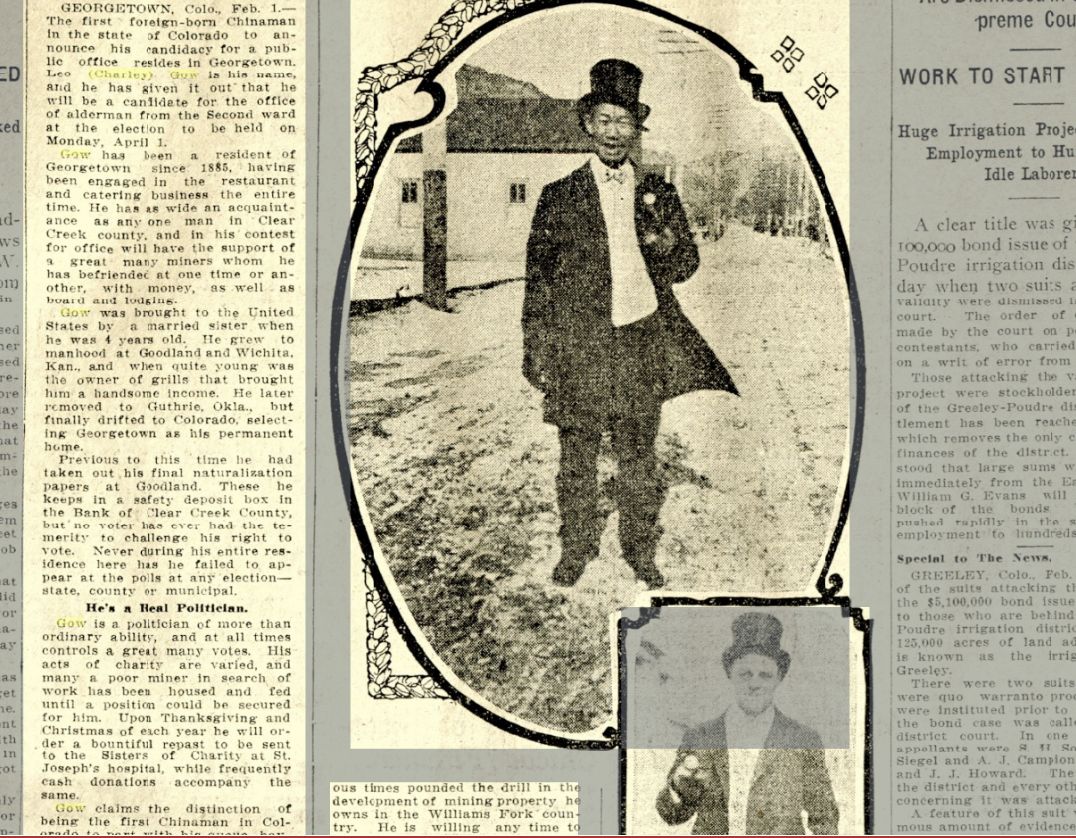
While we are on the subject of the Chinese community in Georgetown, Kevin told me about a man named Leo Gao, who ran the Home Dairy Restaurant just blocks from the Hotel de Paris. Chop suey and chicken, inexpensive, next to a saloon, popular with the bachelor miner population.
Leo Gao became the first Chinese person in Colorado to run for public office. He had become an American citizen at four years old. He lived in Ward Two of Georgetown. He was eligible to run for selectman.
He showed up in a tuxedo, top hat, and cane. His campaign manager, who was white, wore the same. They campaigned through the streets of Georgetown.
The establishment said he was not an American citizen and blocked it. Racism. Shocker.
But Kevin's point is clear. He was the first. And it happened here, in this small mountain town, because there was a segment of the population that was genuinely open to it. Louis Dupuy, reading Frederick Douglass in his library upstairs, running debates in Room 14, was probably part of why that community existed at all.
"He's not a household name," Kevin said. "Should he be? Absolutely."
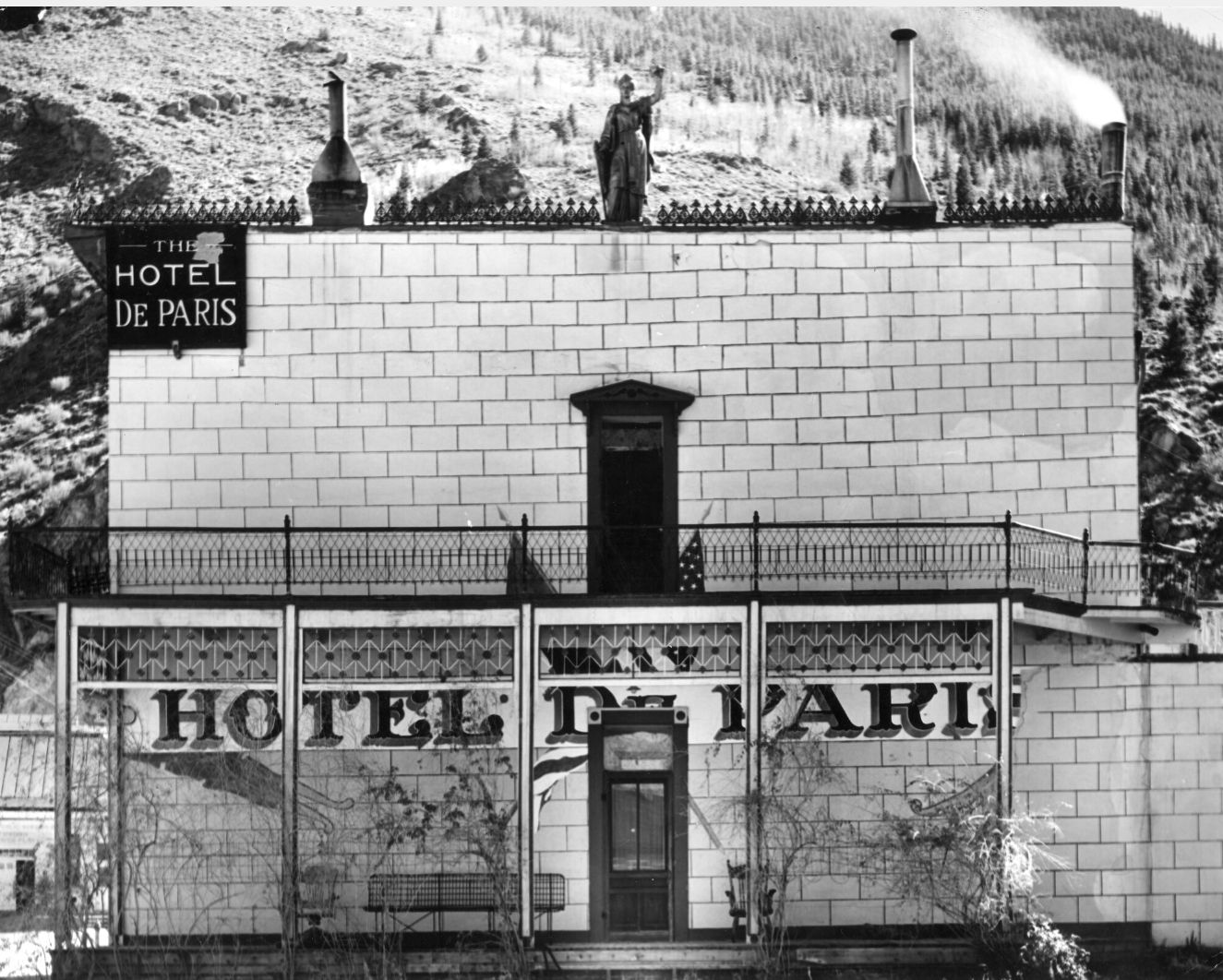
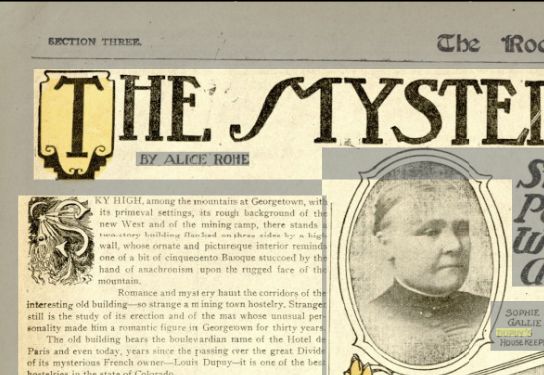
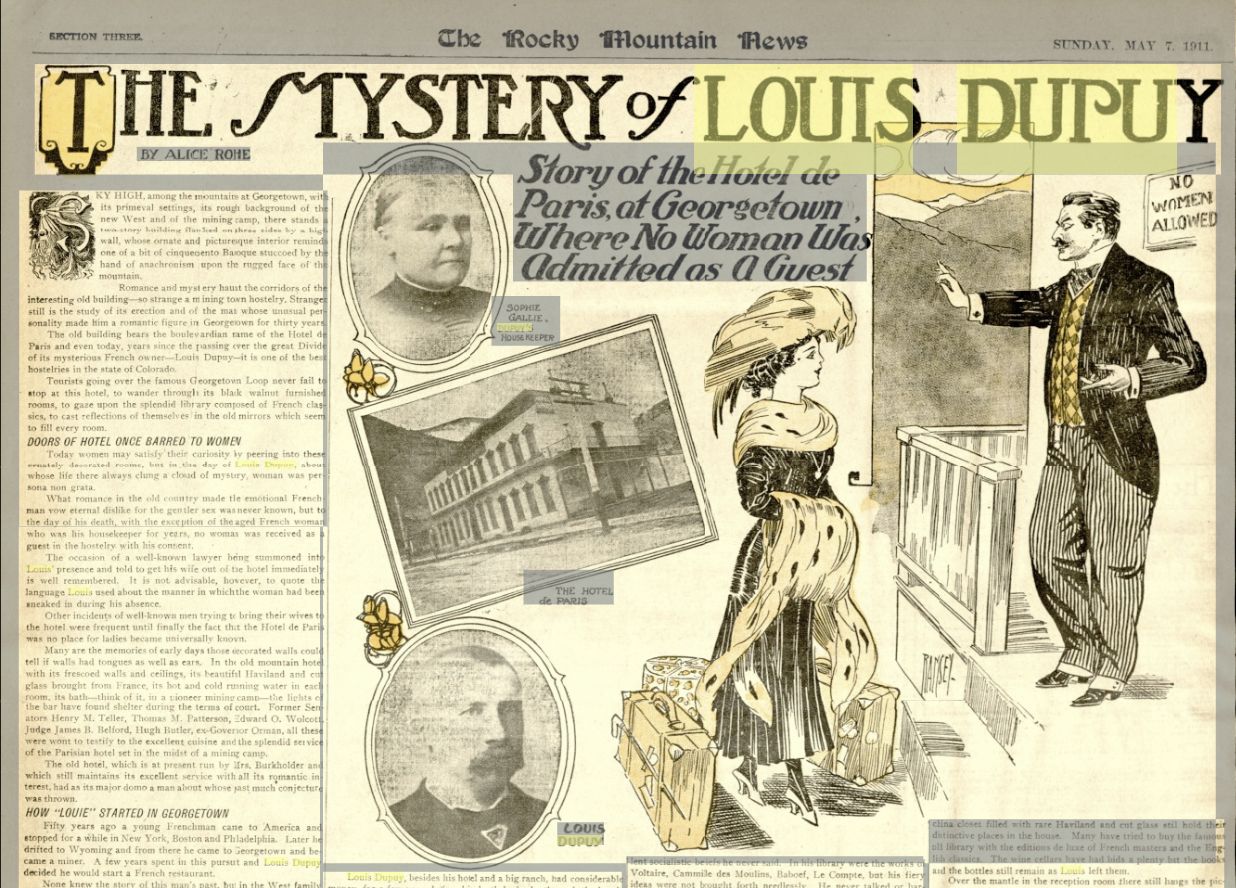
After Louis died in October 1900 from pneumonia, which Kevin notes has its own dark irony given Louis's extensive reading on tuberculosis and lung disease, the hotel passed to his housekeeper Sophie Gally, then to Sarah Burkholder, then to her daughter Hazel McAdams, who ran it as a hotel and then tried an antique shop when business dried up after the Sherman Silver Act repeal killed Georgetown's silver economy in 1893.
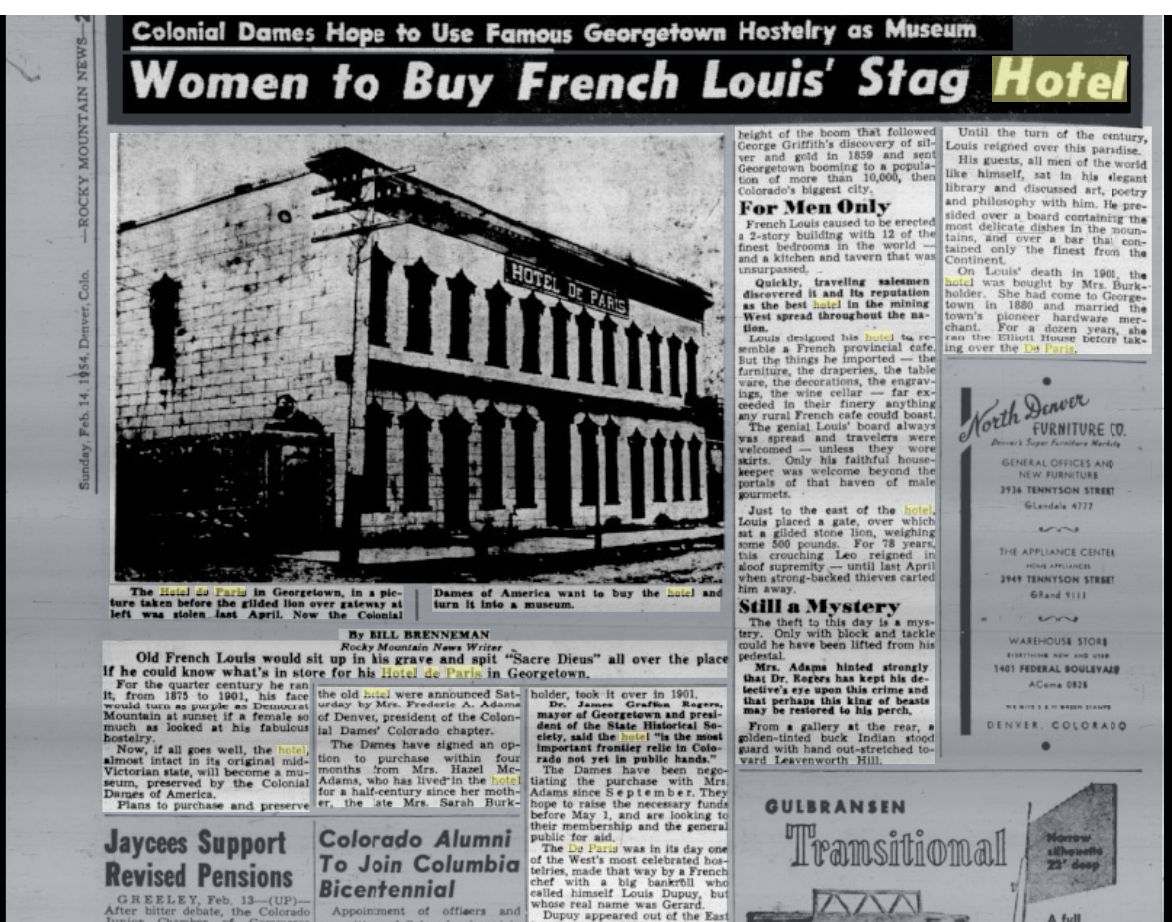
By the 1950s Hazel was behind on taxes. The building was deteriorating. The Colorado Historical Society had actually expressed interest as early as 1945, but Hazel was not ready. When she finally needed to sell or lose it to back taxes, she reached back out. The Historical Society came in, saw what looked like original furnishings being sold off as antiques, got cold feet, and pulled out.
Enter James Grafton Rogers, president of the Historical Society and also the police judge of Georgetown. Former Assistant Secretary of State. Married to Cora Mae Peabody, daughter of Colorado Governor Peabody. Well-connected is an understatement.
Rogers knew his wife belonged to a women's group focused on patriotism and historic preservation. He suggested they step in. That group was the National Society of the Colonial Dames of America, State of Colorado.
In 1954 they struck a deal with Hazel. They paid off the back taxes in exchange for ownership of the property, furnished. The cost was
Kevin said it plainly: "That's so 1800s. It speaks to community."
The museum opened immediately. The bicentennial in 1976 was a turning point when the Colonial Dames got serious about restoration. Their first grant project was the plaster ceiling in the dining room, which had been damaged since 1906 when an overflowing tub caused sections to fall. That ceiling, hand-tooled and meticulously painted in 1878 or 1879, is still overhead right now if you go visit.
Ninety percent of the original hotel furnishings are still in place. Ninety percent. That is almost unheard of for a site like this.
I would be doing a disservice if I skipped this part, because Kevin brought it up himself and he is not someone who takes it lightly.
He described himself as a skeptic by nature. But he said he is softening on the question of whether Louis is still present in the building, because he has had experiences.
The ice scoop that rotated on its own on the counter while he watched it. The penny that appeared inside a dish towel he had taken home, washed, dried, folded, and brought back. He tried bouncing the floor to see if vibration could explain the scoop. Nothing. He bumped the counter. Nothing.
The primary paranormal activity at the Hotel de Paris is smell. Pleasant smells. Bread. Coffee. Cigar smoke. White cake frosting. Whiskey and ginger. Cinnamon and oranges. Perfume. And more recently, incense, which Kevin thinks may connect to the Chinese workers who built much of the building, including John Tao, a Chinese gardener and porter who actually lived on site.
Two mediums came through on separate occasions, unannounced, revealed themselves at the end of their tours, and both assured Kevin that Louis is still here. Sophie too. And Jo, the orphaned apprentice cook Louis and Sophie took in around 1881.
Kevin asked one of them: do they understand what we are doing here now? Running it as a museum instead of a hotel?
"We were assured, yes. And they're happy about it."
He said the whole staff felt an enormous sense of relief when they got that answer.
When Kevin started here in 2010, Louis was being presented as a kind of demigod. A self-made man of success and power and money. Kevin recognized pretty quickly that framing was actually a barrier. If you were not male, not wealthy, not educated, not Catholic, there was nothing in that version of Louis for you to hold onto.
Kevin enriched the story he made Louis human. By making him one of us Louis has the ability to live eternally. In doing this he has carried the mission on of the Hotel as a place of healing. People may not be spending the night there (at least among the living), but I can say that this place moved me. The story of Louis moved me. This is a story of humanity, trials, tribulations and living within our own deficiencies. Despite those things that pull us every day the good we do is what is remembered and it is never too late to start adding bits of good into every part of your life.