Events & Culture
 Revolutionizing · Modernizing · Simplifying
Revolutionizing · Modernizing · Simplifying
Revolutionizing · Modernizing · Simplifying
There is a neighborhood in Castle Rock called The Meadows. Nice houses. Good schools. Suburban Colorado life at its most normal looking. And right now, 7,500 homeowners there are sitting on top of nearly half a billion dollars in debt that most of them had no idea existed when they bought their homes.
That debt started as $57 million in infrastructure bonds back in the 1980s. Roads, sewer lines, water systems. The usual stuff. And here is the wild part. After 40 years of residents paying their property taxes, not one dollar of the original principal has been paid down. Not one. The debt has grown to $454 million. And an entity called Castle Rock Bonds LLC is, according to research done by local real estate agent Jim Garcia, looking to collect roughly $600 million in total before they discharge it.
A $57 million project from the Reagan era is on pace to cost Colorado taxpayers more than
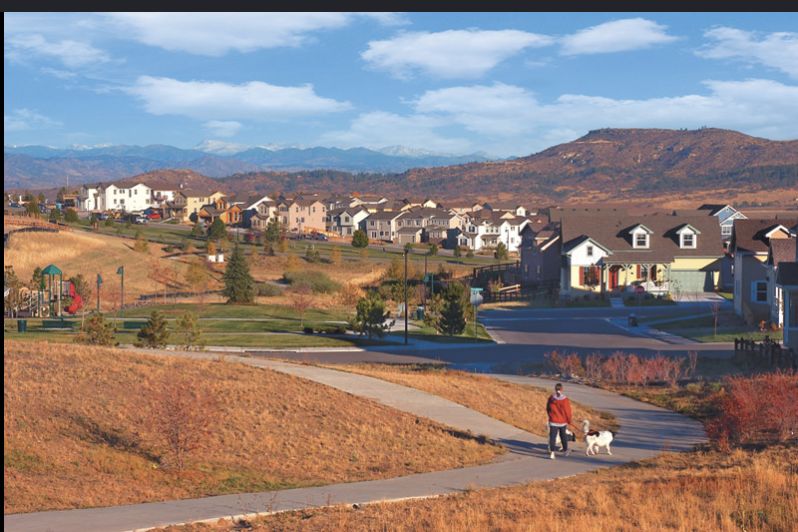
This is not ancient history. This is happening right now, in a neighborhood you can drive to in 30 minutes from Denver. And The Meadows is not some bizarre outlier. It is, as John Henderson of Coloradans for Metro District Reform put it, "the poster child" for what can go wrong inside Colorado's metro district system. A system that, most people do not realize, quietly shapes property taxes for hundreds of thousands of Colorado residents.
So let's talk about what metro districts actually are, what they are doing to home values right now in 2025, and why every single buyer and seller in Colorado needs to understand this before they sign anything.
Here is how it works. A developer wants to build a new community. Before a single home goes up, they need roads, water lines, sewer systems. That infrastructure costs real money. So instead of pricing that cost directly into the homes, the developer creates a metro district, which is a form of local government under Colorado law. The district issues municipal bonds to cover construction. Those bonds are then repaid through a dedicated property tax collected from every homeowner within the district's boundaries, usually over a 20 to 30 year period.
The Colorado Association of Home Builders will tell you this is a good deal for buyers. Public infrastructure typically adds $30,000 to $40,000 to the price of a new home if it's paid upfront without a bond. Metro districts spread that cost over time and keep entry prices lower.
That logic is sound in theory. The problem is what happens in practice.
There are 2,337 active metro districts in Colorado right now. About 100 new ones get approved every year. And according to state Sen. Mike Weissman, authorized but unissued debt across all of Colorado's metro districts exceeds
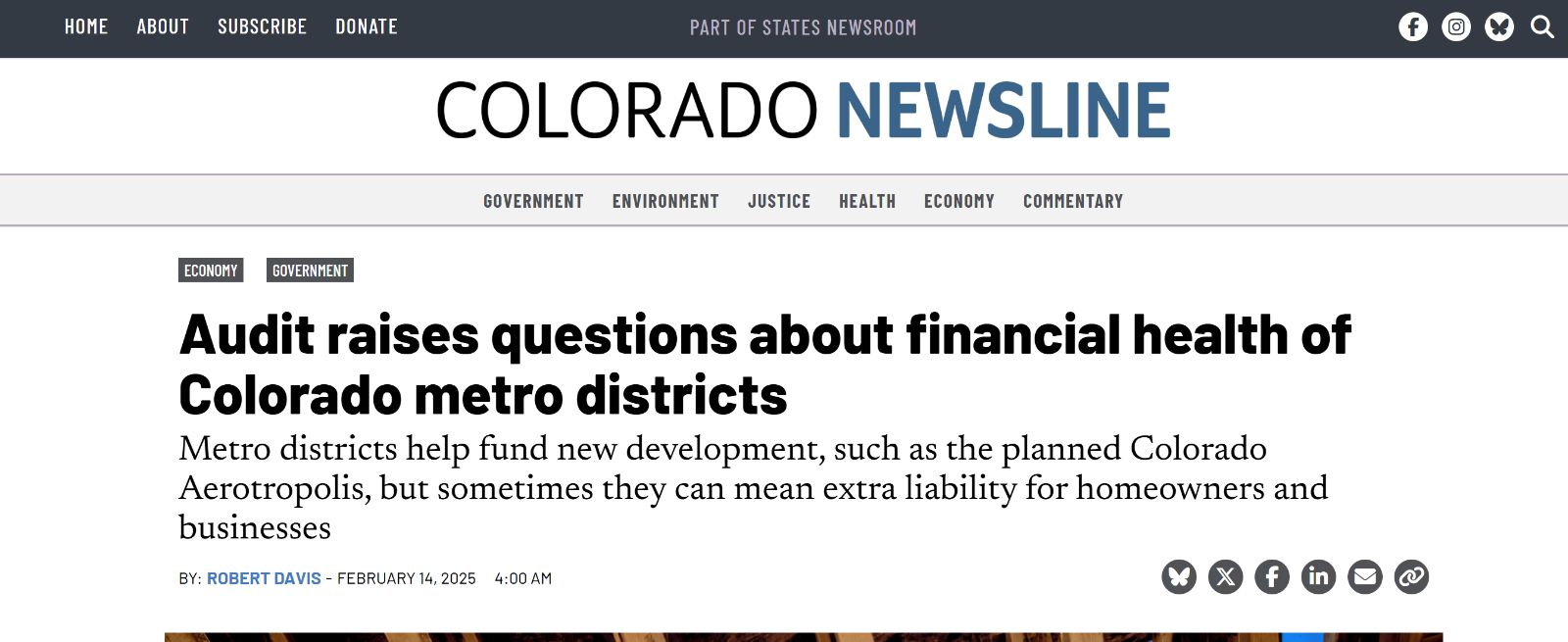
The state auditor's office measured the financial health of 1,598 metro districts against 11 criteria, including debt-to-income levels and property values within their boundaries. Of the 16 metro districts that had the most warning indicators, 13 of them triggered the low financial reserve indicator. Thirteen out of sixteen. That means they had too many debt repayment obligations and not enough reserves to cover them. Three districts, the Conifer Metro District in Jefferson County, the Lowell Metro District in Colorado Springs, and the Murphy Creek Metro District in Aurora, self-reported having serious difficulty repaying their debts.
The Conifer district had more than $41.6 million in debt compared to just $3.2 million in assets. The Lowell district had
And then there is the Aerotropolis around Denver International Airport. Eight metro districts are financing that development. Six of them have voter-authorized debt exceeding $50 billion each. The Aerotropolis Area Coordinating Metro District alone holds
Our team works with buyers and sellers across the Front Range, and right now this issue is showing up in real listings in real neighborhoods in ways that are genuinely hurting people.
Kenny was working with a client in Aurora recently. A 2020 new build that she has been trying to sell. And she could not figure out why nobody would move on it. Here is the real story. When those homes were first sold, the taxes were advertised at around
And honestly? I am not even sure those taxes were ever actually
I have a listing right now in Reunion, a great house in a great neighborhood. But you can go buy a comparable home built in the 1990s, not in a metro district, and pay $3,000 to $4,000 in taxes instead of the $8,000 you are looking at in Reunion. That $400 to $500 a month difference is the conversation nobody is having with buyers.
In Commerce City, I have a client who just does not want to make that payment anymore, knowing he can go find something older with lower taxes and fewer complications. And that math makes sense. The problem is trying to sell in an environment where the builder next door is still active, still offering rate buydowns, still cutting prices, and sending agents emails every week offering ridiculous commissions just to move inventory.
Here is the real estate reality of being in one of these communities right now. If the builder in your neighborhood is offering a $550,000 new home at a 3% interest rate buydown, your $500,000 resale at 6.5% is a harder monthly payment for the buyer. Even though your asking price is lower. The builder can be aggressive on rate in ways individual sellers simply cannot match. So your price has to compensate. In a lot of cases, that means pricing 10 to 15 percent below the builder just to be competitive on monthly payment.
The client Kenny is working with in Aurora? She knows she needs to get out before prices drop under what she paid in 2020. We are not there yet. But the trajectory is pointed that direction. We are already talking about short sale scenarios with some clients in these communities, and those conversations are becoming more common. Loss mitigation departments at the servicing companies are getting busy.
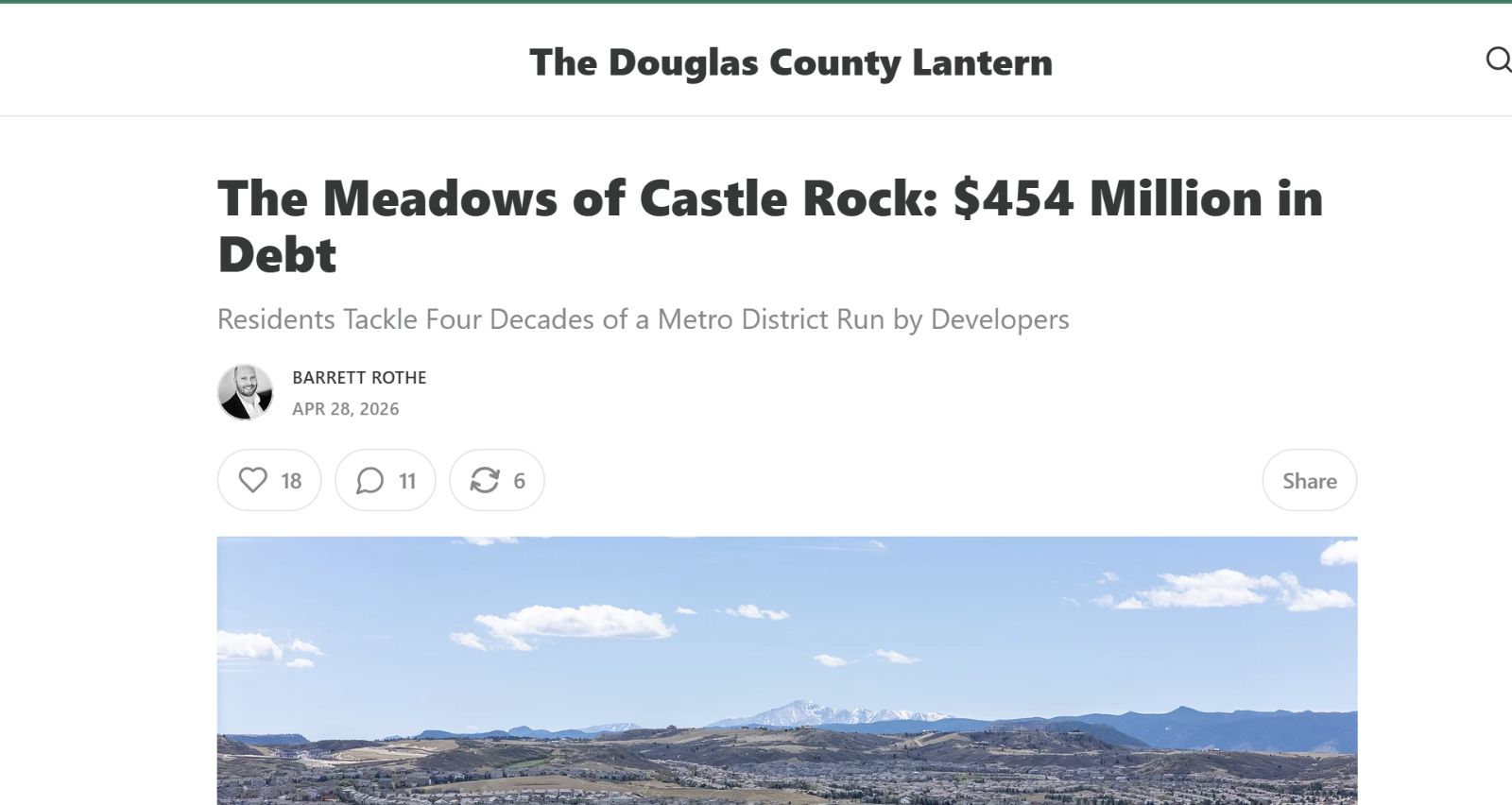
Now let me take you back to Castle Rock, because The Meadows situation is where all of this gets really dark.
The Meadows is the largest master-planned community in Castle Rock, right by the outlets off I-25. Development started in the mid-1980s. Seven metro districts were formed, and they issued approximately $57 million in bonds to build the infrastructure. The original bond terms from 1991 projected full payoff between 2006 and 2021. That is a normal, reasonable 15 to 30 year window. Homeowners would have paid off the obligation and been done with it.
That plan changed in 1993.
In October of that year, the debt was reorganized to about $86 million and approved by the Town of Castle Rock. But then, just two months later in December 1993, the seven metro district boards entered into a separate agreement with the bond holders that materially changed the terms of what Castle Rock had just approved. And here is the thing that should make your stomach drop. When Castle Rock resident and real estate agent Jim Garcia later uncovered those December documents and brought them to town officials, Castle Rock said it had not previously seen or reviewed them. The town that approved the October plan apparently had no idea the terms were changed two months later.
Garcia has spent five years digging through filings from the 1980s and 1990s. What his accounting firm found is this.
$70 million in principal currently outstanding. $383 million in unpaid accrued interest as of December 31, 2024. Total outstanding balance: $453,832,189.
Meadows homeowners have collectively paid more than
The December 1993 restructuring converted what should have been a 30 to 40 year payoff into a structure that could extend more than 100 years. Interest compounds. Principal does not reduce. The bond holder, Castle Rock Bonds LLC, can collect partial or no payment when due and just let it keep compounding. Compounding interest is set to continue through June 1, 2029, at which point all principal and accrued interest must be paid in full. The 7,500 properties in The Meadows currently generate about
And here is the governance piece, because this is where it gets into territory that should genuinely bother people. For more than 30 years, the boards of Districts 2 through 7 were controlled by individuals affiliated with the developer and the bond holder. The same names appearing on multiple boards. District 4, the master district that controls the bond debt finances, remained entirely in developer hands. When residents tried to run for the District 4 board in 2025, the metro district's own attorneys told them their properties were excluded from the district's boundaries and they were ineligible. Despite the fact that they lived in The Meadows and were paying the tax.
"That definitely inspired me to want to get involved," said Larry Canepa, one of those rejected candidates. "And then to receive a letter from the attorney for the metro district saying that none of the homeowners were eligible was very upsetting."
State Sen. Lisa Frizell, who represents Castle Rock and actually lives in The Meadows, has said she has "seen a lot of kind of shady dealings by metro districts over the years." Reform advocate John Henderson described the whole structure more directly. A "lifetime annuity that pays out, guaranteed by the most secure source of revenue you can imagine. Taxes."
For 35 years, while homeowners paid their property taxes, the boards controlling where the money went were run by the very parties receiving the funds.
After CBS Colorado published an investigation in February 2025, things moved fast. More than 200 Meadows residents expressed interest in running for the district boards. In Districts 1, 2, 3, 6, and 7, residents took control. Districts 4 and 5 remained under developer control.
Garcia, the agent who had been researching the debt for five years before anyone else was paying attention, was elected president of the District 1 board. By end of May 2025, District 1 had hired attorneys specializing in Colorado metro bond law. The legal team has been reviewing original bond documents, intergovernmental agreements, and decades of financial records. They have eliminated some legal strategies, identified a limited number of potential avenues, and asked for more time.
Garcia has been clear that all bond payments continue without interruption while the review is ongoing. The goal is to determine whether any legal mechanism exists to restructure, reduce, or accelerate the payoff. On its current path, the debt will not be fully discharged in the lifetimes of most current homeowners.
Meanwhile, at the state level, State Sen. Lisa Frizell and Rep. Max Brooks pushed for a performance audit of the Department of Local Affairs' oversight of metro districts. Rep. Dafna Michaelson Jenet introduced HB 25-1079, which would have expanded the Independent Ethics Commission's jurisdiction to cover special district board members and their hires, giving residents a formal avenue to file ethics complaints. The bill passed the House and was killed in a Senate committee in May 2025. That was the third consecutive year a similar measure failed to become law.
So here is the flip side of this whole thing, and it is real.
If you are a buyer right now, there are some genuinely good deals sitting inside these stressed metro districts. Not because the districts are healthy. But because sellers who bought at peak prices are now in a tough spot and need to move. And the gap between distressed pricing and market pricing in some of these neighborhoods is significant.
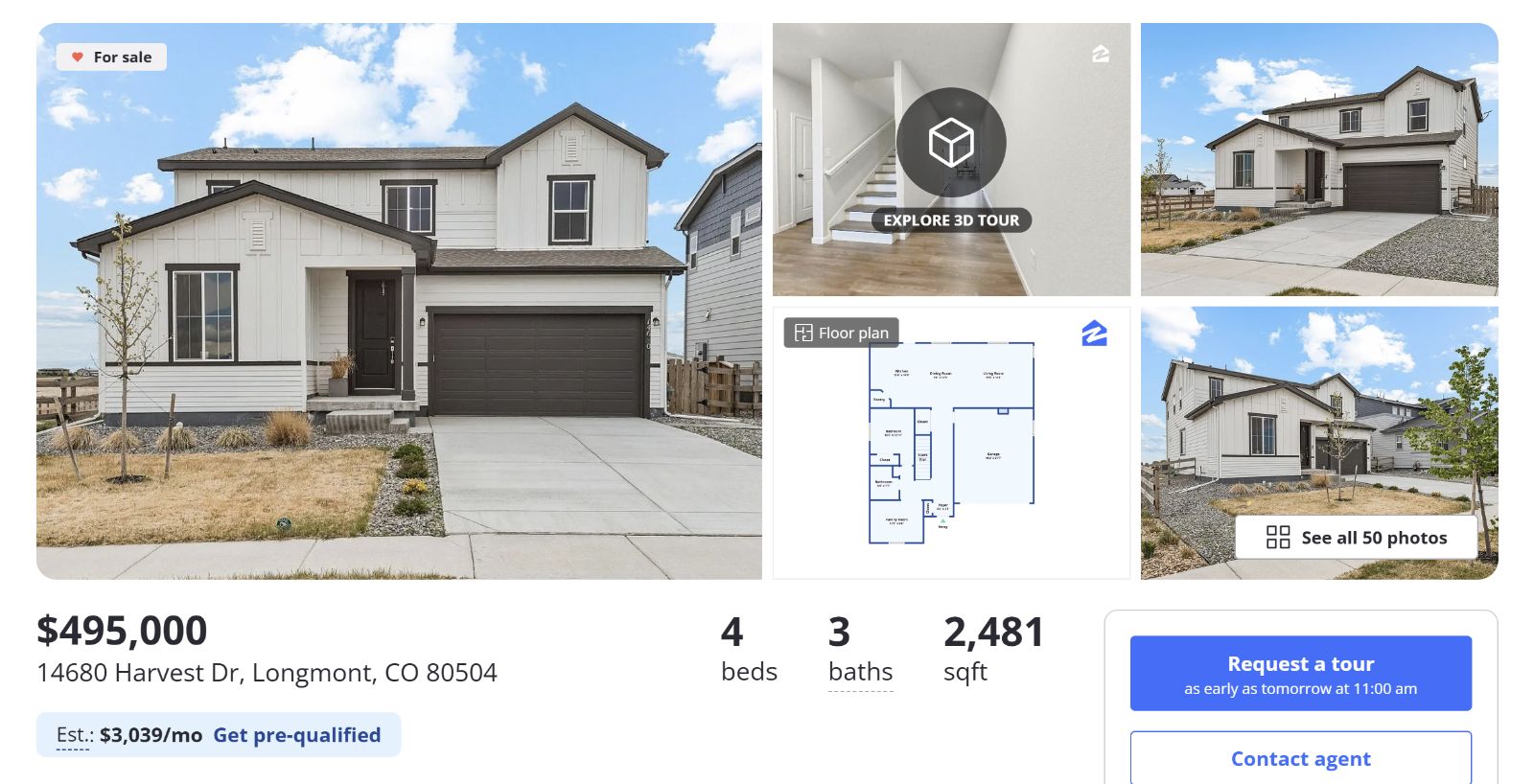
We have a listing at 14680 Harvest Drive in Longmont at $495,000. The builder next door is at $550,000 for the same house. That is a short sale. You are capturing $55,000 to $60,000 in equity on day one if you buy that right.

We have a buyer under contract right now at 15295 Liverpool Way in Centennial, in the Southlands area, Cherry Creek School District. Short sale. The going price for a comparable home in that area is $575,000. That buyer is paying well under that. Getting into Cherry Creek schools at a price they could not touch anywhere else in the submarket.
And on 109th in Commerce City, that is another one where compared to what the original buyer paid four years ago, today's price is a real opportunity.
Are these simple transactions? No. Short sales take real strategy. The approach of taking photos, throwing it on the MLS, and hoping for the best does not work in these communities. You have to mirror the builder's incentives. Offer rate buydowns. Price your monthly payment to be better than, not just equal to, what the builder is offering on a new unit. That means getting creative with concessions and being brutally honest about where pricing needs to land.
It is also worth saying clearly: not every metro district is a problem. We just sold a new build outside of Boulder where the builder was fully transparent about where taxes were going and what the approval number should actually be based on projected future taxes. That felt fair. The buyers understood the risk. That is the right way to do this. The problem is when people are told their taxes are
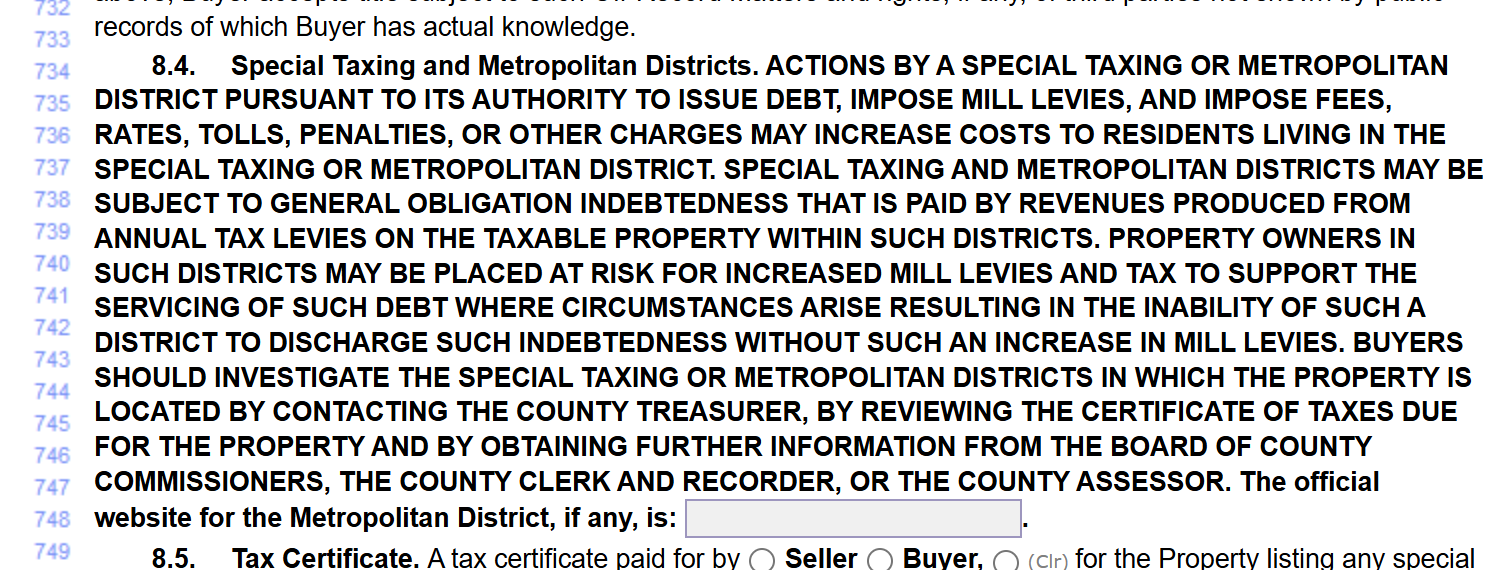
The Colorado real estate contract was updated last year to require disclosure that a metro district exists. That is a step. But if your agent is not specifically telling you to go to that district's website, read the financial documents, and understand what the mill levy trajectory looks like, that disclosure is almost meaningless. You get a checkbox on a contract and zero context.
The state should create specific metro district review deadlines in the transaction, the same way it has inspection and loan deadlines. You should have a window to review the district's financials the same way you review the home's condition. Right now that structure does not exist.
And the bigger structural issue, which Karen Morgan, a Lakewood resident who runs the news opinion site Lakewood Informer, put directly: "Sometimes the only answer to responsible development is to honestly tell people the cost. Go back to traditional models where people buy the house with the infrastructure cost included so that people don't get stuck and districts don't fail. If it's too expensive for the end client, don't start building until market conditions are more favorable. Other states still do it this way. It is possible."
That is a reasonable argument. The counter from industry is that metro districts make new development affordable by spreading infrastructure cost over time. Adams County Commissioner Steve O'Dorisio said he does not think anyone needs to "throw the baby out with the bathwater" and believes the existing tools can be improved. Fine. But the $454 million debt sitting on 7,500 homes in Castle Rock suggests the current tools have some serious gaps.
The Colorado auditor's December report covered 1,598 districts. There are 2,337 active ones statewide. About 100 new ones get approved every year. And authorized but unissued debt across all of them exceeds
This is a Radically Colorado issue if there ever was one. It is not abstract policy. It is your property tax bill, your home's resale value, your ability to refinance, your equity position, and in some cases the question of whether you can sell your house at all without going through a short sale.
To learn more and see the listings go to symbiohomes.com/our-listings