 Revolutionizing · Modernizing · Simplifying
Revolutionizing · Modernizing · Simplifying
Revolutionizing · Modernizing · Simplifying
Picture a red cable car climbing a mountain with nothing holding it up in the middle. No towers. No poles. Just one steel span stretched 2,630 feet from the bottom terminal to the top, and a 12-passenger cabin hanging 200 feet above the trees at the highest point. That is the Estes Park Aerial Tram, and it has been doing this exact trick since June 20, 1955.
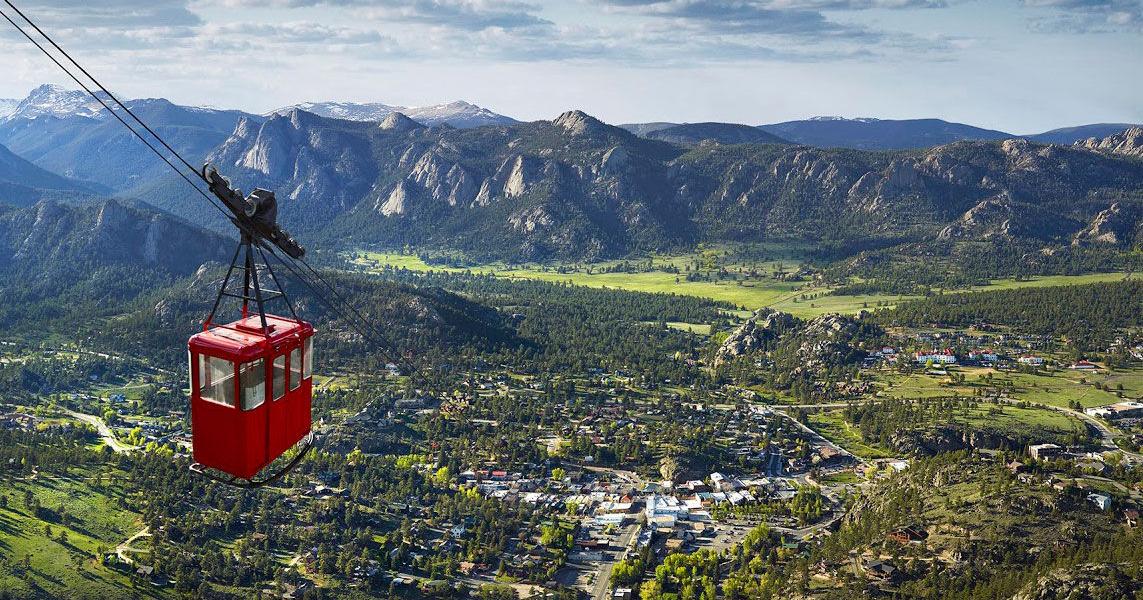
Here is the part people miss. Most folks driving into Estes are white-knuckling their way toward Rocky Mountain National Park, fighting the timed-entry passes and the parking lots that fill by 8 a.m. Meanwhile, a five-minute ride to an 8,708-foot summit is sitting right there at 420 E. Riverside Dr., no park pass required, parking $7.95. That is the whole cost of admission to the lot. And honestly, it might be the most under-appreciated summit on the Front Range.
The tram is the work of a Denver engineer named Robert Heron. Everybody called him Bob. His Heron Engineering Company broke ground on April 1, 1955, and the whole thing cost about
So how does it stay tight? Bricks. Down in a shaft below the terminals sit two massive counterweight buckets loaded with roughly 48,000 and 52,000 pounds of brick. That is what keeps the cables slack-free, decade after decade. It is old-school physics doing the work, and it has moved over 3 million people since 1955. The two red cars run about 240 riders an hour.
General manager Adrian Liddell has ridden it more than anyone, and he describes the tower-free trip better than I could. He calls it "like flying, but you're still attached to the ground on both sides." That is exactly it. No towers means nothing interrupting the view or the feeling. Just you, the cable, and a whole lot of air underneath.
Here is the thing about Bob Heron that makes this more than a roadside attraction. The man was a legend in the cable business, and his story starts in a war.
During WWII, Heron designed a portable tramway for the U.S. Army's 10th Mountain Division. That equipment helped the Allies pull off the capture of Riva Ridge in Italy in early 1945, one of the hardest mountain assaults of the war. So the guy learned to move people and cargo up impossible slopes when the stakes were about as high as they get.
After the war he came home and basically wrote the playbook for Colorado skiing. He built Aspen's first ski lift, Lift 1, in 1946. He built Colorado's first double chairlift at Berthoud Pass. Then he went to Boyne Mountain in Michigan and built the nation's first triple chairlift and the first quad. If you have ridden a chairlift anywhere, you are riding on ideas this man worked out. The Estes tram was just one more thing he figured out how to do that nobody else had.
Heron died in 1999, and his son John Heron kept it running. The Heron family operated the tram continuously from 1955 with only two exceptions. 2020, for Covid. And 2023, when they sold.
In 2024 the family sold to Gondola Ventures LLC, a company led by CEO and co-founder Perry Shea. They held a grand reopening on May 25, 2024. Smart move, they kept Adrian Liddell as GM, so the guy who knows this machine inside and out is still at the controls.
And they have been fixing the place up. The Hungry Chipmunk Cafe got a revamp and now serves beer and wine (which is dangerous for me, because a cold beer at 8,708 feet is a hard thing to say no to). There is a robotic cotton candy machine, a new picnic area, and here is the one that actually matters most: they trimmed the trees back to open up the summit view.
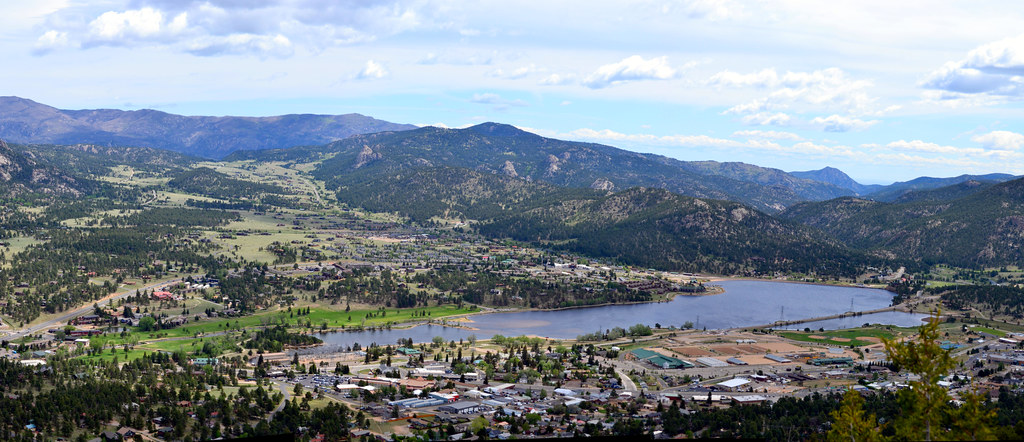
That view is the whole payoff. From the top you are looking straight into Rocky Mountain National Park, out at Longs Peak, and across the Continental Divide. There is a gift shop and some light hiking trails up top if you want to stretch your legs before you ride back down.
So think about the math on a summer day. The national park is packed, the passes are gone, the lots are full. And a few minutes away, a 71-year-old red cable car counterweighted by tons of brick will fly you to a real Colorado summit for the price of parking plus a ticket. The 2026 season runs May 9 through November 1.
If you ask me, that is the move. Skip the timed-entry stress for a day. Go ride the thing Bob Heron built when Eisenhower was president, and drink a beer while Longs Peak stares back at you.