 Revolutionizing · Modernizing · Simplifying
Revolutionizing · Modernizing · Simplifying
Revolutionizing · Modernizing · Simplifying
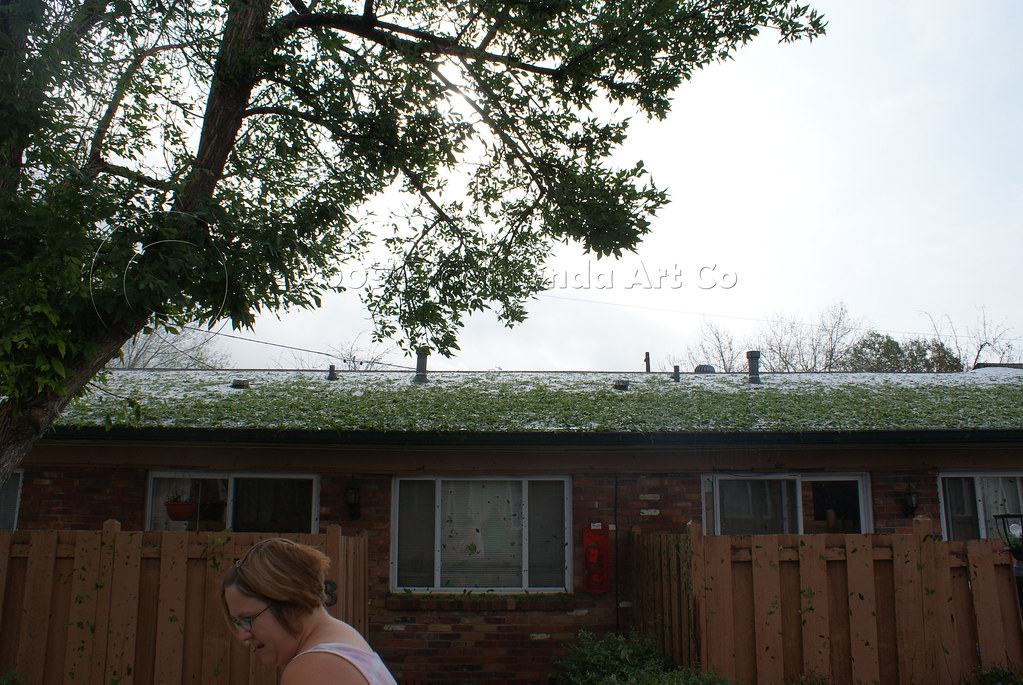
Picture your roof after this summer. Denver hail season did its usual thing, your shingles are chewed up, and you call for a bid to reroof the whole thing. Standard Front Range story. Most people do not realize that if your house sits in a mapped wildfire zone, that reroof might now trigger a whole different set of rules and a whole different number at the bottom of the estimate.
Here is the thing. As of July 1, 2026, Colorado has its first statewide building code aimed squarely at wildfire. It is called the Colorado Wildfire Resiliency Code, or CWRC, and it applies to new construction and additions in what the state calls the wildland-urban interface. The WUI. That is the zone where neighborhoods bump up against the kind of land that burns.
And this is not a small deal. Colorado is the first Western state after California to adopt mandatory statewide wildfire construction standards. That is per reporting from Property Guardian and The Bacon Partners. For a state that loves its local control, that is a genuinely big move.
The code did not appear overnight. It started with Senate Bill 23-166, signed back in 2023. From there the state's Wildfire Resiliency Code Board adopted the actual code on July 1, 2025, built on the 2024 International Wildland-Urban Interface Code. Then local jurisdictions in WUI areas had until April 1, 2026 to adopt the CWRC or something stricter, and had to be fully enforcing it on applicable permits by July 1, 2026.
So the timeline has fully caught up. This is live right now.
Why does the state care so much? The Colorado State Forest Service estimates about half of all dwellings in the state are at high risk of wildfire. Half. And if you want the human version of what that means, look at Waldo Canyon in 2012, which destroyed 346 homes inside Colorado Springs city limits, and Black Forest in 2013, which took out 511 homes. Both of those burned directly into residential neighborhoods. That is the exact scenario this code is built around. Not remote cabins. Actual streets with actual houses.
Here is where it hits your wallet, and it is worth your attention because most homeowners have no idea this exists.
The code is triggered three ways. New construction. Additions or alterations over about 500 square feet. Or, and this is the big one, any project that replaces 25% or more of a structure's surface area. It is not retroactive. If you never touch your existing home, you are exempt under section 102.8. Leave it alone and nothing changes.
But the moment you cross that 25% line, the rules kick in.
The roof rule, section 101.6, says if you replace 25% or more of your roof surface, which a hail-damaged full reroof absolutely does, the entire roof has to meet new-construction fire ratings. Not the patch. The whole thing.
The wall rule, section 101.7, is even bigger. Replace 25% or more of your exterior walls and the whole wall assembly has to use compliant materials, plus you have to bring the five-foot zone around your house into defensible-space compliance. Builders are reporting that the required upgrades to roofing, siding, vents and windows add real expense, and the fire-rated exterior wall assemblies are among the biggest cost drivers of the whole thing.
So the bid you thought was a straightforward hail repair can quietly become a fire-hardening project. That is why you want to know before you sign.
One quirk worth mentioning. HUD-code manufactured homes are exempt from structure hardening on first installation under section 101.2.3. But move one into a designated area and it becomes subject to the code. So the location, not just the home, is doing the work.
There is no single map. Each jurisdiction adopts its own version of the code and its own WUI map. Jefferson County, for example, runs its own Wildfire Resiliency Code with a Class 1 and Class 2 overlay map for unincorporated areas. Arvada has already adopted its own hardening and defensible-space requirements. So the honest answer to "does this affect me" is: it depends on your exact address and which map you land on. Check your specific jurisdiction before you assume anything.
And do not confuse this with your insurance situation, because they are not the same tool. The Colorado Division of Insurance is explicit that the state's WUI code map is not an insurance map. Insurers use their own tools and their own maps to set your coverage and your pricing.
Which, honestly, is its own headache. Colorado saw roughly 400 hail events in 2023, fourth in the entire nation per NOAA data cited by insurance officials. Meanwhile the average Colorado homeowners insurance premium is now about $4,100 a year. That is a 137% jump over the past decade, according to National Bureau of Economic Research data cited by Denver7. So the hail keeps coming, the premiums keep climbing, and now the repair itself can cost more if you are in the zone.
If you own a Front Range home and you are staring down a reroof or a siding job after this summer, do two things before you sign anything. Find out if your address sits in your jurisdiction's WUI map. And ask your contractor point blank whether the scope crosses that 25% threshold, because that single line is the difference between a normal repair and a code-triggered upgrade.
Know it before the bid, not after. That is the whole game here.