 Revolutionizing · Modernizing · Simplifying
Revolutionizing · Modernizing · Simplifying
Revolutionizing · Modernizing · Simplifying
December 9, 2017. A farm in Cañon City. Jude and Addie Schuenemeyer are standing in front of a tree that, as far as the record was concerned, should not exist.
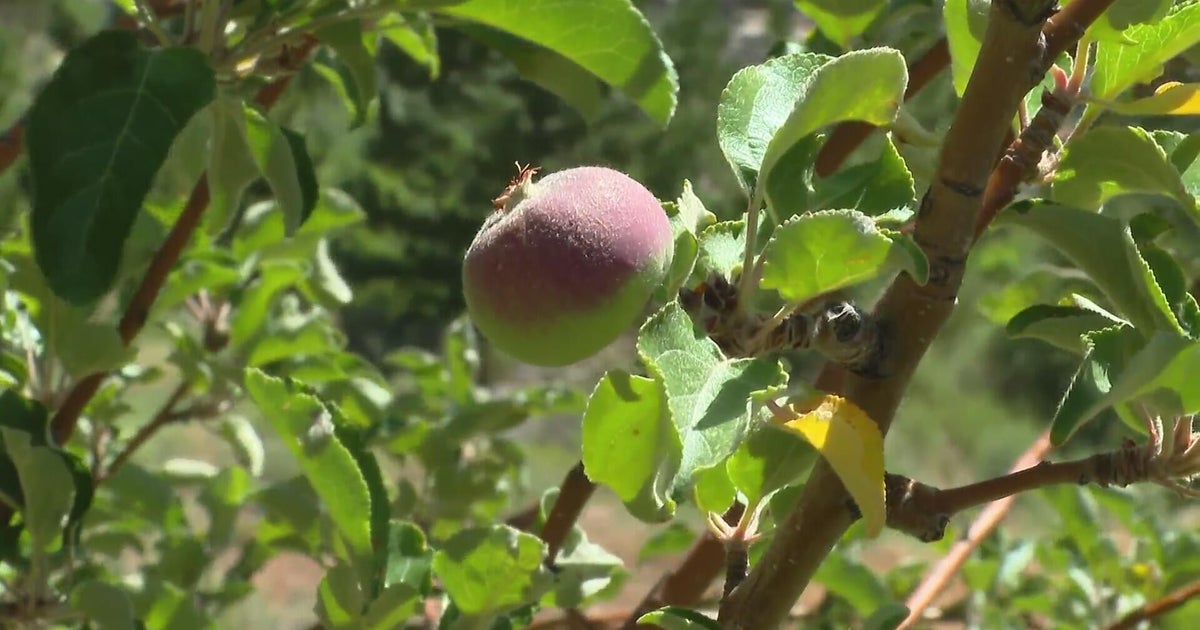
The Colorado Orange apple was extinct. Gone. A name in old catalogs and nothing more. And here it was, the last known one, still standing on the historic Steinmeyer Farm.
That is the kind of thing these two do.
Most people do not realize this, but Colorado used to be an apple state. Not a "we grow a few" apple state. A giant. In the 1800s this was one of the largest apple producers in the entire country. By the 1920s you had roughly 400 varieties and something like 1.5 million apple trees planted across the state, from the Front Range all the way out to Grand Junction. Orchards everywhere.
And then, over decades, farm consolidation and time did their thing. About half of those 400 varieties are now considered lost. Just wiped off the map.
So here is the real story on this. Jude and Addie Schuenemeyer bought a nursery back in 2001 down in Montezuma County, near Cortez. And instead of just running a nursery, they started digging into the region's fruit-growing history. What grew here. What used to grow here. What disappeared.
That research turned into the Montezuma Orchard Restoration Project, or MORP. And MORP has now documented over 400 varieties of apples that were historically grown in Colorado. Roughly half of them lost.
Their answer to that is a place called the Gold Medal Orchard, out in McElmo Canyon. It has grown to nearly 400 trees, and every single one is a variety that was thought lost to history. Jude figures 100 to 150 of the varieties growing out there are found almost nowhere else on earth. Let that sink in. This is a living library, and for a lot of these apples it is the only copy left.
Back to the Colorado Orange. How do you even confirm you have found something everybody wrote off decades ago?
You do your homework. The couple compared their apples to four Colorado Orange depictions inside the USDA's collection of nearly 4,000 pomological watercolor paintings. That is a real thing, by the way. The government paid artists to paint fruit before color photography could do the job. Then, to be sure, they sent DNA off to the University of Minnesota.
And here is a detail I love. A 1923 ad in the Leadville Daily Herald offered 1,000 bushels of Colorado Orange apples for
The Colorado Orange is not the only comeback story either.
Two Walbridge apple trees, also thought extinct, were rediscovered standing right in front of the Western Museum of Mining and Industry in Colorado Springs. These things are about 130 years old. Leftovers from the old Reynolds farm, just standing there the whole time while everybody assumed the variety was gone.
That is the part people miss. These trees are not always hiding in some remote canyon. Sometimes they are in your town, in a front yard, next to a museum parking lot. Nobody knew what they had.
Here is how you actually keep a variety alive once you find it. You clone it. Preservationists take living branches off the rare tree and graft them onto new rootstock, then plant those clones in multiple orchards. Spread the risk. If disease or drought takes out one site, the variety does not die with it. Smart, and honestly the only way this works long term.
The Gold Medal Orchard almost did not make it, by the way. In 2015 it landed on Colorado Preservation, Inc.'s list of the state's Most Endangered Places. It got saved through cooperation between MORP and the Kenyon family. That is the whole ballgame right there. These things survive because specific people decide they should.
And the Schuenemeyers are not alone in this fight. There is the Boulder Apple Tree Project, run by CU Boulder ecology professor Katharine Suding. There is Daniel Haykin of Haykin Family Cider over in Aurora, turning heritage fruit into cider. A small crew doing quiet, patient work.
Colorado is 150 this year. And I think there is something exactly right about spending that birthday chasing down the last living pieces of what this place used to be. Not a plaque. Not a reenactment. An actual apple you can bite into, the same one somebody bought for
The knowledge is fragile too. These varieties live in old trees and in the memory of a handful of people who know how to graft them. Lose both and it is over. No do-overs.
So the next time you are out past Cortez in McElmo Canyon, know what is growing out there. Nearly 400 trees, most of them the only ones of their kind. A whole vanished orchard, brought back one branch at a time.