 Revolutionizing · Modernizing · Simplifying
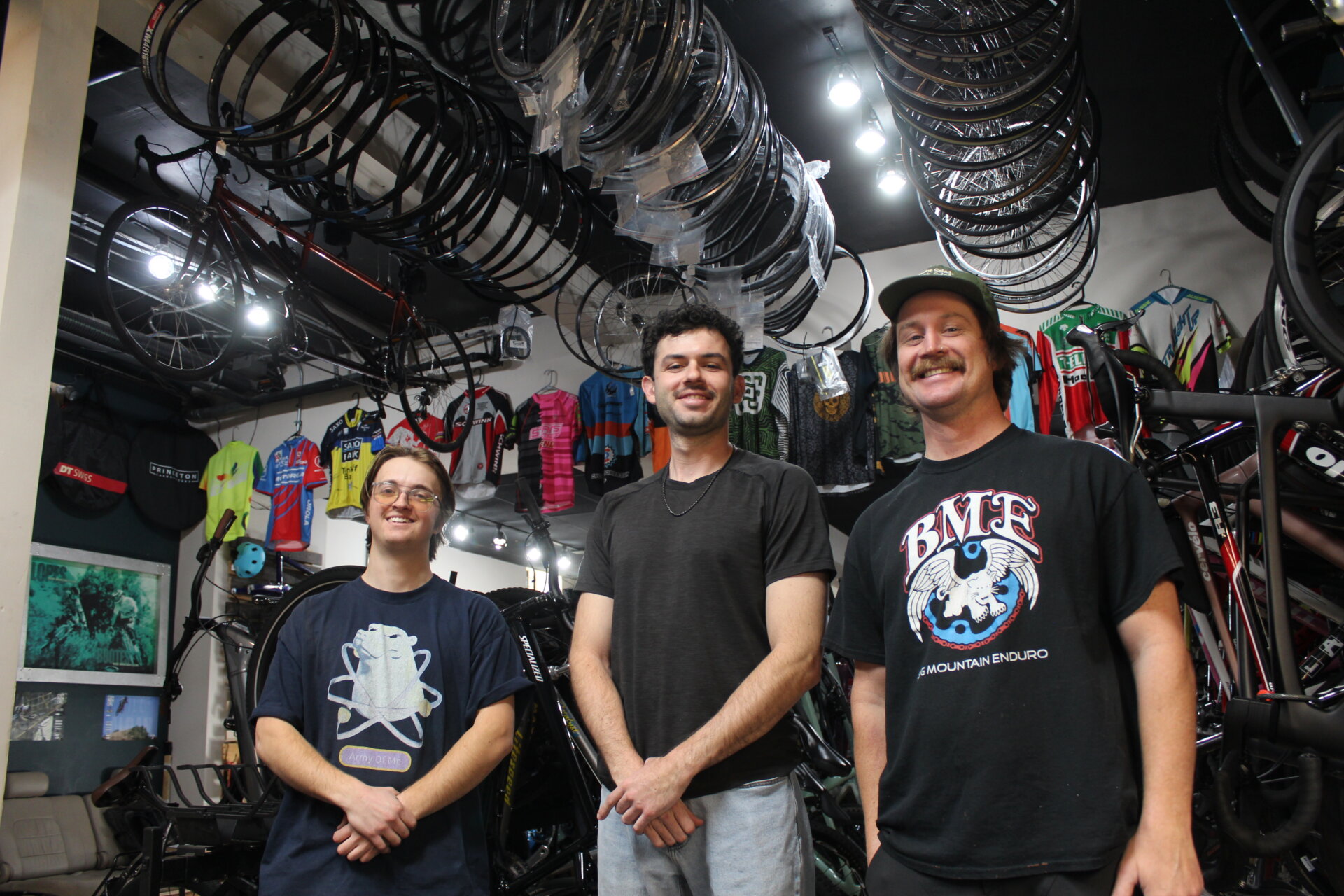
Anton Cariffe was about 10 years old when he bought an old bike off Craigslist, fixed it up, and sold it for a profit. That one flip, in his words, "started the cycle." Sixteen years later he is 26 and running a shop on Santa Fe Drive that BusinessDen says is on pace for roughly $650,000 in sales this year.
Let me say that number again. $650,000. On used bikes. In a retail stretch where a lot of people are telling you nobody is spending.
Here is the part most people miss about Traveling Ground. The whole thing is built on a model you already know, you just know it from buying cars.
Cariffe's pitch is simple. Car dealers have two lots. A new lot and a used lot. You pull up, you browse the pre-owned inventory, somebody who knows the product walks you through it. Normal. Expected.
Now think about bike shops. "No bike shops have a used lot," Cariffe told BusinessDen, reported by Max Scheinblum on November 20. And honestly, once he says it out loud, you cannot unhear it. Go into a traditional shop and it is all new, all shiny, all marked up to new-bike money. The secondhand market, the high-end stuff people are quietly selling on the internet, has been this scattered mess of sketchy meetups and guesswork.
Traveling Ground took that chaos and gave it a lot. A storefront. People. A website at travelingground.com where they re-market high-end used bikes and components to buyers who know exactly what they are looking at.
I want to be clear about something, because it would be easy to read this as a kid who got lucky flipping bikes.
Earlier in the growth stretch, the business reported a month that ran 78% over the prior year's monthly average. Bikes and components were going out nearly every single day. That is not a garage side gig. That is a shipping operation.
And it has the receipts to match. Traveling Ground went through the Magis Factory Accelerator, which is tied to Regis University. Then Cariffe took second place in the Regis University Innovation Challenge, up against something like 29 other businesses. So the idea got stress-tested in a room full of people whose whole job is poking holes in business plans, and it still came out near the top.
He is not doing it solo either. Luke Penton and Miles Overstreet are in there with him, which matters when you are moving inventory at that clip.
So the location is doing more work here than you might think.
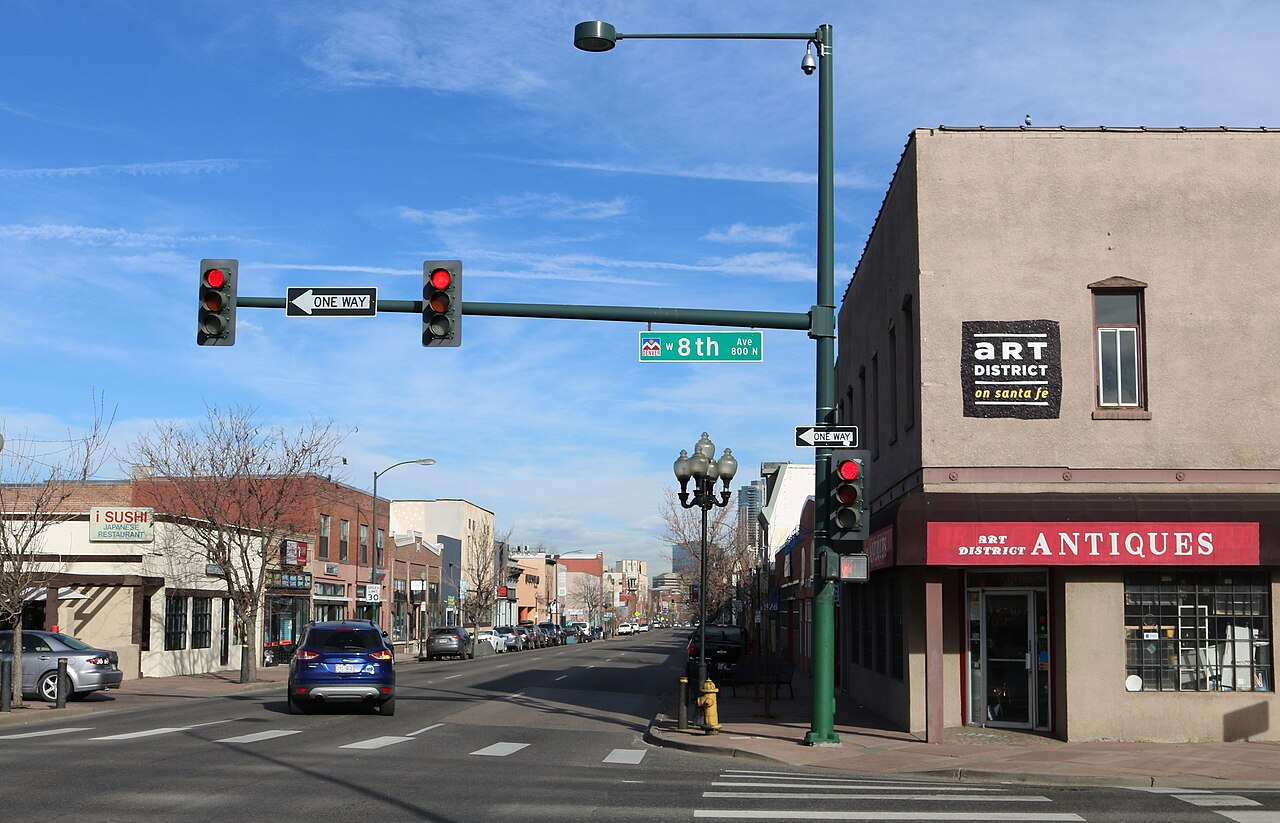
Santa Fe Drive is Denver's arts district, down in the Lincoln Park neighborhood just south and west of downtown. First Friday crowds, galleries, foot traffic that actually shows up. And it already has a cycling cluster forming. Totem Cyclery is right down the street at 218 Santa Fe Dr. When similar businesses stack up on the same corridor, they do not usually kill each other. They pull in the exact customer each of them wants. A cyclist walking the district is a warm lead for everybody.
Here is the real estate angle, and I am not forcing it because it genuinely matters to this story. Santa Fe Drive is one of those corridors people in the business have watched closely for years. It sits close enough to downtown to carry real demand, but the storefront footprint and the arts-district character keep it from feeling like a generic retail strip. For a concept that needs a physical lot, a place for people to actually come look at a used bike before they commit, that address is doing the selling before anyone walks in. You cannot run a "used lot" out of a mailbox. You need the room, and you need to be where the right people already walk.
What is actually happening here is bigger than one shop.
The secondhand market for nice gear has been huge and basically invisible for years. People buy a $5,000 bike, ride it for two seasons, and want out. Other people want that exact bike at half the price and have no safe, organized way to get it. That gap has been sitting there the whole time. Cariffe just built the bridge and put a roof on it.
And he did it during a stretch when plenty of retailers are struggling. That is the quiet lesson in the $650,000. It is not that people stopped spending. It is that they got pickier about where. Give them real value, a product that already proved itself, and somebody who knows what they are talking about, and the money shows up.
I keep coming back to that 10-year-old on Craigslist. Buy low, fix it, flip it, do it again. That is the entire business, scaled up and parked on Santa Fe Drive. Sometimes the idea that works is the one a kid figured out before he could drive, and everybody else just waited around for someone to take it seriously.
Cariffe took it seriously. The number says it is working.