 Revolutionizing · Modernizing · Simplifying
Revolutionizing · Modernizing · Simplifying
Revolutionizing · Modernizing · Simplifying
Look at the two men above. Forty-four years apart, and the economy that carried each of them into office looks almost like a photocopy.
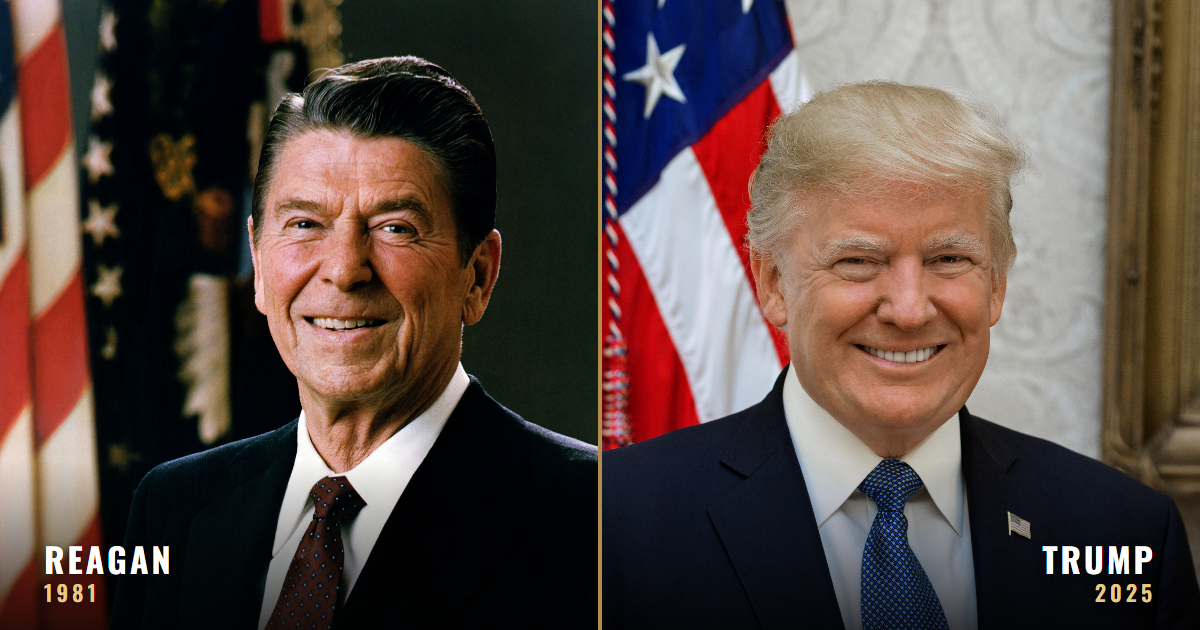
In 1980 the country traded Jimmy Carter for Ronald Reagan. In 2024 it traded Joe Biden for Donald Trump. Both times the same think tank — the Heritage Foundation — handed the incoming administration a thick policy playbook: "Mandate for Leadership" in 1981, "Project 2025" four decades later. Both times the headline problem was the same: prices were running hot and money was expensive.
History does not repeat, the saying goes, but it rhymes. Right now it is rhyming loudly.
In October 1981, the average 30-year mortgage hit 18.63% — still the highest in American history. Fed Chairman Paul Volcker had cranked interest rates toward 20% to strangle an inflation rate that had been running near 14%. Home sales collapsed. Builders went under. Agents left the business in droves.
Now fast forward. Inflation peaked at 9.1% in the summer of 2022, the hottest reading in four decades. The Fed did its best Volcker impression and hiked at the fastest pace in modern history. Mortgages went from under 3% to over 7% in about a year, and they have basically stayed there since. Sales froze. Sound familiar?
The levels are different — 7% is not 18% — but the shape of the story is identical: an inflation scare, a Fed that slams the brakes, and a housing market that seizes up while everyone waits for rates to come back down.
Reagan inherited an energy crisis. The 1979 Iranian Revolution choked off oil, gas lines wrapped around the block, and energy prices dragged the whole economy along with them.
Today the energy story runs the other direction, but it is just as big. Artificial intelligence is eating electricity. Data centers are pulling so much power that utilities are firing retired plants back up, and capital is pouring into anything that can generate a watt. In the '80s an energy shock made everything scarce; in the 2020s an energy boom is pulling capital — and fresh inflation pressure — right back into the system. Either way, energy is once again quietly setting the price of money.
The 1980 election played out against 52 American hostages held in Tehran for 444 days. The 2020s have had their own steady drumbeat of conflict with Iran. Different decade, same name in the headlines.
Here is the honest part. The 1980s crisis was about the cost of money — rates so high that almost nobody could borrow. Today's crisis is about the price of the house itself. Home prices are up roughly 50% since 2020. So even when rates ease, affordability barely moves, because the sticker price already climbed a mountain while everyone was arguing about the rate.
That is the twist the 1980s did not have. And it changes the move.
Everybody remembers the 18% rate. Almost nobody remembers what happened next: the people who gritted their teeth and bought in 1981 spent the rest of the decade refinancing as rates fell — and they owned a fast-appreciating asset the entire time. The people who waited for the perfect rate kept renting while home prices ran off without them.
If the 2020s really are the 1980s, the lesson is the same one it was then: you marry the house and you date the rate. You cannot refinance a price you never locked in. A decade of high rates is survivable if you own the asset. It is brutal if you are stuck on the sidelines paying down someone else's mortgage.
Nobody knows whether rates stay high for another year or another ten. The 1980s says a long stretch is absolutely possible, so betting your housing plan on a fast drop back to 3% is betting against history. The smarter play in a market like this is the one good buyers made in 1981 — get the right house on the right terms, structure the financing so it works at today's numbers, and let time and the next refinance do the rest.
Same movie. New cast. The people who understood the plot the first time did just fine.