 Revolutionizing · Modernizing · Simplifying
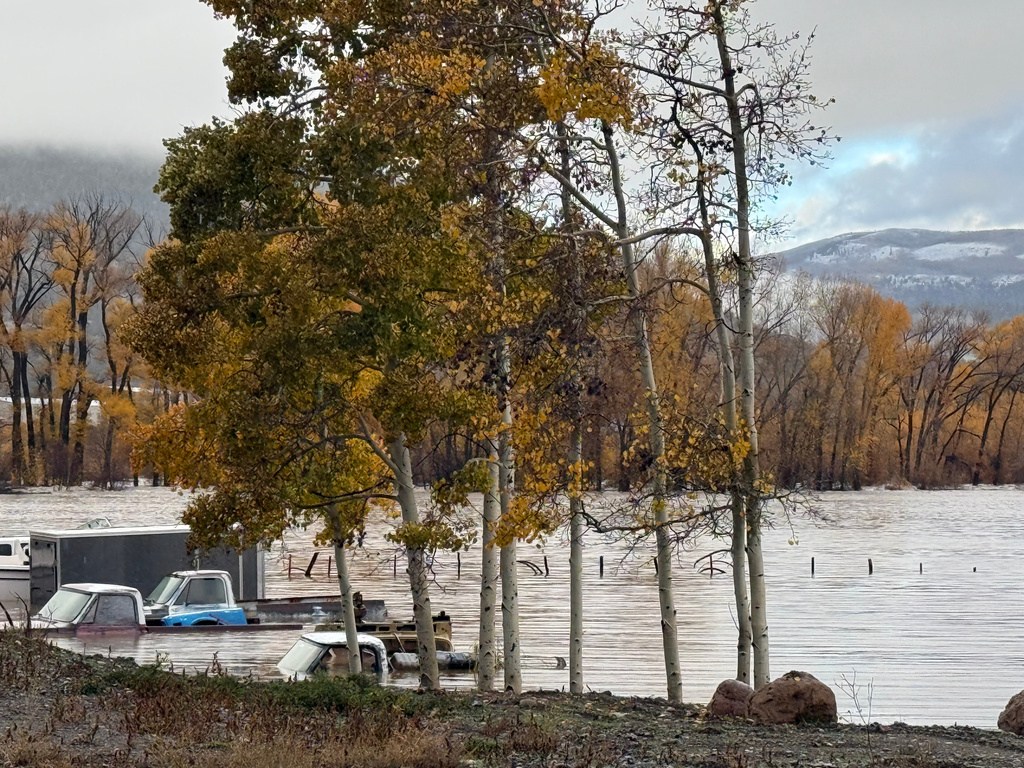
McCabe Creek is usually a trickle. A little nothing of a stream that slides under North Fifth Street and you would never give it a second thought. This week it took out a culvert and reminded everybody in Pagosa Springs that water does whatever it wants.
That is the kind of week it has been down in the San Juans.
The town of Pagosa Springs declared a local disaster emergency Thursday, Oct. 22, after heavy rain hammered southwest Colorado. By early Friday the San Juan River peaked at about 15 feet. Let me put that in perspective. That is a level Pagosa has not seen in over a century. Once-a-century flooding, and that is not a figure of speech. That is the actual math.
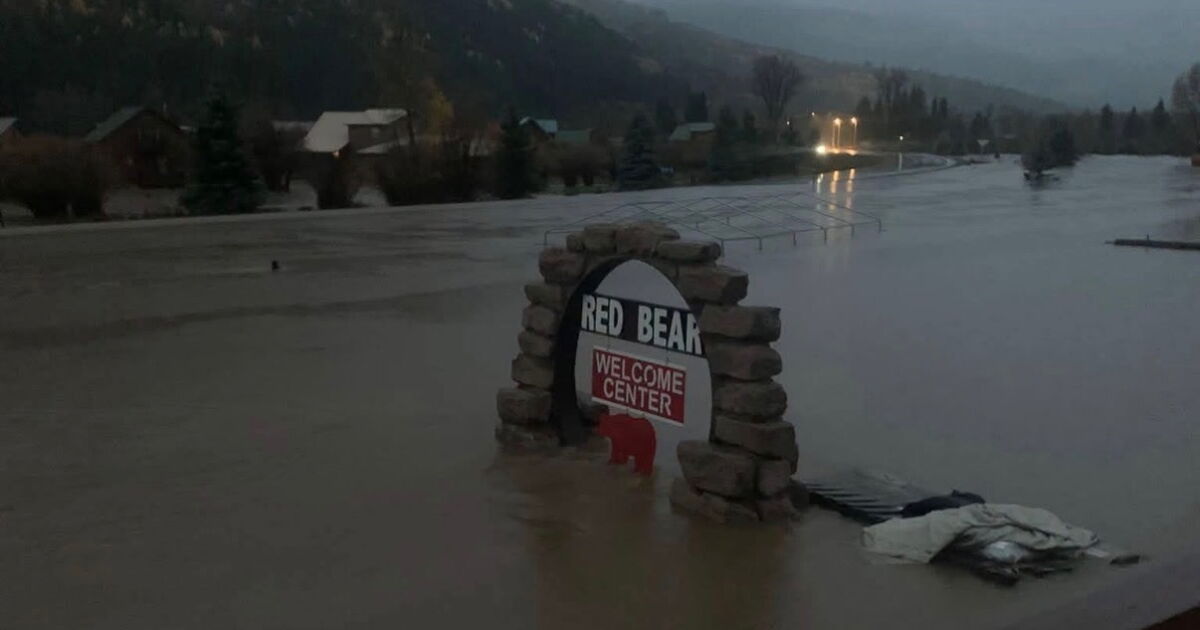
Here is the setup. A tropical Pacific storm was falling apart out over the ocean, and instead of just dying quietly, it shoved a firehose of moisture straight into the Four Corners. Over 5 inches of rain dropped in places. Mountain ground can only take so much before it just gives up and sends everything downhill.
And it did not stay in one spot. The flooding ran east all the way to the Conejos River in south-central Colorado.
Over in Durango the Animas River turned into a muddy torrent, the kind of ugly brown rage that makes you stop your car on the bridge. Now, the Animas stayed below its own records going back more than a century, so Durango dodged the worst of it. Pagosa did not.
Gov. Jared Polis declared a disaster emergency late Thursday for an 11-county stretch of southwest Colorado. Then he expanded it and added Conejos County. A hundred National Guard members got deployed. When the Guard is rolling into the San Juans in late October, that tells you everything about the scale.
If you had any plans to move around down there, forget it.
CDOT closed a 26-mile stretch of U.S. 160, mile points 157 to 183, because the debris was just too much. Think mud, rock, chunks of road, the works. The Million Dollar Highway, U.S. 550 between Durango and Ouray, took water damage but crews got it reopened. If you have ever white-knuckled that drive on a good day, imagine it after a flood.
The Durango and Silverton Narrow Gauge Railroad, that steam train that is basically the heartbeat of tourist season down there, suspended service through at least Monday. And the La Plata County Sheriff closed the Animas River to all watercraft. No rafts, no kayaks, nothing. Which, honestly, if you were looking at that water you would not want to be on it anyway.
By Saturday, Oct. 24, hundreds of homes were still evacuated and still without power. That is three days of no lights, no heat, no coming home.
It was not all bad by the weekend. Evacuations got lifted for Hermosa and San Juan streets in Pagosa Springs. U.S. 160 reopened between Pagosa Springs and Durango, running alternating one-way traffic at a damaged section out in Aspen Springs. Slow, but moving.
For folks who got pushed out of their homes, the American Red Cross of Western Colorado opened two shelters. One at the La Plata County Fairgrounds in Durango, the other at the Pagosa Lakes Property HOA Clubhouse in Pagosa Springs. And the Community Foundation serving Southwest Colorado turned on its Community Emergency Relief Fund to help people in Pagosa and the surrounding towns. If you are looking for a way to actually do something from up here on the Front Range, that is a real one.
A flood watch stayed up through Sunday morning for the Animas River Basin, the Four Corners and Upper Dolores, the San Juan River Basin, and the Southwest San Juan Mountains. So nobody down there was fully exhaling yet.
This is the second major flood to hit Pagosa in two years. Two. Years.
Go back to October 2025. That flood was the third largest on record for Pagosa Springs, 12.82 feet and 8,570 cubic feet of water per second ripping through town. And here is the detail that should make your blood pressure tick up. FEMA turned down the town's roughly $5.7 million aid request. Flat refused it. The town scrambled and pieced together about $3.8 million from NRCS and the Colorado Office of Emergency Management instead.
So this is a small mountain town that just got slammed, got told no on the federal money, patched the hole with other funding, and then got slammed again twelve months later. Only worse.
That matters for anyone thinking about property down there, and I am not saying it to scare you off a beautiful part of the state. I love the San Juans. But two once-in-a-while floods back to back is a pattern, not bad luck. If you are buying near a river in that country, you ask about the floodplain, you ask about insurance, you ask what the water did in 2025 and 2026. Those are not paranoid questions anymore. They are the smart ones.
For now, the water is dropping, the roads are opening, and the people of Pagosa are doing what mountain towns always do. Digging out and checking on the neighbors. We will be watching how the recovery money shakes out this time.