 Revolutionizing · Modernizing · Simplifying
Open your mortgage statement. Look at the escrow line. The number that used to scare you was property tax. It is not anymore.
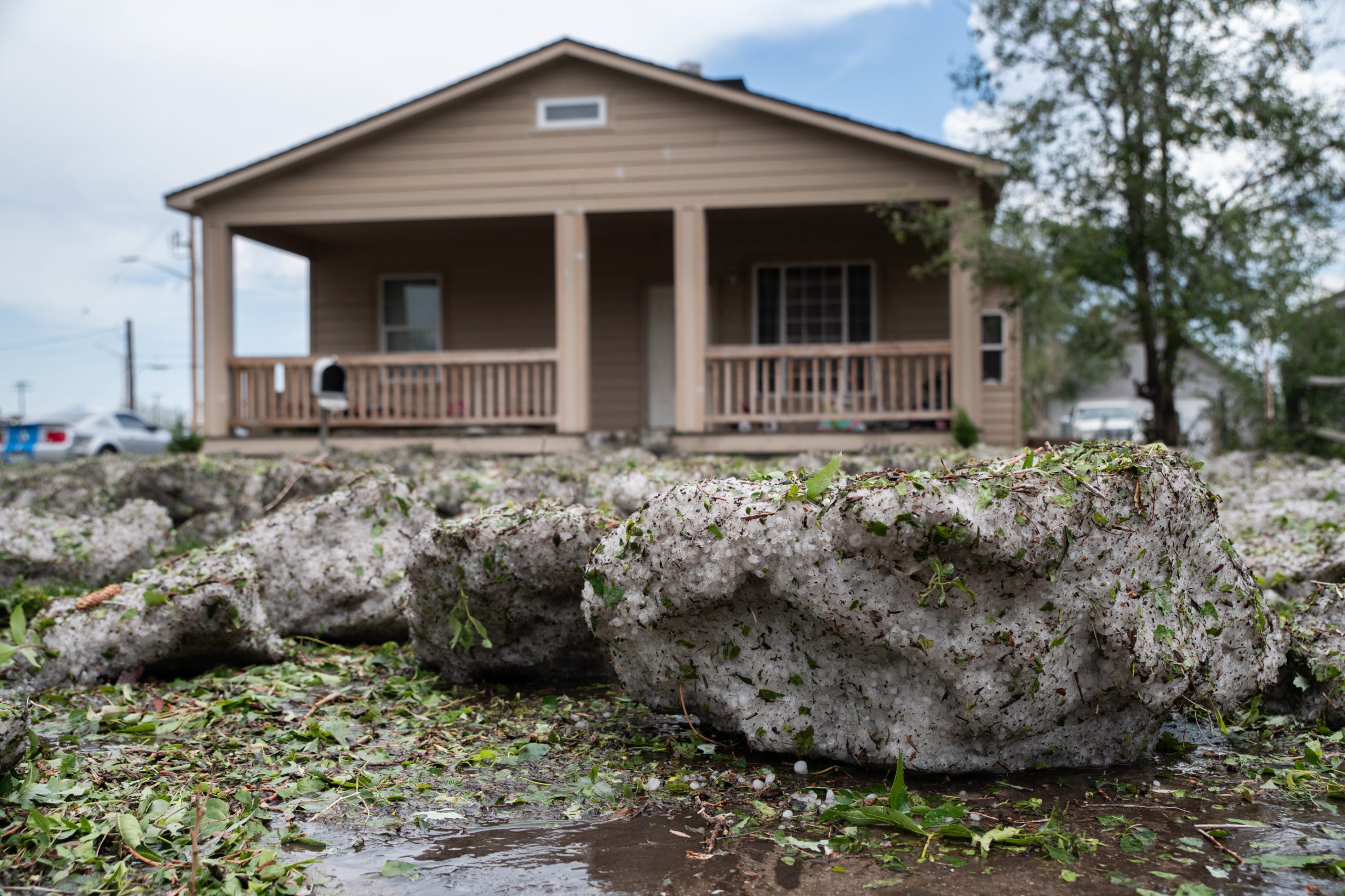
On Monday, Oct. 20, 2026, Bloomberg Intelligence dropped an analysis that put a name on something every Front Range homeowner has been feeling in their gut. In two-thirds of U.S. counties, the average home insurance premium now costs more than the average property-tax bill. Andrew John Stevenson, the analyst who ran the numbers, found homeowners pay a county-level average of 14% more for insurance than for tax. Throw auto insurance into the pile and that jumps to about 30%.
And here is the part that should make every Coloradan sit up. Bloomberg's lead photo was not Miami. It was not Houston. It was a housing development in Aurora.
Bloomberg points to hail and winter weather pushing rates up fastest across the Midwest and Mountain West, led by Colorado, Utah and Minnesota. We are not on the list by accident. We are at the front of it.
Insurance.com's 2026 report puts Colorado's average annual home insurance premium at $5,511. That is up 11.0% from $4,963 just a year ago. It is the third-highest in the country, and it sits about
Six states now average more than $5,000 a year on home insurance. Florida leads at $8,471. Then Nebraska at $5,513, Colorado right behind at $5,511, Oklahoma at $5,378, Kansas at $5,289 and Louisiana at $5,185. We are keeping company we did not ask to keep.
But the single-year number is not even the scariest one. LendingTree's 2026 State of Home Insurance report found Colorado rates rose 100.8% cumulatively from 2020 to 2025. That is more than doubling in five years. The steepest climb of any state in the country. And in 2025 alone, Colorado posted an 18.3% jump, the largest single-year increase in the nation, ahead of Minnesota at 17.0% and Iowa at 14.7%.
I mean, read that again. More than doubled in five years. If your grocery bill did that you would be on the news.
Here is the thing people miss when they only look at the average. The averages are dragged up by risk, and in Colorado the risk has a name. Fire. ColoradoBiz, citing the LendingTree data, reported more than 321,000 Colorado homes are exposed to wildfire risk. That is not a mountain-town problem anymore. That is a Front Range problem, a foothills problem, a "my neighborhood backs up to open space" problem.
And it changes the real estate conversation in a way that is easy to ignore until you are under contract. A buyer qualifies on the loan, qualifies on the tax, and then the insurance quote comes back and the whole deal math shifts. A $5,500 annual premium is roughly $460 a month folded into your payment. That is the difference between the house you wanted and the house you settle for. Worth your attention because it is quietly resetting what a Front Range family can actually afford, even when the sticker price never moved.
Now the good news, and there is some. Colorado did not just sit here and watch the line go up.
New homeowners-insurance protections under HB25-1182 took effect this fall. The Division of Insurance announced the transparency rights and the wildfire-mitigation discount requirements on Oct. 12, 2026. The short version: insurers now have to credit documented wildfire mitigation. That means if you put on Class A fire-resistant roofing, or you do the defensible-space work, that effort has to show up as a direct premium discount or get baked into the pricing model. In writing. Not as a maybe.
So the work you do on your own house can finally buy you something back. That is new.
The state also launched a FAIR Plan, a last-resort backstop for homeowners in high-risk areas who simply cannot find coverage on the open market. It is not cheap and it is not meant to be your first call, but it means the people getting dropped in the burn zones are not left with nothing.
One honest note, because this is journalism and not a sales pitch. The averages move around depending on who is counting. The Colorado Sun, using Insurify data back in July 2026, pegged the state average at $4,164 and ranked us sixth-most-expensive instead of third. Different methodology, different number. But notice the thing that never changes across any of these reports. Colorado is always near the top. Every single one of them.
So pull your statement. Look at the escrow line. The insurance number is the one driving your payment now, and it is the one nobody warns you about until you own the house. If you are buying on the Front Range, get the real quote early, mitigate what you can, document all of it, and run the full number before you fall in love with the kitchen.
Because the tax bill is not the monster anymore. The premium is.