 Revolutionizing · Modernizing · Simplifying
24,192 pieces of glass. One of them nearly won.
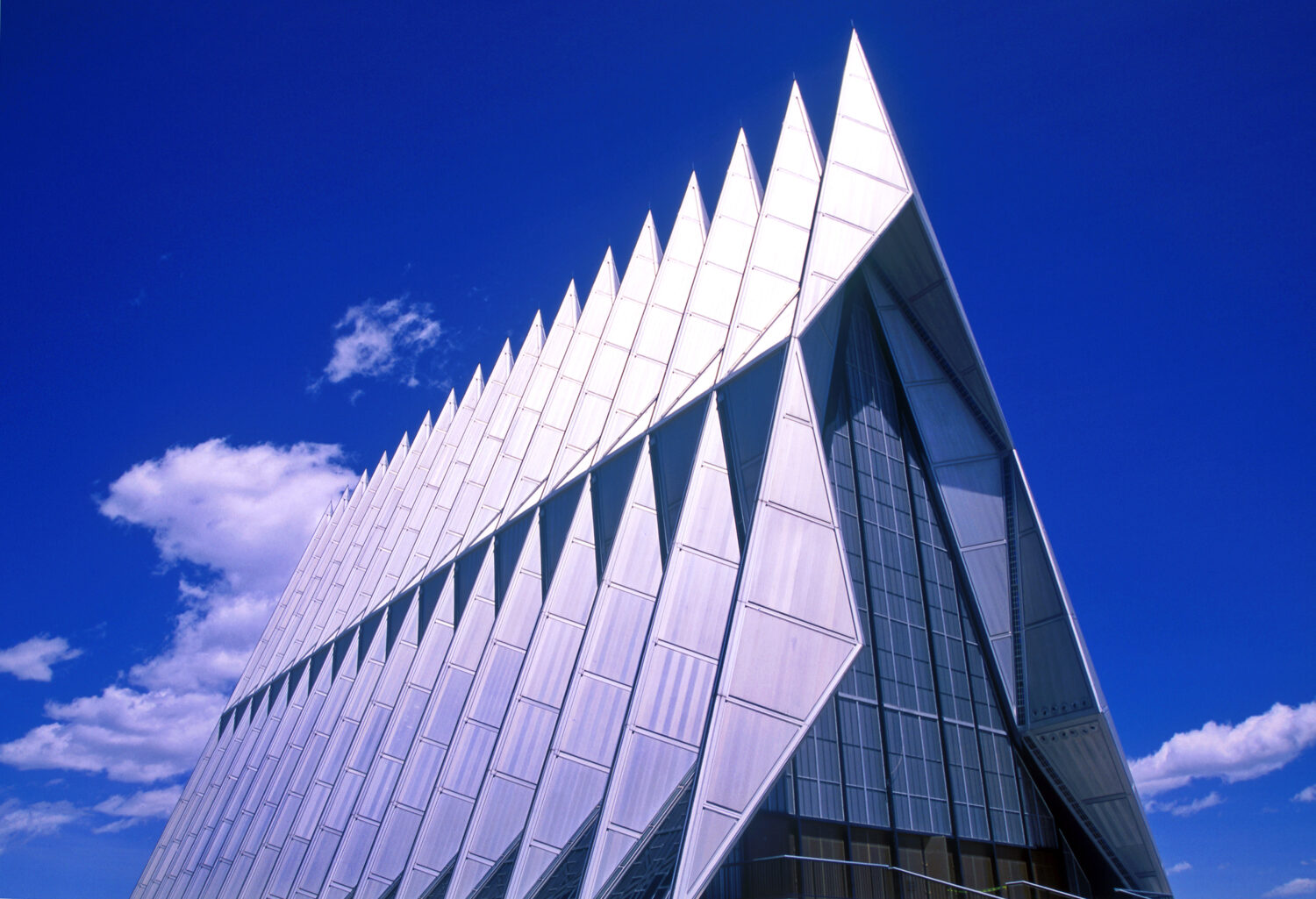
That is the number crews just wrestled back into place at the Air Force Academy Cadet Chapel in Colorado Springs. 24,192 blocks of dalle de verre, set across 2,240 aluminum cassettes, and every single one is now back where it belongs. The Air Force Installation and Mission Support Center made it official around Nov. 18, 2026, a few days after workers set the last restored panel on Friday, Nov. 13.
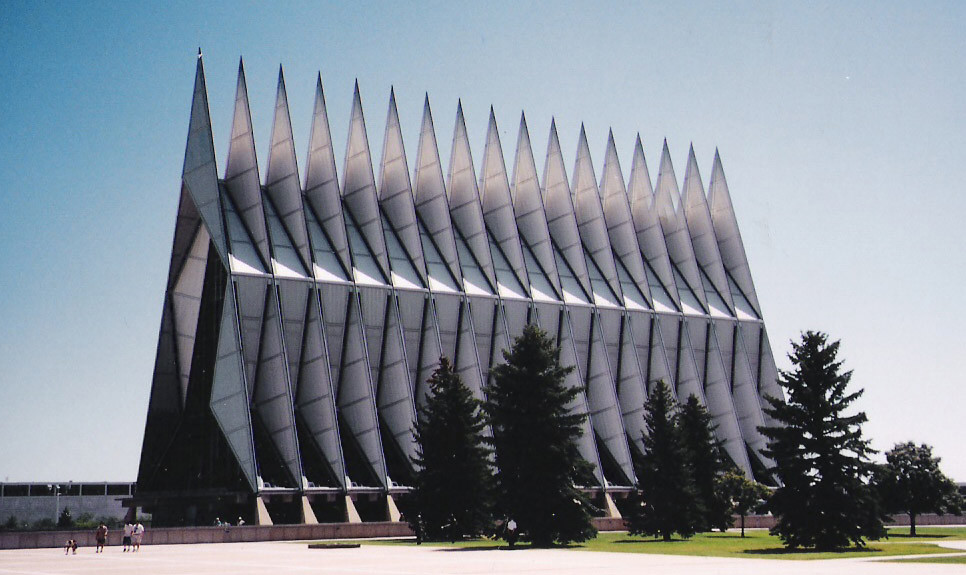
If you grew up anywhere on the Front Range, you know this building without even trying. Seventeen spires punching into the sky south of Denver off I-25. 150 feet high, 280 feet long, 84 feet wide. Completed in 1962 and still one of the most recognizable pieces of modernist architecture in the country. Roughly 800,000 people come through every year. Call it 500,000 tourists and another 300,000 showing up for services, weddings and funerals.
And it has been locked up since September 2019.
Here is the part people miss. The chapel did not close because somebody wanted to polish it up. It closed because it was leaking. For decades. Water kept finding its way in, the damage kept stacking, and eventually the Air Force decided the only fix was to basically take the whole thing apart and put it back together right.
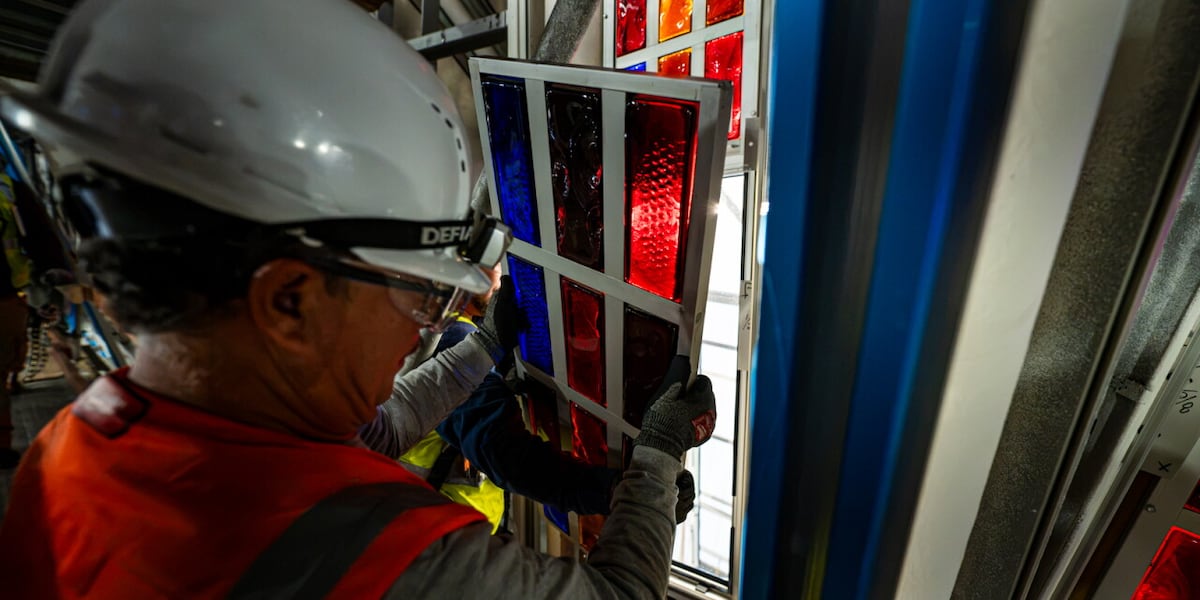
So that is what they are doing. The entire structure is currently sitting inside a giant white enclosure, which from the highway looks like somebody shrink-wrapped a cathedral. Crews started pulling the stained glass out in 2021. Every cassette got a number so it could go back into its exact spot later, no guessing.
The reinstallation has been running section by section since January 2026. Cassette by cassette, matched to its original number, slid back into place. Friday was the last one on the main walls.
Now the glass itself. This is where it gets a little wild, if you ask me.
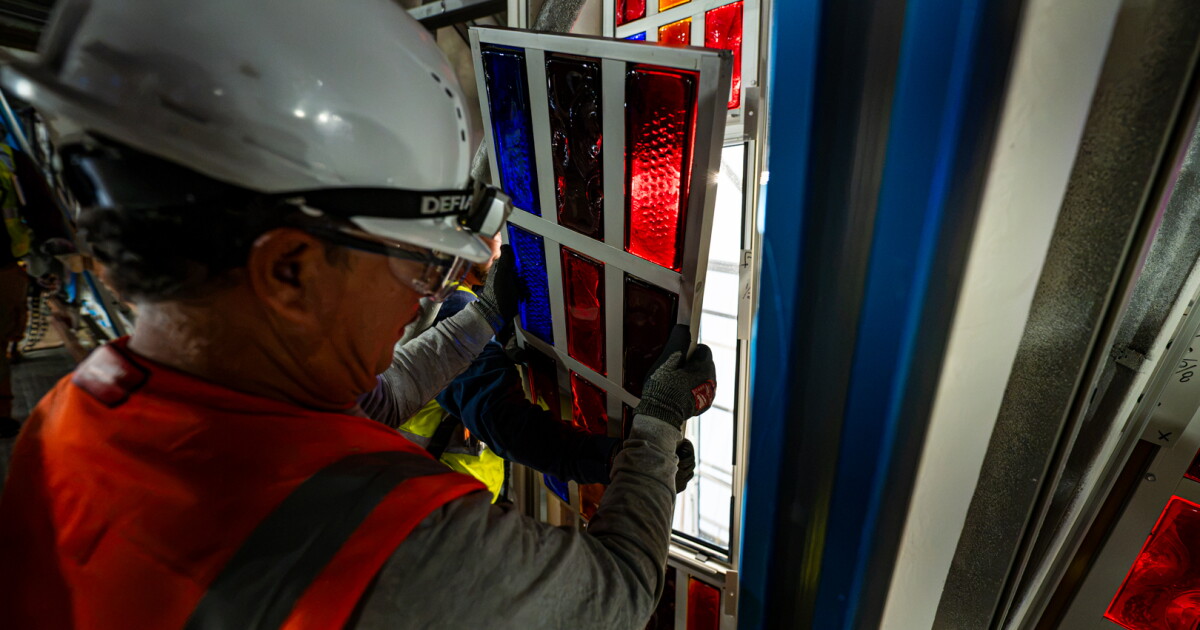
The same company that made the original glass more than 60 years ago is the one that pulled all 2,240 cassettes and rehabilitated every piece. Think about that for a second. The original makers came back for their own work six decades later. That does not happen.
Of the glass that came out, about 2,000 blocks were cracked. They repaired all but one. One single block was too far gone to save.
So they did not just swap in something close enough. They laser scanned the broken block, 3D printed it to build a new mold, and recast it from scratch. That means the chapel today holds 100 percent of its original glass, give or take one piece that is now a perfect modern copy of itself. One block out of 24,192, and they refused to let it be the reason the thing was not whole.
That is the kind of detail that tells you what this project actually is. Not a repair job. A resurrection.
Buckle up, because the glass being done does not mean the doors are opening.
The current plan targets an August 2028 reopening. Contractors are aiming to hand the building back to the Air Force in April 2028, and then there is work after that before the public walks in. We are still more than a year out.
And the timeline has already moved. A few times. The notes on this one are honest about why. There was misaligned structural steel, which is exactly the kind of problem that quietly eats months. There was COVID, which froze a lot of the early work. And there was the paperwork, the administrative grind that comes with any federal project this size. Every one of those pushed the finish line back.
There is also plenty left to do. Crews are still rebuilding the interior, and they are still prepping to install glass on the north and south walls. So the final panel on Friday was a milestone, a real one, but it was a milestone in the middle of the race, not the finish.
Look, Colorado has a handful of buildings that just are Colorado. Red Rocks. The Brown Palace. The blue mustang at the airport that everybody pretends to hate and secretly loves. The Cadet Chapel is on that short list, and it has been dark for seven years now.
Hayley and I have driven past that white enclosure more times than I can count, and every time one of us says some version of "I wonder how that is going." Now we know. It is going slow, it is going careful, and somebody out there decided a single cracked block was worth laser scanning and recasting instead of faking.
That tells you how they are treating the whole thing. When it finally reopens in 2028, all 24,192 pieces of glass are going to be throwing color across those spires again. The original glass, from the original makers, back in the original numbered spots.
Worth the wait. Even the extra year of it.