 Revolutionizing · Modernizing · Simplifying
Revolutionizing · Modernizing · Simplifying
Revolutionizing · Modernizing · Simplifying
Ten basketball courts. That is roughly how much wall Olive Moya and a six-person crew covered on the outside of Denver Pavilions this summer.
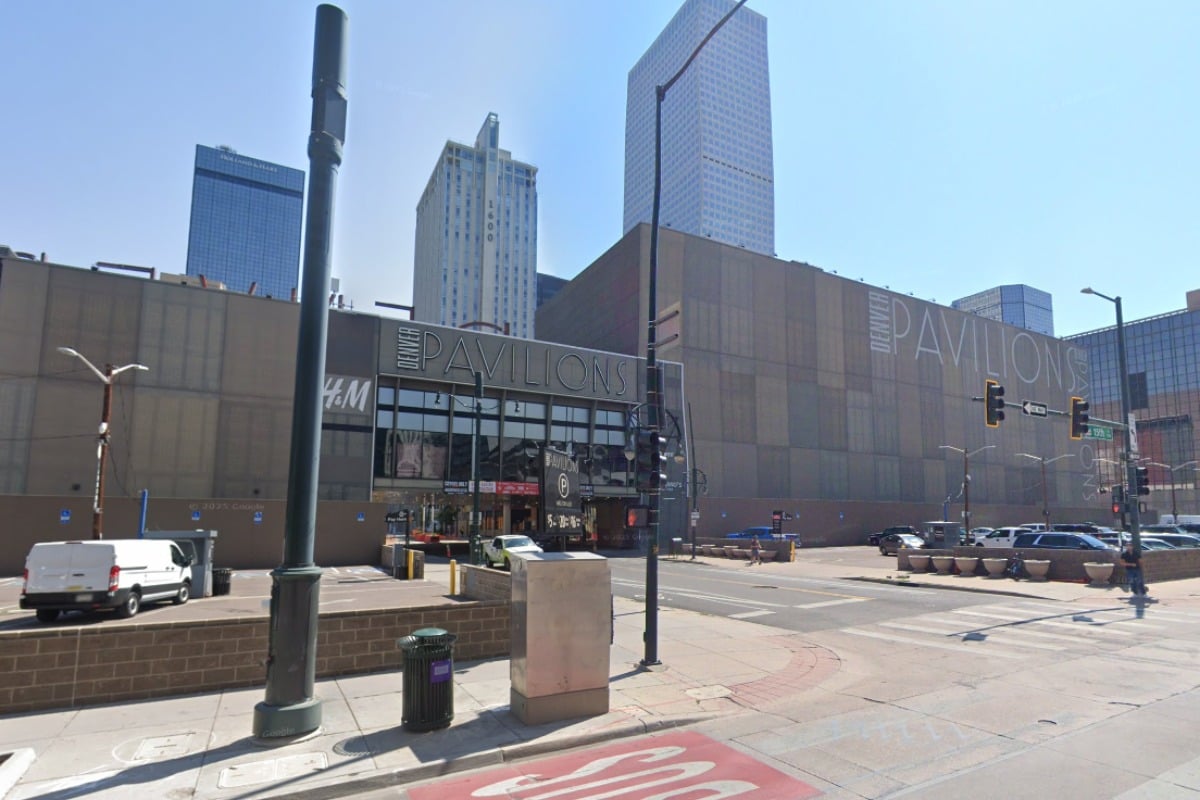
Forty-seven thousand square feet. Ninety-seven feet tall at its highest point. On the Tremont Place side it runs 97 feet by 265 feet, and on the Welton Street side it stretches 55 feet by 251 feet. The whole thing wraps the corner at Welton and Tremont and faces 15th. You cannot miss it, which is kind of the point.
Moya wrapped it up on Monday, Aug. 31, 2026. Six weeks. Twelve-hour days. Seven days a week. No weekends off, no easing into it. "It feels kind of unreal, actually, that it's finally done," she said. I believe her. That is the biggest project of her entire career, and honestly one of the largest murals in the whole state of Colorado now.
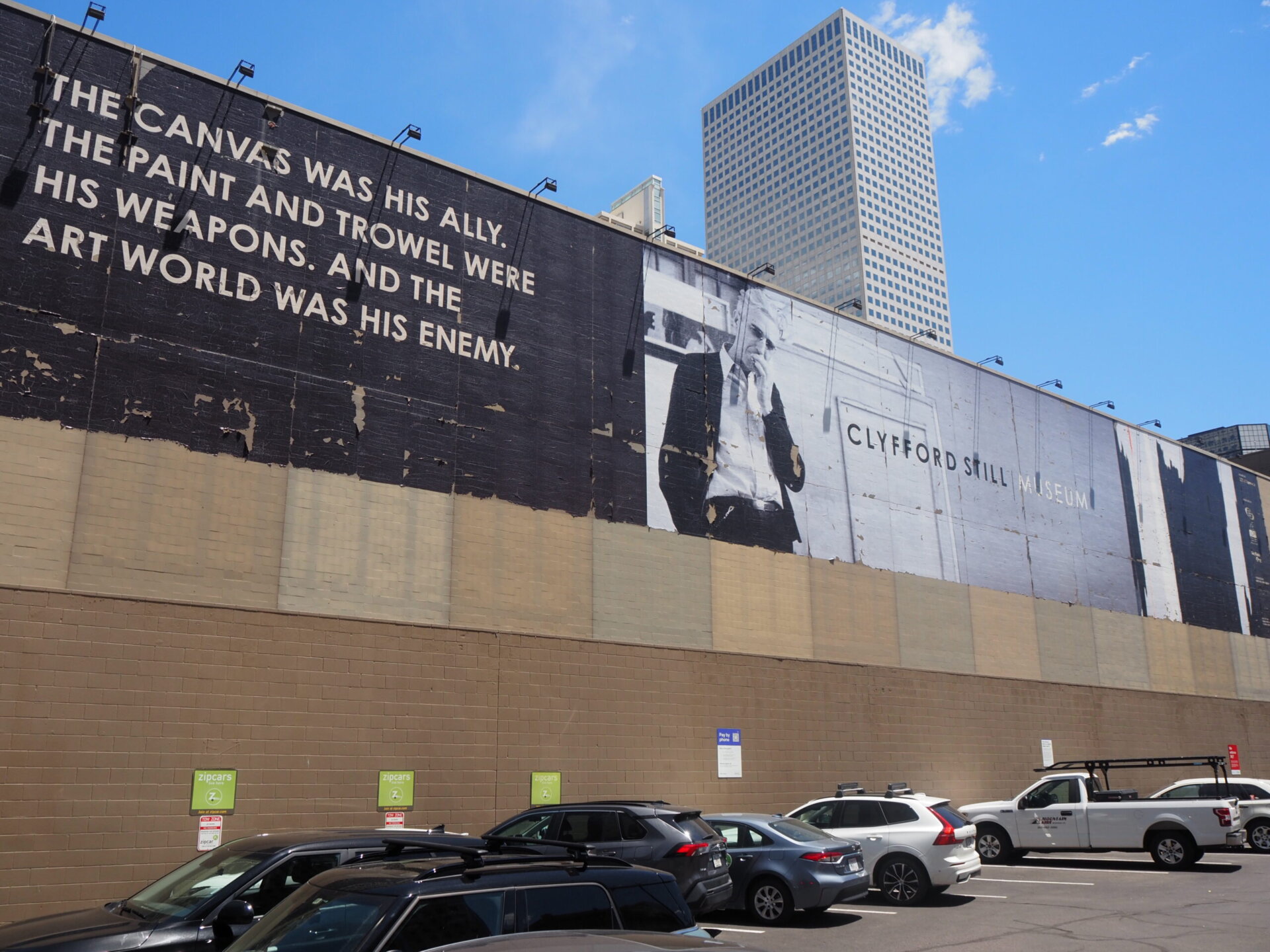
Here is the part people forget. That corner was not blank.
Since 2011 it wore a giant vinyl mural of Clyfford Still, put up to advertise the opening of the Clyfford Still Museum over on Bannock. Fifteen years of Denver weather does a number on vinyl, though, and by this year it was weathered and tired. So in June 2026 the Denver Downtown Development Authority Board signed off on taking it down.
Bye, Clyfford. Nothing personal.
The replacement is not vinyl. It is paint, and it is Moya's, and it is a completely different animal.
Moya came out of Southern California and picked up a Bachelor of Fine Arts from Otis College of Art and Design back in 2011. She calls her style "abstract storytelling," and she leans on Frank Stella's idea of narrative geometry, which is a fancy way of saying the shapes are doing the talking.
If you have walked around this city at all, you have probably stood in front of her work without knowing it. She has murals in RiNo, Baker, Cherry Creek, Englewood, Wheat Ridge, and Broomfield. And in 2021 she co-created an indoor piece called "I Invent It, My Hands Draw a Cloud" for the Denver Art Museum's Martin Building renovation. So this Pavilions job is not some out-of-nowhere thing. This is a Denver artist getting handed the biggest canvas of her life on one of the most visible corners downtown.
Let me talk about the money, because the money tells you what is really going on here.
The original budget was $300,000, back when the mural was only supposed to cover the Welton side. Then they added the Tremont section, and the cost went up, according to project representative Alana Watkins. The Downtown Development Authority commissioned it, working with Denver Arts & Venues, the city agency that handles public art.
But the mural is just one line item. It is part of a bigger capital improvements package. In May 2026 the DDDA approved a
Now here is the context that makes all of this land differently.
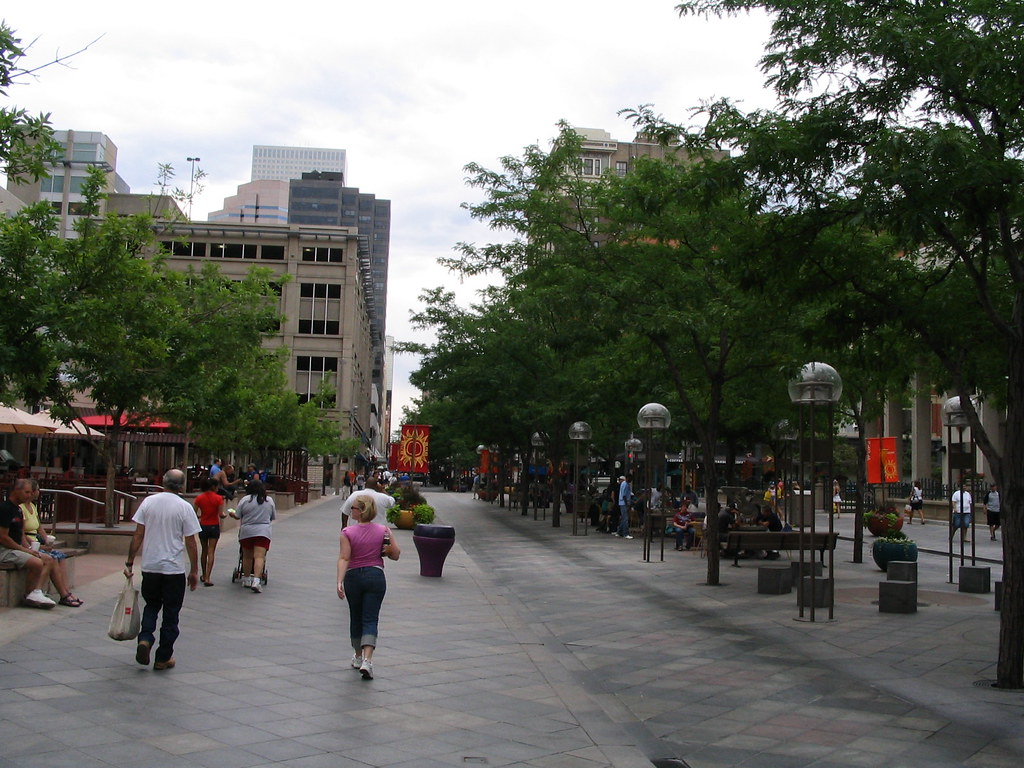
Denver Pavilions has been struggling. You know this. The DDDA, which is a city affiliate, actually bought the whole property for $37 million in December 2025 after the former owner, Gart Properties, defaulted on its loan.
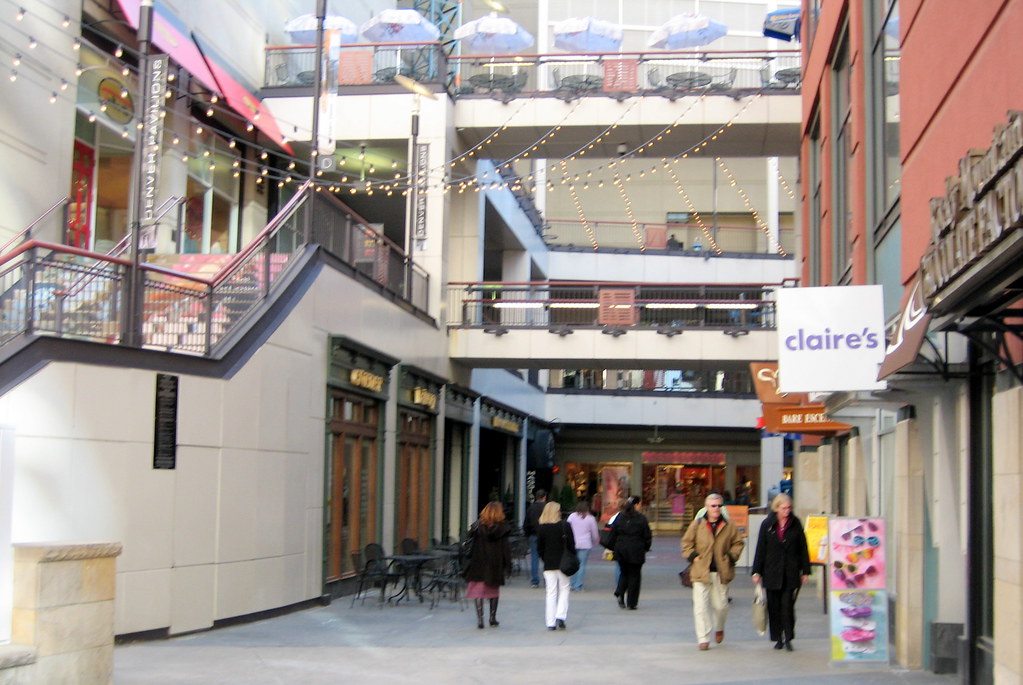
So the city, through this affiliate, ends up owning a struggling open-air mall on 16th Street. Then it starts pouring money into fixing the garage, patching the roof, and painting the outside. That is not a coincidence. That is a public entity trying to breathe life back into a corridor that has been on the ropes.
And it gets more interesting. In April 2026, an Urban Land Institute advisory panel that city officials brought in looked at the Pavilions and basically said the open-air mall design is obsolete. Their suggestion? Demolish much of the structure and put in a public park and two residential towers.
So sit with that for a second. On one hand you have a group of experts saying tear a lot of this down. On the other hand you have the city spending six figures on a mural covering ten basketball courts of wall on the same building. Both things are true at the same time. Which tells me nobody has fully decided what this corner becomes yet, and in the meantime they want people actually walking up to it instead of walking past it.
Here is my honest take, if you ask me. Two residential towers on 16th Street is not a throwaway idea. Downtown Denver has spent years trying to figure out how to get people living in the core again, not just visiting it, and rooftops are how you keep a struggling corridor from dying. Whatever eventually happens to the Pavilions structure, the ULI panel already told you where the smart money thinks this is heading. Homes.
For right now, though, you get something that costs you nothing. A free, walk-up piece of public art from a Denver artist, 97 feet tall, on a corner most people were trained to ignore.
Go stand under it. Look up. That is what six weeks of 12-hour days looks like, and it is the best thing to happen to that block in a while.