 Revolutionizing · Modernizing · Simplifying
Revolutionizing · Modernizing · Simplifying
Revolutionizing · Modernizing · Simplifying
Five percent.

That is how much prices climbed in the Denver-Aurora-Lakewood region between May 2025 and May 2026. Highest rate we have seen since September 2023. And when you line Denver up against the 12 major metro regions the feds track, only one place is worse. Urban Hawaii. That is the company we are keeping right now.
For context, the national annual average sat at 4.2%. So we are running hot, and we are running hotter than most of the country. Core inflation, the number that strips out the stuff that bounces around like gas and groceries, came in at 4.7% here. That is the sticky kind. That is the kind that tells you this is not a one-month fluke.
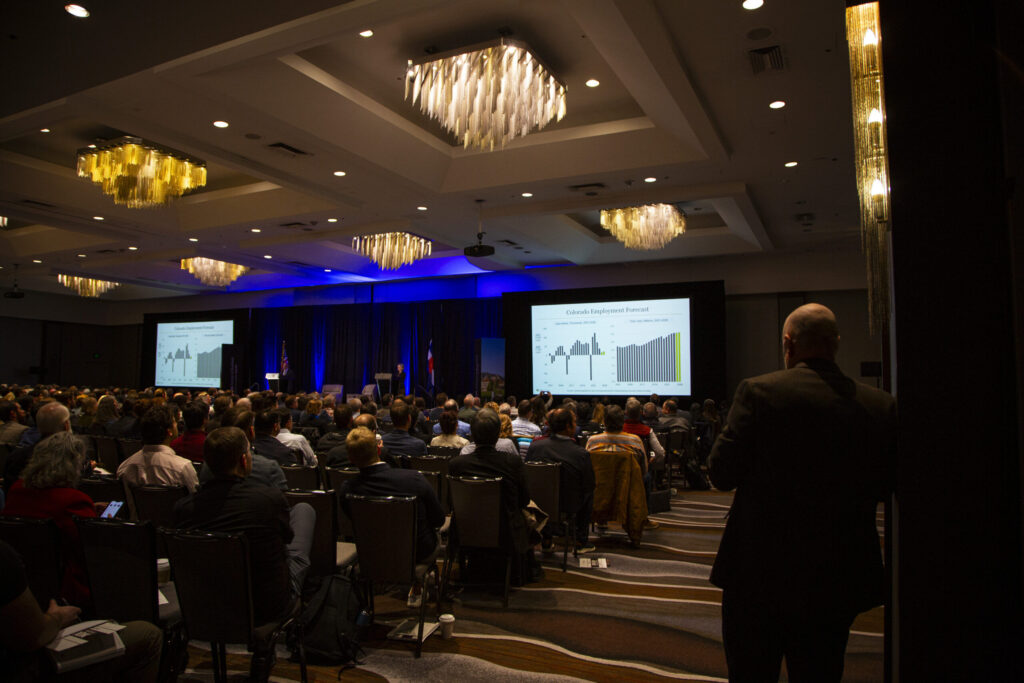
This all comes from the Colorado 2026 Midyear Economic Update, which the Business Research Division at CU Boulder's Leeds School of Business dropped on August 11. And here is the thing about that report. It is not doom. It is not a crash warning. It is something arguably more annoying to plan around.
Stagflation.
The report actually names it. Weak or flat growth, with unemployment and inflation climbing together at the same time. That is the nightmare combo, because the usual fixes for one make the other worse. And while the report says national recession risk is fading, it also says, and I am quoting here, "the economy is sending mixed signals."
Mixed signals. Great. Love that for a household budget.
Now, the part people miss. It is not just prices. It is who is left to work.
Colorado's labor force dropped by nearly 65,000 people year over year. And on rate of change for that measure, we rank 46th nationally. Forty-sixth. Out of the whole country. Brian Lewandowski, who runs the Business Research Division, put the blame on two things. An aging population and slow net migration. Fewer people moving in, more people aging out of the workforce. He said it is squeezing the state's labor supply and it is going to slow job growth.
So think about what that means if you are trying to hire right now. Smaller pool. Meanwhile the cost of everything your employees have to pay for is up 5%, which means they need more just to stay even, which means wage pressure, which feeds right back into, you guessed it, more inflation.
And if you are the one job-hunting? A shrinking labor pool actually gives you a little leverage. But that leverage evaporates fast if the growth slows the way the report warns it will.

Here is where I have to be honest, because the story is genuinely split.
Employment went up in the first half of 2026. Output went up. Personal income went up. Wealth went up. All four. That is not what a struggling economy looks like on paper.
And the business filings? Kind of wild. Colorado recorded 64,243 new business entity filings in the second quarter, up 25.5% from a year earlier and up 17.6% from the first quarter. That is the Q2 Quarterly Business and Economic Indicators report, which Leeds puts out for the Secretary of State's Office. What makes that number stand out is that Q2 usually dips seasonally. This one climbed instead. People are still starting things here. A lot of them.
One more piece of good news for anyone who thinks Colorado workers are checking out. Even after that 65,000-person drop, our labor force participation rate is still 4.1 percentage points above the national average. So the people who are here are still working at a higher clip than most of the country. We just have fewer of them coming in behind them.
Richard Wobbekind, also with the Business Research Division, said Colorado is still "a relatively competitive market." But he was clear it is a different environment than before. That line stuck with me. Not broken. Different. And different is harder to plan for than broken, because you cannot just wait for a bounce.
Population growth is expected to stay modest in 2026. Up 0.6%, or roughly 35,100 people for the whole state. That is a small number for Colorado. And it matters for anyone watching housing, because slow migration plus a shrinking workforce changes who is out there competing for homes and rentals. Back in December 2025, CU Boulder had already projected 2026 job growth of just 0.6%, about 17,500 new jobs statewide, and had forecast Denver-area inflation reaccelerating to 3.5%. Well. We blew past that 3.5% and landed at 5%. So even the cautious forecast turned out too optimistic on prices.
Here is my read, for whatever it is worth. If you are a family in Aurora or Lakewood watching your grocery bill and your rent both climb while your paycheck sort of jogs to keep up, you are not imagining it. The data says you are absorbing some of the steepest price increases of any big metro in America right now. If you are hiring, the pool is thinner and it is going to stay thin. And if you are house shopping, slower migration might cool the frenzy at the top a little, but it does nothing for the cost of everything else you have to buy to live here.
Mixed signals. That is the official word. And mixed signals mean you plan for the hard version and hope for the soft one.
Buckle up.