 Revolutionizing · Modernizing · Simplifying
Revolutionizing · Modernizing · Simplifying
Revolutionizing · Modernizing · Simplifying
A $600 savings does not sound like much until you put it next to the actual bill. One Arapahoe County homeowner opened their 2026 property tax statement and saw $5,435.47 due. And that was after the $750 senior exemption discount got knocked off. Statewide, Colorado homeowners watched 2026 bills climb anywhere from 20% to more than 40%.

So yeah. Every break counts right now. And there is one break on a clock most Front Range seniors are not watching close enough.

Here is the thing most people do not realize about Colorado's senior homestead exemption. It is good money. It shields half the value of your first
But that 10-year rule is the trap. The second you sell and move, even across the street, the clock resets to zero. So a 72-year-old who has earned the break for years, and now wants to dump the big house with the stairs for a single-level condo, loses it the day they close. You basically get punished for downsizing at the exact age when downsizing makes the most sense.
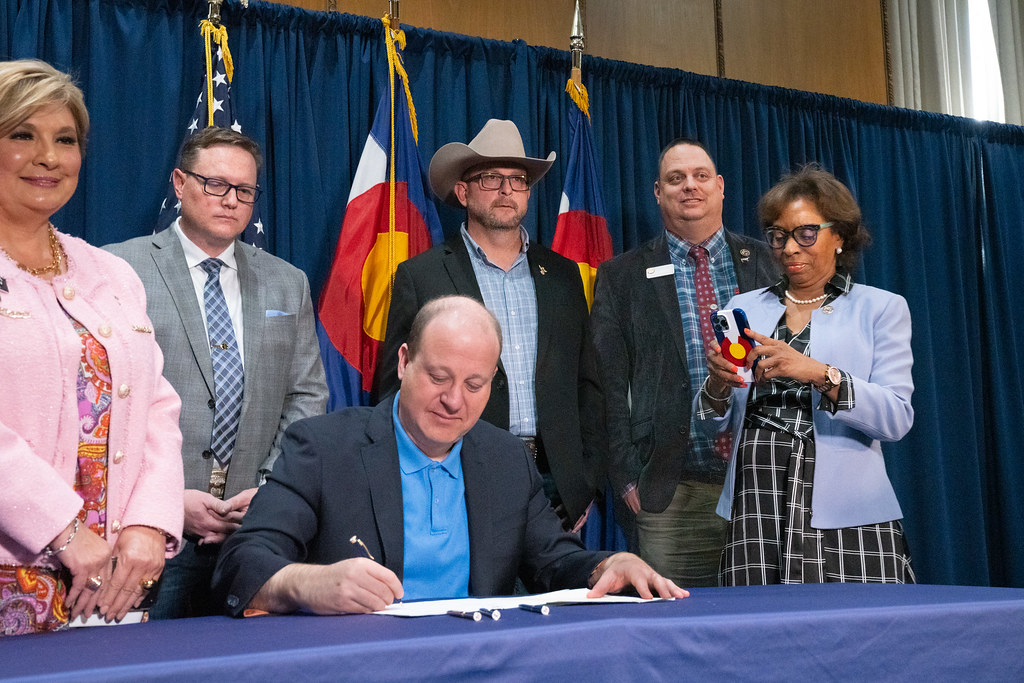
In 2024 the legislature tried to fix that with Senate Bill 24-111. It created something called the Qualified Senior Primary Residence Classification. Clunky name, simple idea. If you had already earned the senior exemption on a prior home and then moved and lost it, this hands you an equivalent benefit so you do not restart from scratch.
The math is the same math. It cuts your assessed value by 50% of the first
Now the catch. SB 24-111 only wrote this in for property tax years 2025 and 2026. That is it. Two years.
And then in June, the door got nailed shut. Gov. Jared Polis signed SB 26-116 on June 3, 2026. It takes effect August 12, 2026, and it ends the classification for any property tax year starting on or after January 1, 2027. Which means 2026 is the last year this thing applies. Period.
This is the part people miss. To claim it for 2026, you had to have previously qualified for and received the Senior Property Tax Exemption as of January 1, 2020 or later, and then lost it by moving. If that is you, this is not theoretical. This is real money sitting on the table.
The deadline is a real deadline. Applications go to your county assessor by March 15. Late filings get accepted until July 15, but if you file late you forfeit your appeal rights, so do not be casual about it. And one timing note that trips people up. Any reduction you claim for 2026 shows up on the bill you receive in 2027, not this year. So you are acting now for savings you see later.
Colorado's Division of Property Taxation, the state agency under DOLA run by Executive Director Maria De Cambra, actually stood up a dedicated webpage and an email line to walk seniors through claiming the 2026 benefit. The state wants people to use it. That tells you something.
You would think, logically, somebody would just make this permanent. They tried. HCR25-1001, called Senior Property Tax Exemption Portability, would have let any senior who qualified in 2016 or later keep the exemption no matter how long they had owned the new place. The House Finance Committee postponed it indefinitely on February 24, 2025. Which in legislature language means dead. And it is not on the November 2026 ballot.
This is not the first time, either. An earlier run at portability, SCR22-002 back in 2022, also failed. Here is why it keeps being so hard. That 10-year rule lives in the state constitution. So the legislature cannot just rewrite it. It takes a ballot measure to put this in front of voters, and so far nobody has gotten one across.
There was even a bill, HB 25-1156, that would have simply continued the classification indefinitely starting in 2027. It did not pass. And its fiscal note is the number that should get your attention. About 94,000 seniors qualified for the exemption between 2020 and 2026 and then moved. All of them would have qualified again in 2027 under that bill. Plus roughly 14,500 more households every year through 2029. That is the size of the group about to lose this on-ramp.
So here is the practical read. If you are a Front Range senior who earned that exemption and has been going back and forth on whether to sell the big house, the calendar just made the decision sharper. 2026 is the window. After that, moving means restarting the clock the old-fashioned way.
For context on why the timing matters, residential property this year is assessed at 6.8% for local-government levies and 7.05% for school-district levies, and those bills are not getting smaller. If downsizing was already in the plan, this is a rare case where the tax code rewards you for acting sooner rather than sitting tight.
Talk to your county assessor. Talk to your accountant. And if the house-selling math is part of it, that is a conversation Symbio Homes has every week. This one has a hard deadline, so do not let it quietly pass you by.